




Installing ac installation on pelmet is becoming increasingly popular in modern UAE interiors where aesthetics and space efficiency matter. However, this setup requires careful planning to ensure structural safety, proper airflow, and long-term AC performance. In this guide, we explain feasibility, sizing, installation steps, risks, and real cost expectations in Dubai.
Table of Contents
ToggleWhat Is AC Installation on Pelmet
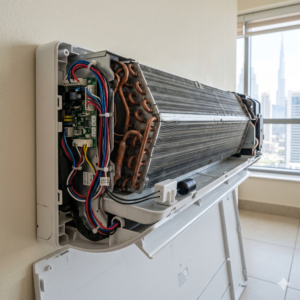
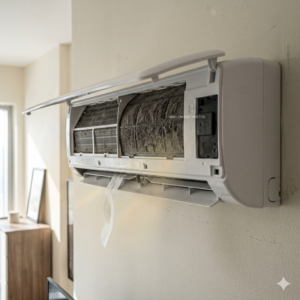
A pelmet is typically a boxed structure near the ceiling, often used to conceal curtain rods or architectural elements. In many modern apartments and villas, pelmets are now used to hide AC indoor units for a cleaner and more minimal look.
Instead of mounting the AC directly on a visible wall, the unit is installed inside or partially inside the pelmet, with only the airflow outlet exposed.
This design is visually clean, but it introduces technical challenges that must be handled properly.
Is It Safe to Install an AC Unit on a Pelmet
Yes, but only if the pelmet structure meets specific requirements. Not all pelmets are designed to carry the weight and vibration of an AC unit.
Structural Strength Requirements
The pelmet must be strong enough to support:
- The weight of the indoor unit (typically 8–15 kg)
- Continuous vibration during operation
- Long-term load without sagging
Ideal materials include:
- Reinforced gypsum board with internal metal framing
- Concrete-backed structures
- Solid wood with proper support
If the pelmet is hollow or decorative only, additional reinforcement is required before installation.
Clearance Requirements
Proper clearance is essential for airflow and maintenance:
- Top clearance: minimum 5–10 cm
- Front clearance: at least 30–50 cm for airflow
- Side clearance: minimum 5 cm
- Bottom clearance: enough space for air distribution
Without proper clearance, cooling performance will drop significantly.
Correct AC Unit Sizing for Pelmet Installation
Choosing the right AC size is critical. Oversized or undersized units can cause inefficiency.
| Room Size | Recommended Capacity |
|---|---|
| Up to 12 sqm | 1.0 Ton |
| 12–20 sqm | 1.5 Ton |
| 20–30 sqm | 2.0 Ton |
For pelmet installations, compact indoor units are often preferred to ensure proper fit and airflow.
Step-by-Step AC Installation on Pelmet
1. Site Inspection and Measurement
Before installation, the technician checks:
- Pelmet dimensions
- Wall strength
- Drainage route
- Piping path
2. Structural Reinforcement
If needed, internal supports are added to ensure the pelmet can hold the AC unit securely.
3. Mounting Bracket Installation
The AC mounting bracket is fixed using strong anchors or bolts, ensuring stability and alignment.
4. Indoor Unit Placement
The unit is carefully placed onto the bracket, ensuring proper balance and alignment.
5. Piping and Wiring Connection
This includes:
- Copper refrigerant pipes
- Electrical wiring
- Communication cables
6. Drainage Setup
Drain pipes must have a proper slope to prevent water backflow.
- Minimum slope: 1–2 cm per meter
- No upward bends
- Secure connections to prevent leakage
7. System Testing
After installation, the system is tested for:
- Cooling performance
- Noise and vibration
- Water drainage
Proper AC installation handling ensures long-term reliability and performance.
How to Conceal Pipes and Wiring Properly
One of the main goals of pelmet installation is visual cleanliness.
Common concealment methods:
- Internal routing inside pelmet structure
- False ceiling integration
- Wall embedding for pipes
However, access points must still be available for maintenance.
Common Risks and How to Prevent Them
1. Vibration Noise
Improper mounting can cause noise and rattling.
Solution: Use vibration pads and secure mounting.
2. Condensation Issues
Poor insulation or drainage can lead to water leakage.
Solution: Proper pipe insulation and slope.
3. Airflow Obstruction
Restricted airflow reduces cooling efficiency.
Solution: Maintain proper clearance and vent opening.
4. Maintenance Difficulty
Fully enclosed units are hard to service.
Solution: Include access panels.
AC Installation Cost on Pelmet in Dubai
The cost depends on complexity, materials, and additional work required.
| Service Type | Estimated Price (AED) |
|---|---|
| Basic AC Installation | 300 – 700 |
| Pelmet Installation (with modification) | 800 – 1,500 |
| Full Concealed Installation | 1,500 – 3,000+ |
Note: Prices are slightly below average market rates and may vary depending on structural work, piping length, and system complexity.
Professional Recommendations for Best Results
- Always inspect pelmet strength before installation
- Ensure proper airflow clearance
- Use high-quality insulation and piping
- Plan for maintenance access
- Work with experienced technicians
When Pelmet Installation Is Not Recommended
- Weak or decorative pelmet structure
- Insufficient airflow space
- Limited access for servicing
In such cases, wall-mounted installation may be safer and more effective.
Long-Term Performance Considerations
Pelmet installations can perform well if done correctly. However, poor installation can lead to:
- Reduced cooling efficiency
- Higher energy consumption
- Frequent maintenance issues
This is why proper planning and execution are essential.
If you are planning AC installation on a pelmet or experiencing issues with an existing setup, it is important to address them early. Improper installation can lead to airflow problems, condensation damage, and reduced system efficiency over time. These issues not only affect comfort but can also increase electricity costs and lead to more serious AC damage. With the right approach, these risks can be minimized and the system can perform efficiently. If you need guidance based on your setup, you can use the WhatsApp or Call button on the top right to connect with the Bio On Air team and understand the most suitable next step.
Conclusion
AC installation on pelmet is possible and effective when done correctly. By ensuring structural strength, proper clearance, and professional installation, you can achieve both aesthetic and functional benefits while maintaining long-term AC performance.