




geyser vs ac power consumption is one of the most common concerns for households in Dubai trying to understand high electricity bills. In the UAE, both AC and geysers consume significant energy—but in very different ways. This guide explains real usage, costs, seasonal impact, and how to reduce your bill effectively.
Table of Contents
ToggleUnderstanding the Real Question Behind Power Consumption
When comparing a geyser and an AC, many people focus only on wattage. However, wattage alone does not tell the full story. What truly matters is how long each system runs during the day and how often it cycles.
In simple terms:
- AC uses moderate power but runs for long hours
- Geyser uses high power but runs for short periods
This difference between continuous and cyclical usage is the key to understanding your electricity bill in Dubai.
Wattage Comparison Between AC and Geyser
| Appliance | Typical Power (Watt) | Usage Pattern |
|---|---|---|
| Split AC (1.5 ton) | 1,200 – 1,800 W | Runs for long hours (8–20 hours/day) |
| Window AC | 1,000 – 1,500 W | Runs continuously but less efficient |
| Central AC | 3,000 – 5,000+ W | Whole home cooling, heavy usage |
| Storage Geyser | 1,500 – 3,000 W | Short bursts (heating cycles) |
| Instant Geyser | 3,000 – 6,000 W | Very high power, short usage |
At first glance, geysers appear to consume more power. But this is misleading without considering usage time.
Continuous vs Cyclical Power Consumption Explained
The AC operates in cycles but over long periods. It cools the room, turns off, then turns on again repeatedly to maintain temperature.
However, in UAE conditions:
- AC runs almost all day in summer
- Even when cycling, it consumes energy frequently
On the other hand, geysers:
- Heat water once and stop
- Reheat only when temperature drops
- Are used mostly during showers or short usage periods
This is why AC usually contributes more to total electricity consumption despite lower wattage.
Hourly Electricity Cost Comparison in Dubai
Let’s break it down into a simple hourly understanding based on typical UAE usage.
| Appliance | Estimated Cost per Hour | Usage Pattern |
|---|---|---|
| Split AC | Moderate cost/hour | Runs 10–20 hours daily |
| Central AC | High cost/hour | Runs continuously in large homes |
| Storage Geyser | High cost/hour | Runs 1–3 hours total/day |
| Instant Geyser | Very high cost/hour | Runs only during usage (minutes) |
Even though geysers consume more power per hour, their total daily usage is much lower compared to AC systems.
Monthly Electricity Impact AC vs Geyser
Now let’s translate this into real-world monthly impact.
AC:
- Runs 8–20 hours daily
- Major contributor to electricity bill
- Can account for 50%–70% of total usage in summer
Geyser:
- Runs 30–90 minutes per day (average)
- Higher spike usage but short duration
- Usually contributes a smaller percentage overall
In most UAE households, AC is the dominant electricity consumer.
Seasonal Difference Summer vs Winter
Summer Reality
During peak summer months:
- AC runs almost continuously
- Indoor-outdoor temperature gap increases load
- Electricity bills rise sharply
In this period, AC is clearly the main driver of electricity consumption.
Winter Reality
During winter:
- AC usage drops significantly
- Geyser usage increases due to hot water needs
In some homes, geysers become the noticeable contributor to electricity usage during winter months.
Split vs Window vs Central AC Consumption
Split AC
- More efficient than window AC
- Moderate energy usage
- Best for apartments
Window AC
- Lower upfront cost
- Less efficient
- Higher electricity consumption over time
Central AC
- Cools entire property
- High energy consumption
- Requires proper maintenance to stay efficient
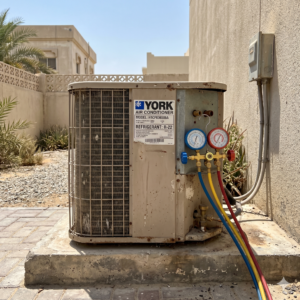
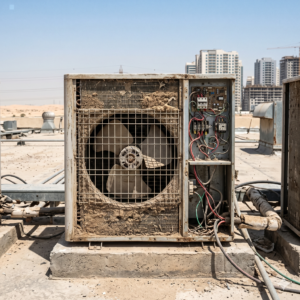
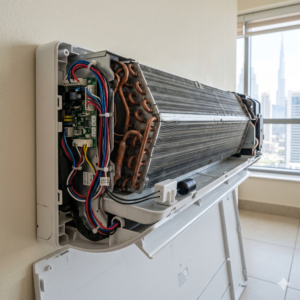
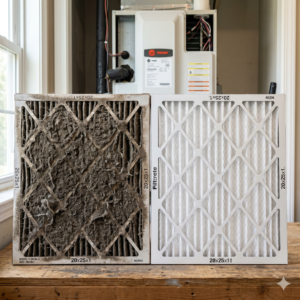
Maintenance plays a major role. Dirty filters or clogged systems can increase consumption significantly. Regular AC maintenance helps reduce unnecessary energy usage.
Storage vs Instant Geyser Consumption
Storage Geyser
- Keeps water heated in a tank
- Consumes energy periodically
- Can waste energy if left on continuously
Instant Geyser
- Heats water on demand
- No standby energy loss
- Very high power but short usage
Choosing between these depends on usage habits and household size.
Should You Turn Off the Geyser or Leave It On?
This is one of the most common questions.
Turn it OFF when:
- Not using it for several hours
- During the day when no one is home
- During summer when hot water demand is low
Leaving it ON may be okay when:
- Frequent usage in short intervals
- Proper thermostat control is used
However, leaving it on all day usually increases electricity consumption unnecessarily.
Why AC Often Becomes the Main Electricity Consumer
In UAE homes, AC dominates energy usage due to:
- Continuous operation
- Extreme outdoor temperatures
- Poor insulation in some buildings
- Dirty or inefficient systems
Even a small inefficiency can significantly increase energy consumption when the system runs for long hours.
Practical Ways to Reduce Electricity Bills
AC Optimization Tips
- Set thermostat to 24–26°C
- Clean filters regularly
- Avoid extremely low temperature settings
- Ensure proper airflow
Geyser Optimization Tips
- Set temperature around 50–60°C
- Turn off when not needed
- Use timers if available
- Check insulation of tank
General Tips
- Seal air leaks in doors and windows
- Use curtains to reduce heat gain
- Schedule regular system checks
The Hidden Factor Airflow and System Condition
Many people assume high bills are caused only by usage time. In reality, system condition plays a huge role.
For example:
- Dirty coils reduce cooling efficiency
- Blocked ducts increase load on AC
- Low refrigerant causes longer running time
This means your AC may be consuming more electricity than necessary without you realizing it.
Long-Term Cost vs Short-Term Usage
AC costs accumulate slowly but consistently. Geysers create short bursts of high usage.
Over time:
- AC has higher total cost impact
- Geyser impact depends on usage habits
This is why focusing on AC efficiency often gives the biggest savings.
If you are noticing rising electricity bills or inconsistent cooling, it is important not to ignore the early signs. Issues like poor airflow, hidden dust buildup, or system inefficiency can silently increase your energy consumption while reducing comfort and indoor air quality. Over time, this can lead to higher costs and deeper system damage. With the right approach, these problems can be addressed early. If you want to better understand your AC condition, you can use the WhatsApp or Call button on the top right to connect with the Bio On Air team and discuss the most suitable next step.
Conclusion
When comparing geyser vs ac power consumption, AC usually consumes more electricity overall due to long running hours, especially in UAE conditions. Understanding usage patterns, improving efficiency, and making small adjustments can significantly reduce your electricity bill while maintaining comfort.