




A centralised ac system is often considered at a turning point: when a homeowner upgrades from split units, when a builder specifies cooling for a new project, or when rising electricity bills force a deeper look at system efficiency. This guide explains how it works in simple terms, compares it with other options, clarifies costs without technical jargon, and helps you assess whether your property is truly ready before committing.
Table of Contents
ToggleWhy People Consider a Centralised AC System
The decision to install or upgrade to a centralised ac system rarely happens randomly. It usually appears at a career or property phase change. Homeowners renovating a villa want cleaner ceilings and fewer visible indoor units. Builders want a scalable solution that adds value and uniform comfort. Property managers want predictable maintenance and better long-term efficiency. Others start exploring it after noticing consistently high electricity bills from multiple split units running independently.
The common pain points are surprisingly similar:
- Rooms cooling unevenly.
- Too many indoor units affecting aesthetics.
- Noise from several compressors.
- Maintenance complexity with multiple systems.
- Energy bills that feel inconsistent or unpredictable.
A centralised ac system is often seen as the “next level” solution. But it is important to understand how it actually works and whether it matches your building conditions and long-term plans.
How a Centralised AC System Works (Explained Simply)
Let us remove the technical language and look at the system in everyday terms. A centralised ac system cools air in one main location and distributes it throughout the property using ducts.
The Main Parts
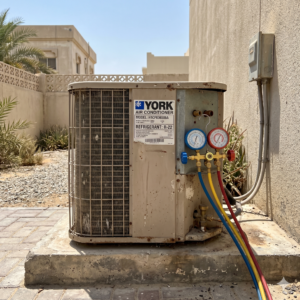
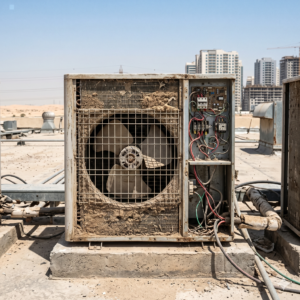
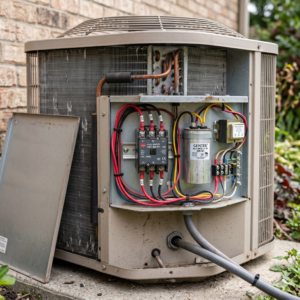
1. Condenser (Outdoor Unit)
This sits outside the building. Think of it as the part that releases heat collected from inside your home. It pushes unwanted heat into the outdoor air.
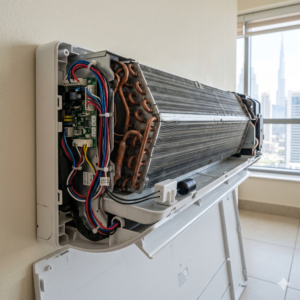
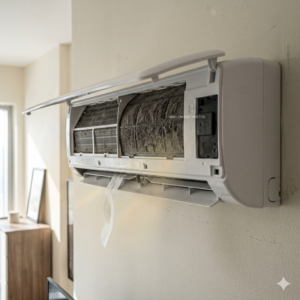
2. Air Handler (Indoor Unit)
This is usually hidden in a ceiling void or service area. It pulls warm air from rooms, cools it, and pushes it back through ducts.
3. Ductwork
These are the hidden air tunnels inside ceilings or walls. They carry cool air to rooms and return warm air back to the system.
4. Refrigerant Cycle (Without Jargon)
The refrigerant is a special fluid that absorbs heat inside your home and releases it outside. It continuously cycles between absorbing heat (inside) and releasing heat (outside). That constant heat transfer is what creates cooling.
Instead of multiple indoor units working independently, everything is coordinated through one central cooling source.
Comparison Framework Centralised vs Multi-Split vs VRF
Choosing between systems is not about which is “better” universally. It is about which fits your property and priorities.
Aesthetics
- Centralised ducted: Clean ceilings, only small vents visible.
- Multi-split: Visible wall-mounted units in each room.
- VRF: Can also be concealed, but depends on configuration.
For homeowners focused on design and minimal visual clutter, centralised systems often win.
Control Flexibility
- Centralised: Traditionally one main control, but zoning can change this.
- Multi-split: Each indoor unit has its own control.
- VRF: Highly flexible, each zone independently controlled.
Zoning Capability
Zoning allows different areas to be cooled separately. With smart dampers inside ducts, you can control airflow room by room. This means:
- Bedrooms can cool independently at night.
- Unused rooms receive less airflow.
- Energy waste can be reduced.
Without zoning, a centralised system cools all connected spaces equally. With zoning, it behaves more like multiple systems within one framework.
Installation Complexity
- Centralised: Requires duct space and ceiling void.
- Multi-split: Easier retrofit, minimal ductwork.
- VRF: More advanced design and engineering needed.
Scalability
Centralised systems scale well for medium to large villas and commercial spaces. VRF systems scale even further for complex buildings. Multi-split systems are practical for smaller properties.
Suitability by Property Type
- Small apartments: Multi-split often sufficient.
- Medium villas: Centralised ducted works well.
- Large villas or offices: Centralised with zoning or VRF.
Zoning and Smart Dampers Explained
Zoning is often misunderstood. It does not mean installing multiple AC systems. Instead, it means dividing duct airflow using smart dampers.
Smart dampers are adjustable valves inside ducts that open or close based on room demand. When a room reaches its desired temperature, the damper reduces airflow to that area.
Benefits include:
- More balanced comfort.
- Potential energy savings.
- Reduced strain on the system.
However, zoning requires careful design. Poorly planned zoning can create airflow imbalance or pressure issues. This is why system planning matters more than the equipment brand.
Cost Structure Explained Without Listing Figures
Instead of listing numbers, it is more useful to understand how centralised AC system cost is structured.
1. Equipment Cost
This includes the outdoor condenser, indoor air handler, control system, and refrigerant lines. Higher efficiency models cost more upfront but may reduce long-term operating expenses.
2. Ductwork and Labor
Duct fabrication and installation can represent a large portion of the total cost. Complex ceiling layouts increase labor time. Custom duct routing adds expense.
3. Electrical Upgrades
Some properties require panel upgrades or additional circuit capacity to support centralised systems.
4. Efficiency Rating Impact
Higher efficiency systems often cost more initially but reduce monthly electricity bills. Over years, operating savings may offset the difference.
5. Long-Term Operating Costs
Energy consumption depends on:
- Insulation quality.
- Window efficiency.
- Zoning configuration.
- Usage habits.
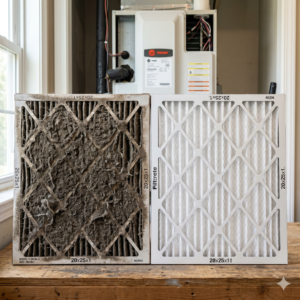
Maintenance expectations include regular filter replacement, periodic duct inspection, and seasonal performance checks.
If you want to understand structured maintenance support after installation, you can refer to AC maintenance and AMC services for how ongoing care is typically handled.
Balanced Pros and Cons
Advantages
- Uniform cooling throughout the property.
- Cleaner interior aesthetics.
- Improved air filtration options.
- Potential property value increase.
- Lower indoor noise compared to multiple wall units.
Limitations
- Higher upfront investment.
- Requires ceiling or duct space.
- More complex installation planning.
- Single-point failure risk (if main unit stops, all zones are affected).
Understanding both sides helps avoid unrealistic expectations.
Compliance and Technical Readiness Considerations
Before committing to a centralised ac system, assess these technical factors:
- Electrical capacity: Is your panel sufficient?
- Insulation quality: Poor insulation increases load.
- Window efficiency: Single-glazed windows increase cooling demand.
- Duct space availability: Is there enough ceiling void?
- Building envelope condition: Air leakage reduces efficiency.
If these conditions are weak, upgrading the AC alone may not solve high bills.
Audit-Style Readiness Checklist
Use this checklist before deciding:
- Do you have sufficient ceiling height for ducts?
- Is your electrical panel ready for higher load?
- Are insulation and windows adequate?
- Is the property large enough to justify centralisation?
- Do you prefer long-term efficiency over lower upfront cost?
If you answer “no” to multiple points, improvements may be needed first.
When a Centralised AC System Should Be Planned Carefully
A centralised ac system can improve comfort, aesthetics, and efficiency when properly designed. However, incorrect sizing, poor duct layout, or ignoring building readiness can lead to uneven cooling, higher bills, and frustration. At Bio On Air, system planning and readiness assessment are handled carefully to ensure performance aligns with expectations. Acting thoughtfully before installation is a preventive step that protects long-term investment. You can use the WhatsApp or Call button at the top right of this page to discuss whether your property is technically ready for centralised cooling.
Conclusion
A centralised ac system is not just an equipment upgrade. It is a structural decision that affects comfort, energy use, property value, and maintenance planning. By understanding how it works, comparing it fairly with alternatives, assessing readiness, and evaluating cost structure beyond upfront figures, you can make a decision aligned with your property and long-term goals. Thoughtful planning today prevents expensive adjustments tomorrow.