




If you are asking why is my ac leaking water, you are likely dealing with visible drips, ceiling stains, indoor puddles, or unexpected moisture around your AC unit. In the UAE climate, AC systems run for long hours, and water leakage is one of the most common yet stressful problems. Beyond the mess, it can damage ceilings, walls, electrical components, and indoor air quality if not handled quickly. This guide gives you immediate emergency steps, clear symptom-based diagnosis, and practical guidance on what you can safely do yourself and when professional repair is the smarter move.
Table of Contents
ToggleEmergency First Steps Before Anything Else
When you notice water leaking from your AC, your first priority is not diagnosis. It is damage control and safety.
Step 1: Turn Off the System at the Thermostat
Do not just switch off the remote. Turn off the AC at the thermostat or main control panel. If water is near electrical components, consider switching off the relevant breaker for safety. Continuing to run the system may worsen internal freezing or overflow.
Step 2: Contain the Water Immediately
- Place towels or a container under the leak.
- If leaking from the ceiling, protect furniture and flooring.
- Dry visible moisture to prevent mold growth.
Step 3: Do Not Restart Immediately
If ice is forming inside or the drain system is clogged, restarting the AC can worsen the issue. Allow the system to remain off until you identify the visible symptoms below.
Quick Navigation: Identify Your Visible Symptom
Jump directly to the section that matches what you are seeing:
- Water dripping from indoor unit → Likely drain blockage or frozen coil
- Visible ice on indoor unit → Frozen evaporator coils
- Ceiling stains below ducted AC → Drain pan or overflow issue
- Water pooling near wall unit → Disconnected or clogged drain line
- Water leaking only during heavy use → Airflow or refrigerant imbalance
- No indoor leak but outdoor drainage stopped → Blocked secondary line
Most Common Cause #1: Clogged Condensate Drain Line
This is the most frequent reason people ask, why is my ac leaking water.
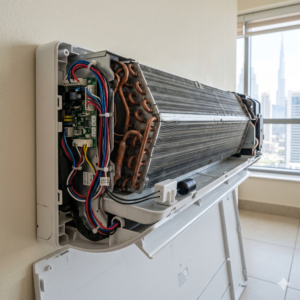
Your AC removes humidity from indoor air. That moisture turns into condensation and flows through a drain line. When dust, debris, or algae block that line, water backs up and leaks from the indoor unit.
Signs of a Clogged Drain Line
- Slow drip from the indoor unit
- Water pooling below the unit
- Musty smell
Safe DIY Option
If accessible, you can gently flush the drain line using clean water or mild cleaning solution. However, avoid forcing pressure if unsure, as improper flushing can disconnect fittings.
When to Call a Technician
If the blockage persists or water continues leaking after flushing, internal buildup may require professional cleaning to prevent recurrence.
Common Cause #2: Frozen Evaporator Coils
If you see ice inside the indoor unit or airflow suddenly becomes weak before leakage, frozen evaporator coils may be the cause.
Why Coils Freeze
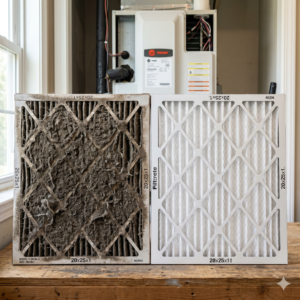
- Restricted airflow (dirty filter)
- Low refrigerant levels
- Blower fan malfunction
What You Can Do Immediately
- Turn off the AC completely.
- Allow it to thaw for several hours.
- Check and replace dirty air filters.
When It Becomes a Professional Issue
If freezing happens repeatedly, refrigerant levels or airflow systems need inspection. Improper refrigerant handling should never be DIY, as it requires technical tools and safe procedures.
Moderate Cause #3: Cracked or Rusted Drain Pan
Over time, drain pans can crack or rust, especially in older systems. When this happens, condensation escapes before reaching the drain line.
Symptoms
- Leak continues even after drain line is clear
- Water appears under central duct systems
- Ceiling stains below AC area
Drain pan replacement is usually a professional repair, as access may require partial system disassembly.
Moderate Cause #4: Improper Installation Level
If your AC unit is slightly tilted the wrong way, water may not flow properly toward the drain outlet.
This issue is more common in wall-mounted split systems and newly installed units. Proper leveling ensures gravity assists drainage.
Correcting installation alignment usually requires adjustment by a technician familiar with mounting brackets and drainage design.
Moderate Cause #5: Disconnected Drain Line
Vibration over time may loosen connections. If the drain pipe becomes partially detached, water leaks directly inside the wall or unit.
This often causes:
- Sudden leakage without warning
- Water inside wall cavities
- Moisture smell near the unit
Reconnecting properly requires inspection to ensure no hidden internal damage has occurred.
Complex Cause #6: Blocked Secondary Overflow System
Many modern systems include a secondary overflow protection system. If both primary and secondary lines clog, leakage can spread into ceilings or walls.
This situation requires urgent professional inspection because structural damage risk increases significantly.
Hidden Consequences If Ignored
Water leakage from AC is not only cosmetic. If ignored, it can cause:
- Electrical damage to boards and wiring
- Mold growth inside ducts and walls
- Drywall and ceiling deterioration
- Increased repair complexity
Minor leaks are usually simpler to resolve. Delays often increase repair scope, which can significantly affect overall cost. While exact pricing depends on inspection findings, addressing issues early is typically more manageable than waiting for visible structural damage.
DIY vs Professional Repair: Where to Draw the Line
Safe DIY Actions
- Replacing dirty air filters
- Turning off system to thaw frozen coils
- Gently flushing accessible drain line
Call a Technician If You Notice
- Repeated freezing
- Electrical malfunction
- Refrigerant concerns
- Ceiling or structural water damage
Professional inspection ensures refrigerant levels, electrical boards, float switches, and overflow systems function correctly.
Prevention Practices to Avoid Future Leaks
Preventive care reduces the chance of asking why is my ac leaking water again.
- Flush drain lines routinely
- Replace filters regularly
- Install float switches for overflow protection
- Schedule seasonal inspections before heavy usage
- Maintain proper airflow around indoor and outdoor units
Even simple maintenance significantly reduces unexpected leakage events.
When Water Leakage Should Be Addressed Properly
AC water leakage can escalate quickly from minor dripping to structural and electrical risk. If left unattended, it may compromise indoor air quality, promote mold growth, damage walls or ceilings, and increase overall repair complexity. Bio On Air handles AC leakage issues through structured inspection, safe refrigerant checks, proper drain system cleaning, and airflow assessment. Acting early protects both your system and your indoor environment. You can use the WhatsApp or Call button at the top right of this page to discuss your AC symptoms with our team and understand the safest next step.
Conclusion
If you are wondering why is my ac leaking water, the answer usually begins with drainage or airflow problems, but it can extend to installation, refrigerant, or structural factors. Immediate shutdown and damage control are your first priorities. From there, identifying visible symptoms helps narrow the cause. Some minor steps are safe to try yourself, but recurring or complex issues require professional diagnosis. Addressing leaks early protects your AC system, indoor air quality, and structural safety, helping you avoid more serious complications later.