




AC water is one of the most confusing and stressful issues homeowners face. You may see dripping from a pipe outside, pooling near the indoor unit, stains on the ceiling, or even water inside an emergency pan. Some AC water situations are completely normal, while others signal serious damage. Understanding the difference can save you from costly repairs and structural damage.
Table of Contents
ToggleUnderstanding AC Water: Normal vs Abnormal Situations
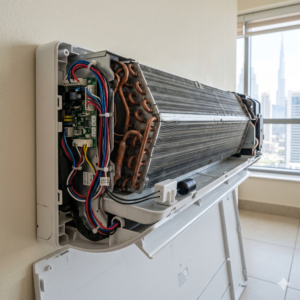
Your AC does not only cool air. It also removes humidity. When warm indoor air passes over the cold evaporator coil, moisture condenses into water. This is normal. That water collects in a drain pan and flows through the primary drain line to the outside.
Normal AC Water
- Steady dripping from the outdoor drain pipe during hot, humid days
- No visible water around the indoor unit
- No ceiling stains or musty smell
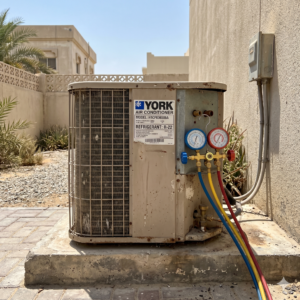
In high humidity environments like the UAE, steady condensation is expected. If water flows smoothly outside, the system is likely working properly.
Abnormal AC Water
- Water pooling around the indoor unit
- Water inside the emergency pan (secondary drain pan)
- Ceiling stains or drywall bubbling
- Musty smell or mold growth
- AC shutting off unexpectedly
These signs indicate drainage failure or deeper system issues. Ignoring them can lead to ceiling collapse, wall damage, flooring repairs, and electrical risks.
Visual Guide to Key AC Components Related to Water
Understanding the basic layout helps you quickly compare what you see at home with how the system should function.
Drain Pan (Primary Pan)
Located directly beneath the evaporator coil. It collects condensation and directs it toward the primary drain line.
Primary Drain Line
The main pipe that carries water from the drain pan to the outside. This is where normal dripping should occur.
Secondary Overflow Line
A backup line designed to drain water if the primary line is blocked. If you see water dripping from a different pipe, it often means the primary drain is clogged.
Emergency Pan
Installed under attic units. If water collects here, the primary drainage system has failed.
Condensate Pump
Used when gravity drainage is not possible. If this pump fails, water backs up quickly.
Structured Troubleshooting Based on Symptoms
Symptom: Water Dripping Outside Normally
This is usually normal condensation. No action required unless the volume is excessive or accompanied by poor cooling.
Symptom: Water Pooling Around Indoor Unit
Likely causes:
- Clogged primary drain line
- Cracked or rusted drain pan
- Improper unit leveling
Symptom: Water in Emergency Pan
This indicates primary drain blockage. Immediate action is required to prevent ceiling damage.
Symptom: Ceiling Leaks Below Attic Unit
Possible causes:
- Overflow due to clogged drain
- Frozen evaporator coil melting rapidly
- Disconnected drain line
Symptom: Ice on Evaporator Coil + Water After Melting
Likely root causes:
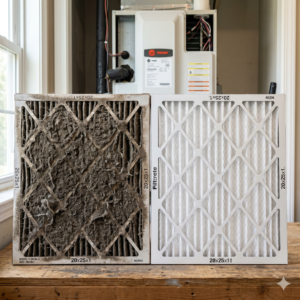
- Restricted airflow (dirty filter)
- Blocked return vents
- Low refrigerant levels
Root Causes Explained Clearly
Clogged Drain Line
The most common reason for AC water issues. Dust, algae, and debris block the line, preventing drainage.
Frozen Evaporator Coil
When airflow is restricted or refrigerant levels are low, coils freeze. Once they melt, excess water overwhelms the drain system.
Cracked or Rusted Drain Pan
Older units may have corroded pans that leak before water reaches the drain line.
Condensate Pump Failure
If your system relies on a pump and it stops working, water backs up rapidly.
Refrigerant-Related Issues
Low refrigerant reduces coil temperature excessively, contributing to freezing and overflow.
Step-by-Step DIY Guidance (Safe and Practical)
Before attempting anything, safety comes first.
Step 1: Shut Down the System
Turn off the thermostat and cut power at the breaker to prevent electrical risk.
Step 2: Clear Standing Water
Use towels or a wet/dry vacuum to remove water around the unit.
Step 3: Use Wet/Dry Vacuum on Exterior Drain Outlet
Attach vacuum hose to the outdoor drain pipe and seal tightly. Run for several minutes to pull out blockage.
Step 4: Flush the Drain Line
Pour a cleaning solution (vinegar or mild AC-safe cleaner) into the indoor drain access point to break down buildup.
Step 5: Inspect and Replace Air Filters
Dirty filters restrict airflow and contribute to freezing. Replace if clogged.
Step 6: Check Overflow Port
If water drains from the secondary line, blockage likely remains in the primary.
If these steps do not resolve the issue, professional inspection is required.
Immediate Damage-Prevention Checklist
- Turn off the AC immediately if ceiling staining appears
- Remove valuables from under leak area
- Place bucket under dripping area
- Dry affected flooring quickly to prevent warping
- Do not ignore attic overflow pans
Ceiling repair, drywall replacement, and flooring restoration often cost far more than timely AC repair.
When Professional Repair Is Necessary
Some AC water issues go beyond DIY cleaning.
Issue vs Solution Overview
- Persistent drain blockage: professional drain clearing and line inspection
- Cracked drain pan: pan replacement
- Frozen coil due to refrigerant leak: leak detection and system recharge
- Condensate pump failure: pump replacement
- Repeated ceiling leaks: full drainage and airflow evaluation
Rather than listing exact numbers, the repair cost depends on the severity and component involved. Minor drain clearing is typically lower cost, while pump replacement or refrigerant-related repairs fall into higher categories. The best approach is inspection first, then a clear explanation of the repair scope and cost before work begins.
Why AC Water Problems Should Not Be Ignored
Ignoring abnormal AC water can result in:
- Mold growth inside walls
- Structural ceiling damage
- Electrical hazards
- Reduced system lifespan
- Higher energy consumption
Acting early prevents these risks and protects both your property and health.
When AC Water Needs Proper Handling
AC water issues may seem small at first, but when left unresolved they can quickly damage ceilings, walls, flooring, and indoor air quality. Mold growth, electrical risk, and repeated system strain are common outcomes of delayed action. Bio On Air can assess whether the issue is a simple drainage blockage or a deeper airflow or refrigerant-related problem. Early inspection often prevents expensive structural repairs. If you notice unusual water behavior, you can use the WhatsApp or Call button at the top right of this page to discuss your situation with our team before the damage spreads.
Conclusion
AC water is normal when it drains properly outside, but abnormal when it pools, overflows, or damages ceilings. Understanding the difference between condensation and drainage failure allows you to act confidently. Simple DIY steps can solve minor blockages, but deeper issues require professional handling. The key is early action—because water damage spreads silently and becomes expensive quickly.