




Searching for change ac filter home usually means you want a quick, safe, and correct way to improve cooling, air quality, and system performance without calling a technician. For many homeowners, the confusion starts immediately: where is the filter located, which side faces the airflow, what size is correct, and how often it should actually be replaced. This guide is written as a practical, fast-start home reference to help you change your AC filter properly, understand what the filter is really doing, and avoid mistakes that can quietly reduce airflow, strain the system, or worsen indoor air quality.
Table of Contents
ToggleFast-Start Guide: What You Need Before Changing an AC Filter
Before opening your AC unit or return grille, it helps to prepare a few basics. Changing an AC filter is simple, but doing it correctly matters.
- A replacement filter with the correct size
- A flashlight or phone light
- A clean cloth or vacuum for light dust
- A marker or label to note the installation date
Turn off the AC before removing the filter. This prevents dust from being pulled into the system and protects internal components while the filter slot is open.
How to Identify the AC Filter Location at Home
One of the most common pain points for homeowners searching change ac filter home is simply finding the filter. AC filters are not always located inside the indoor unit itself.
Typical filter locations include:
- Return air grille: often on a wall or ceiling, especially in central AC systems
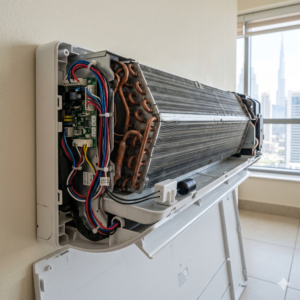
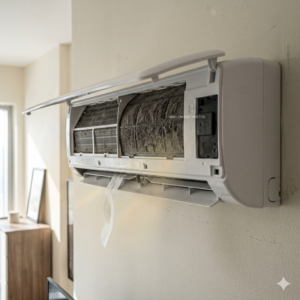
- Indoor unit slot: behind the front panel of split AC systems
- Air handler cabinet: near the blower in some installations
If you see a large grille that pulls air into the system, that is usually where the filter sits. The purpose of the filter is to clean air before it enters the AC, not after it is cooled.
If you are unsure, trace where air is being pulled in rather than blown out. Supply vents push air; return vents pull air.
How to Remove the Old AC Filter Safely
Once you locate the filter, slide it out gently. Avoid shaking it, as this can release dust back into the room.
As you remove the filter, take a moment to note:
- Which side faces inward
- How tightly it fits
- Whether it looks warped or clogged
If the filter resists removal, do not force it. Some housings have clips or covers that need to be opened first.
Understanding Airflow Direction (The Most Common Mistake)
Incorrect airflow direction is one of the most frequent errors when people change AC filters at home. Every disposable filter has an arrow printed on the frame.
The arrow always points toward the AC unit, meaning in the direction of airflow. If installed backward:
- Dust may bypass the filter
- Airflow resistance can increase
- The filter may collapse or bend
A simple rule: the arrow should point from the return grille into the system, never toward the room.
How to Read AC Filter Size Correctly
Filter size is usually printed on the edge of the filter in this format:
Length × Width × Thickness (for example, 20 × 25 × 1)
Measurements are in inches. Thickness matters as much as length and width. Using the wrong thickness can cause:
- Air bypass around the filter
- Difficulty closing the filter slot
- Increased strain on the blower
If the size is not printed or unreadable, measure the filter opening directly. Always match the size as closely as possible.
MERV Ratings Explained in Simple Terms
MERV (Minimum Efficiency Reporting Value) ratings describe how well a filter captures particles. This is where many homeowners get confused.
Higher MERV does not automatically mean better for every home.
What MERV Ratings Really Mean
- Lower MERV: less resistance, captures larger dust particles
- Higher MERV: captures smaller particles but restricts airflow more
The key trade-off is filtration performance versus airflow.
Recommended MERV Ranges for Typical Homes
- MERV 6–8: basic dust protection, good airflow
- MERV 9–11: balanced choice for most homes
- MERV 12–13: better particle capture, may reduce airflow if system is not designed for it
Using a filter that is too restrictive can cause weak airflow, coil freezing, and higher system strain. For most residential systems, mid-range MERV offers the best balance.
Basic AC Filter Types and How They Differ
Understanding filter types helps you choose the right replacement instead of guessing.
- Fiberglass filters: low cost, low filtration, minimal resistance
- Pleated filters: better particle capture, moderate airflow resistance
- Electrostatic filters: attract particles using static charge
- Washable filters: reusable, require proper drying and cleaning
Pleated filters are the most common choice for homes because they balance protection and airflow.
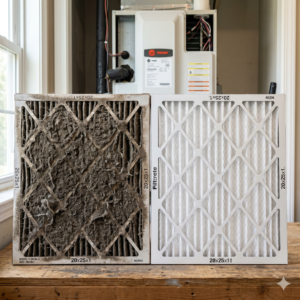
Visual Condition Check: Is the Filter Still Usable?
Before throwing away the old filter, inspect it closely. This helps you understand whether your replacement timing is correct.
Filter Is Still Usable
- Light gray dust only
- No bending or clogging
- Air can pass through easily
Filter Needs Replacement Soon
- Darker gray or uneven dust buildup
- Noticeable airflow reduction
- Dust visible between pleats
Filter Signals a Deeper System Issue
- Black or oily residue
- Wet or moldy smell
- Filter collapsing or heavily clogged quickly
If filters clog unusually fast, it may indicate excessive dust, poor airflow design, or internal system contamination.
How to Install the New AC Filter Correctly
Slide the new filter into place following the airflow arrow. Make sure:
- The filter sits flat and snug
- No gaps exist around the edges
- The grille or panel closes properly
Once installed, turn the AC back on and listen for unusual noise. Proper installation should not change sound levels.
Practical Benefits of Regular AC Filter Changes
Changing AC filters regularly offers benefits that go beyond basic cleanliness.
Energy Efficiency Support
Clean filters allow air to move freely. This helps the system maintain stable airflow without forcing the blower to work harder.
System Protection
Filters protect internal components such as coils and blowers from dust buildup. Cleaner components experience less wear.
Indoor Air Quality Improvement
Filters reduce airborne dust and particles, making indoor air feel fresher and more comfortable.
These benefits compound over time when filter changes become routine.
How Often Should You Change AC Filters at Home?
There is no single rule for everyone. Frequency depends on how your home is used.
General Guidelines
- Light use, no pets: every 2–3 months
- Regular use: every 1–2 months
- Homes with pets: monthly or sooner
- High occupancy or frequent AC use: more frequent checks
The best habit is inspection, not guessing. Check the filter monthly and replace when needed.
Lifestyle Factors That Affect Filter Replacement Frequency
Several daily habits affect how quickly filters load with dust.
- Pets shedding hair and dander
- Windows opened frequently
- Home renovations or nearby construction
- High foot traffic
More airborne particles mean faster filter saturation.
Homeowner Pro Tips to Make Filter Changes Easier
Label the Installation Date
Write the install date on the filter frame. This removes guesswork later.
Set Simple Reminders
Calendar reminders help maintain consistency without relying on memory.
Clean Intake Grilles
Wipe or vacuum return grilles when changing filters. This ensures unobstructed airflow.
Buy Filters in Multipacks
Having replacements on hand reduces delays.
When Filter Changes Are Not Enough
If airflow remains weak or air smells persist after changing the filter, deeper system cleaning or inspection may be needed. Filters protect the system, but they do not clean internal components.
Ignoring these signs can lead to coil contamination, moisture problems, or system strain.
Conclusion
Learning how to change ac filter home properly is one of the simplest and most effective steps you can take to protect your AC system and improve indoor comfort. When done correctly, filter changes support airflow, protect internal components, and help maintain healthier air inside your home.
The key is understanding—not guessing. Knowing where the filter is located, how airflow direction works, what size and MERV rating suit your system, and how to visually assess filter condition gives you control over routine maintenance. Combined with simple habits like labeling install dates, setting reminders, and keeping intake grilles clean, regular filter changes can extend AC system lifespan and reduce unexpected issues.
When filter changes no longer solve airflow or air quality concerns, it is a signal to look deeper rather than forcing the system to work harder. Used as part of a thoughtful home maintenance routine, proper AC filter care becomes a quiet but powerful way to keep your home comfortable year-round.