Searching for ac switch repair usually means your AC suddenly refuses to turn on, shuts down without warning, or ignores your commands completely. The frustration comes from one simple question that is not actually simple at all: which “switch” is really failing? Many AC systems have several different switches and controls that people casually call “the switch,” and guessing the wrong one can lead to wasted time, unnecessary repairs, or even electrical danger. This guide is designed to help you clearly identify the failing switch, rule out false alarms, understand what is safe to check yourself, and know exactly when to stop and call a professional—without guesswork.
Table of Contents
Toggle#1 Identify Which “AC Switch” Is Actually the Problem
The biggest mistake people make with ac switch repair is assuming there is only one switch involved. In reality, modern AC systems rely on multiple switches and control points that work together. If any one of them fails or trips, the AC may stop working entirely.
Before thinking about repair, you need to identify which switch category you are dealing with. The most common ones are:
- Thermostat control: the user-facing control that sends signals to the AC.
- Circuit breaker: the power source protection switch in your electrical panel.
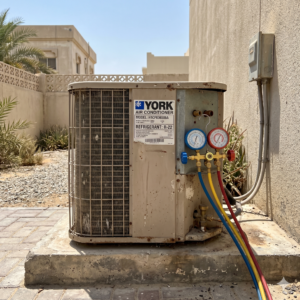
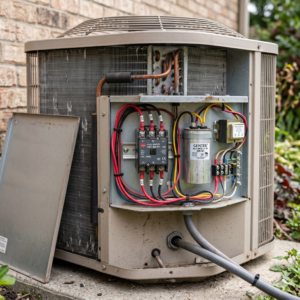
- Outdoor disconnect switch: the safety cut-off near the outdoor unit.
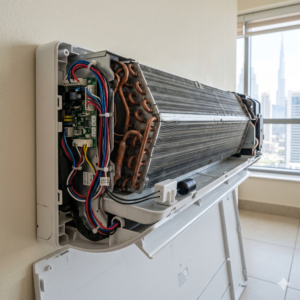
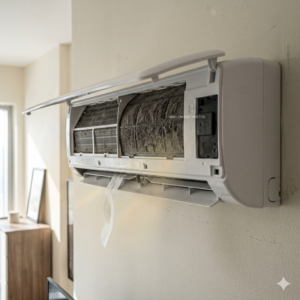
- Safety float switch: a moisture-related safety device linked to the drain line.
Each of these behaves differently when it fails, and each has different risk levels. Treating them all as “the AC switch” is what causes confusion and unnecessary damage.
Thermostat Control Issues
If your AC does not respond to temperature changes, ignores mode changes, or the display behaves strangely, the issue may be the thermostat rather than a power switch. Common signs include:
- Screen is blank or flickering
- Buttons do not respond
- Temperature setting changes but AC does nothing
This is a control signal issue, not a power delivery issue. Repair approaches here are very different from electrical switch repair.
Circuit Breaker Power Source
If the AC is completely dead—no sound, no display, no response—the circuit breaker is often the first place to check. Breakers trip to protect wiring from overload or short circuits.
A tripped breaker does not always mean the breaker itself is faulty. It can also indicate:
- Temporary overload
- Power surge
- Underlying electrical fault
Outdoor Disconnect Switch
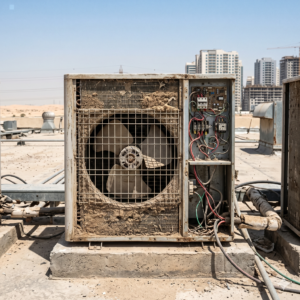
This is a manual safety switch located near the outdoor unit. It allows technicians to safely cut power during service. Sometimes it is accidentally switched off or becomes loose or corroded over time.
If indoor controls seem fine but the outdoor unit never starts, this switch becomes a prime suspect.
Safety Float Switch
This is one of the most misunderstood parts of ac switch repair. The float switch is designed to shut down the AC when the drain line is blocked and water backs up. It is a safety device, not a failure.
When triggered, it can look exactly like a broken switch, even though it is doing its job correctly.
#2 Is It Really Broken? Immediate Reality-Check Before Repair
Before touching tools or opening panels, you should first confirm whether the switch is actually broken or just reacting to a temporary condition. Many AC shutdowns are protective, not failures.
Basic Power Reset Behavior
Try a controlled power reset:
- Turn the thermostat off.
- Switch the AC breaker fully off.
- Wait at least 3–5 minutes.
- Turn the breaker back on, then the thermostat.
If the AC resumes normal operation, the issue may have been a temporary overload or control glitch, not a faulty switch.
Control Responsiveness Check
Check whether the thermostat responds logically:
- Does the display change when buttons are pressed?
- Does switching from cooling to off change system behavior?
- Does the fan mode respond independently?
If the controls respond but the AC does not start, the issue is likely downstream—power delivery or safety shutdown.
Drain-Related Shutdown Signs
A clogged drain can silently shut down your system via the float switch. Look for:
- Water near the indoor unit
- Dripping or damp areas
- AC shutting off shortly after starting
In these cases, repairing the “switch” without clearing the drain will not solve the problem.
#3 Safety-First DIY Overview for Basic Switch-Related Checks
Some aspects of ac switch repair can be checked safely, but only if strict safety rules are followed. Electricity does not forgive mistakes.
Absolute Power-Off Rules
Before touching anything:
- Turn off the AC from the thermostat.
- Switch off the circuit breaker supplying the AC.
- Confirm power is off—never assume.
If you are unsure which breaker controls the AC, stop here and do not proceed.
Basic Tools You May Need
- Insulated screwdriver
- Flashlight or headlamp
- Smartphone camera (for documentation)
No advanced tools should be used unless you have proper training.
Documentation Before Touching Wires
Always take clear photos before disconnecting or adjusting anything. This single step prevents one of the most common DIY failures: incorrect reconnection.
If you cannot confidently restore the wiring exactly as it was, do not proceed.
#4 What You Can Safely Check Without Repairing Anything
There are checks that involve observation rather than repair. These help narrow down the problem.
Breaker Condition
If the breaker trips again immediately after reset, do not keep resetting it. Repeated trips indicate a deeper electrical issue.
Outdoor Disconnect Position
Confirm the disconnect switch is fully engaged and not loose. Do not open it if you are unsure—visual confirmation is enough.
Float Switch Visual Inspection
Look for signs of water buildup near the drain pan. Clearing visible blockage (without dismantling wiring) may resolve the shutdown.
#5 Danger Signs That Mean Stop Immediately
This is the most important section for ac switch repair. Certain signs mean DIY should stop instantly.
- Burning smell or melted plastic
- Scorch marks near switches or wiring
- Buzzing or crackling sounds
- Repeated breaker trips
- Visible corrosion or moisture near electrical parts
These indicate electrical damage or high-risk conditions. Continuing DIY at this point can cause serious injury or system destruction.
#6 Confirming a Faulty Switch Without Guessing
One major pain point is uncertainty. People guess which switch is broken and replace the wrong part.
A proper diagnostic approach includes:
- Confirming power reaches the system
- Checking whether control signals are sent
- Verifying safety switches are open or closed as designed
Professionals use proper testing methods to verify continuity and response. Without this, replacing switches becomes trial and error.
If you want to stop guessing and confirm the fault accurately, professional AC repair diagnostics are often the safest path. You can review how structured diagnosis is handled through a dedicated AC repair service overview.
#7 DIY vs Professional Repair: Making the Right Decision
DIY and professional repair are not enemies—they serve different purposes.
When DIY Makes Sense
- Simple resets
- Basic visual checks
- Drain-related clearing when accessible
When Professional Repair Is the Better Choice
- Electrical switch replacement
- Control board or thermostat signal issues
- Repeated shutdowns without visible cause
- Any signs of electrical damage
Professional repair removes uncertainty. Instead of guessing, you get confirmation of the exact fault and a clear explanation of the solution. This often saves money by preventing repeated attempts and accidental damage.
#8 How to Prevent Switch-Related AC Problems in the Future
Most switch-related AC issues are triggered by secondary problems, not the switch itself.
- Keep drain lines clean to avoid float switch shutdowns.
- Schedule periodic inspections to catch wiring wear early.
- Avoid frequent manual power cycling.
- Use maintenance support to reduce sudden failures.
Preventive care dramatically reduces the chance of sudden shutdowns and emergency repairs.
When AC Switch Repair Should Be Handled Properly
Switch-related AC problems are often warning signs, not isolated failures. Ignoring them can lead to electrical damage, system instability, or complete AC shutdown during critical times. Bio On Air helps handle AC switch and control-related issues through careful diagnosis, safety-first repair, and clear explanations so you understand what failed and why. Acting early helps prevent escalation and protects both comfort and system integrity. If you want to confirm whether your AC switch is truly faulty or just reacting to a safety condition, you can use the WhatsApp or Call button at the top right of this page to discuss the situation with our team.
Conclusion
AC switch repair is rarely as simple as replacing a single switch. Modern AC systems rely on multiple control and safety components, each with a specific role. Understanding whether the issue lies in the thermostat, breaker, outdoor disconnect, or float switch helps you avoid unnecessary repairs and dangerous mistakes.
By starting with identification, confirming whether the shutdown is protective or faulty, following strict safety rules, and knowing when to stop DIY, you can make informed decisions instead of guessing. When uncertainty or risk appears, professional diagnosis is not an expense—it is a safeguard. In a climate where AC reliability is essential, handling switch-related issues correctly protects your comfort, your safety, and your long-term costs.