




When people search duct cleaning does it work, they are usually not looking for a sales pitch. They are looking for clarity. Many homeowners and tenants feel skeptical because they hear mixed opinions: some say duct cleaning is essential for health, others say it is a scam. The confusion grows when promises sound exaggerated while real results feel unclear. This article is a reality check. It separates marketing claims from real outcomes, explains when duct cleaning actually works, when it does not, and what problems it can and cannot solve—so you can make a decision based on evidence, not pressure.
Table of Contents
ToggleWhat “Does It Work” Actually Means in Duct Cleaning
The question duct cleaning does it work is often misunderstood because “work” can mean different things to different people. Before deciding whether duct cleaning is useful, expectations must be clearly defined.
In real-world HVAC systems, duct cleaning can only be evaluated based on specific outcomes, not vague promises. These outcomes usually fall into four categories:
- Dust reduction inside the living or working space
- Improvement of indoor air quality
- Removal of persistent odors
- Impact on AC efficiency and airflow
Duct cleaning does not magically eliminate all dust, instantly cure allergies, or drastically lower electricity bills. When people feel disappointed, it is often because expectations were set incorrectly from the beginning.
Why Many People Believe Duct Cleaning Is a Scam
Skepticism around duct cleaning does not come from nowhere. It is largely driven by poor-quality services and misleading claims.
Common reasons people feel duct cleaning “does not work” include:
- The service only cleans visible vents, not the duct system
- No before-and-after verification is provided
- The cleaning process takes an unrealistically short time
- There is no improvement in dust, smell, or comfort afterward
In many cases, what is sold as duct cleaning is actually vent vacuuming. This removes surface dust near the grille but leaves most of the duct network untouched. When results are minimal, the conclusion becomes “duct cleaning is useless,” even though proper duct cleaning was never performed.
Low-Quality Duct Cleaning Practices to Watch Out For
Understanding poor practices helps explain why duct cleaning often fails to deliver results.
Common low-quality approaches include:
- Vent-only cleaning: cleaning supply vents without addressing main trunk lines
- No negative pressure: dust is loosened but not fully extracted
- Single-tool approach: using only a basic vacuum without agitation tools
- Ignoring HVAC components: coils, blower, and drain pan are not addressed
These methods may make vents look cleaner but do not meaningfully reduce contaminants inside the system. In some cases, they can even worsen indoor air quality by dislodging debris without capturing it.
When Duct Cleaning Actually Works
Duct cleaning does work—but only under specific conditions. It is not a universal solution, and it is not something every home needs regularly.
Situations where duct cleaning is genuinely effective include:
- Post-renovation or construction: fine dust, cement particles, and debris often settle deep inside ducts
- Pest contamination: droppings, nesting materials, or insect debris inside ducts
- Persistent odors: smells that return quickly after basic cleaning
- Visible buildup: dust or debris clearly visible inside ducts, not just on vents
In these scenarios, duct cleaning addresses a real contamination problem. The key is that the issue exists inside the duct network itself, not just in the room.
Duct Cleaning and Dust Reduction: What to Expect
One of the most common expectations is reduced dust in the home. This expectation needs adjustment.
Duct cleaning can help reduce recirculated dust if:
- The ducts contain significant accumulated debris
- The system is airtight enough to prevent new dust intrusion
- Filters are properly installed and maintained afterward
However, dust in a home comes from many sources: outdoor air, clothing fibers, furniture, human activity, and open doors or windows. Duct cleaning alone cannot eliminate these sources.
If dust levels return quickly after cleaning, the root cause may be poor filtration or duct leakage rather than dirty ducts.
Duct Cleaning and Indoor Air Quality
Indoor air quality improvement is another area where expectations must be realistic.
Duct cleaning can improve air quality when:
- There is microbial growth inside the ductwork
- Fine debris is being actively circulated through the system
- Contaminants are trapped in areas unreachable by filters
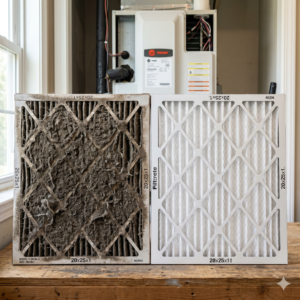
It does not, however, replace proper filtration or ventilation. If the HVAC system uses low-quality filters or has air leaks pulling contaminants from walls or ceilings, cleaning alone will not solve the problem.
In many cases, upgrading filters or adding air purification provides more consistent air quality improvement than duct cleaning by itself.
Odor Removal: One of the Strongest Use Cases
Odor removal is one area where duct cleaning often delivers noticeable results—when done correctly.
Persistent smells may come from:
- Mold or mildew growth inside ducts
- Pest contamination
- Moisture accumulation near drain pans
- Residues from smoking or cooking
When the odor source is inside the duct system, cleaning combined with proper sanitisation can significantly reduce or eliminate the smell. However, if the odor originates from carpets, walls, or furniture, duct cleaning will have limited effect.
Does Duct Cleaning Improve Energy Efficiency?
This is one of the most misunderstood claims.
Duct cleaning alone rarely produces dramatic energy savings. Efficiency improvements usually occur only when:
- Dust buildup significantly restricts airflow
- Debris interferes with dampers or airflow balance
- Cleaning is combined with coil cleaning and maintenance
More often, energy losses are caused by:
- Leaky ducts
- Poor insulation
- Clogged or low-quality filters
In these cases, duct sealing or maintenance delivers better efficiency gains than cleaning alone.
What Real, Effective Duct Cleaning Actually Includes
To answer duct cleaning does it work accurately, it is important to understand what a proper process looks like.
An effective duct cleaning process should include:
- Full-system negative pressure: to prevent debris from spreading
- Mechanical agitation: brushes or air whips to dislodge buildup
- Main trunk line cleaning: not just branch ducts
- Return and supply paths: both sides of the airflow
- HVAC component attention: blower, coil access areas, and drain pan where relevant
Cleaning only the vents does not meet these criteria and should not be considered real duct cleaning.
Claims Versus Real Outcomes
Understanding the difference between marketing claims and realistic outcomes prevents disappointment.
| Common Claim | Realistic Outcome |
|---|---|
| “Removes all dust forever” | Reduces existing duct contamination; new dust still enters from daily activity |
| “Cures allergies completely” | May reduce one source of allergens if ducts are contaminated |
| “Cuts energy bills significantly” | Minor improvement only if airflow was restricted |
| “One-time solution” | Effectiveness depends on maintenance, filtration, and duct condition |
Why Routine Duct Cleaning Is Not Always Recommended
Routine duct cleaning on a fixed schedule is often unnecessary. If ducts are clean, sealed, and well-filtered, cleaning them repeatedly adds little value.
This is why reputable professionals do not recommend duct cleaning unless there is evidence of a problem. Over-cleaning can even introduce risks if done improperly.
Alternatives That May Solve the Real Problem Better
Sometimes, duct cleaning is not the best solution. Better alternatives may include:
- Upgrading air filters: higher-efficiency filters reduce circulating dust
- Air purification: helps manage airborne particles continuously
- Duct sealing: prevents dust intrusion from ceilings or walls
- Regular AC maintenance: addresses airflow and hygiene at the source
These options often provide more consistent results, especially for dust and air quality issues.
How to Evaluate Whether Duct Cleaning Is Worth It for You
Instead of asking “does duct cleaning work,” a better question is “does it solve my specific problem.”
Consider duct cleaning if:
- You can see debris inside ducts
- There was recent renovation or pest activity
- Odors persist despite basic cleaning
- Airflow feels restricted without another clear cause
If none of these apply, focus first on filtration, sealing, and maintenance.
Pricing Without Promotional Guarantees
Duct cleaning pricing varies based on property size, duct complexity, and contamination level. A realistic approach to pricing focuses on scope, not guarantees.
Be cautious of extremely low prices tied to big promises. Effective duct cleaning takes time, equipment, and skilled labor. The value lies in solving a real problem, not in promises of universal improvement.
Conclusion
So, duct cleaning does it work? The honest answer is: sometimes, and only when it addresses a real issue inside the duct system. Duct cleaning is not a scam by definition, but it becomes ineffective when done poorly or sold as a cure-all solution.
When there is post-renovation debris, pest contamination, persistent odors, or visible buildup, proper duct cleaning can make a meaningful difference. When dust and air quality problems come from filtration, leakage, or system design, other solutions may be more effective.
The key is clarity. Understand what problem you are trying to solve, verify that the contamination exists, and evaluate whether cleaning is the right tool. With realistic expectations and the right process, duct cleaning can be a valid solution—but it should never be sold as a universal one.