




Duct cleaning tips are often searched by homeowners who want cleaner air, better airflow, and fewer allergy symptoms—without falling into unnecessary services or unsafe DIY mistakes. Light dust inside ducts is normal, so the real challenge is knowing what you can safely do yourself, what tools actually help, how to avoid scams, and when cleaning is not needed at all. This guide breaks it down clearly, focusing on safe homeowner actions, practical checks, and honest decision-making so you can protect indoor air quality without wasting money or risking damage.
Table of Contents
ToggleWhat Duct Cleaning Really Means for Homeowners
Duct cleaning is not about making ducts look brand new. Its purpose is to remove debris that interferes with airflow or contaminates air—such as heavy dust accumulation, debris from renovation, mold growth due to moisture, or pest residue. Many homes have light dust in ducts that does not affect performance or health. Cleaning becomes meaningful only when there is a clear reason.
Understanding this baseline helps you avoid two common problems: over-cleaning (paying for work that adds no value) and unsafe DIY attempts that damage duct liners, insulation, or seals. The sections below focus on what you can safely do, what to avoid, and how to decide next steps.
Safe DIY Duct Cleaning Actions You Can Do First
Homeowners can improve air quality and airflow with a few safe, low-risk actions. These steps address the most common sources of dust entering rooms without opening sealed duct systems or using aggressive tools.
Clean Supply and Return Registers First
Registers (the visible grilles on walls, floors, or ceilings) collect dust faster than the ducts themselves. Cleaning them regularly reduces dust recirculation.
- Turn off the HVAC system before cleaning.
- Remove the grille and wash it with warm water and mild detergent.
- Let it dry fully before reinstalling.
- Wipe the surrounding wall or floor to remove settled dust.
This simple step often produces noticeable improvement, especially in rooms where dust builds up quickly.
Light Vacuuming Inside Reachable Duct Sections
You can vacuum the short, straight section just behind the register—only where it is clearly reachable.
- Use a household vacuum with a hose and soft brush attachment.
- Do not push tools deep into the duct.
- Avoid scraping or brushing duct liners.
The goal is to remove loose debris near the opening, not to clean the entire duct run. Going deeper without proper equipment risks damaging the system.
Choose the Right Air Filter Without Restricting Airflow
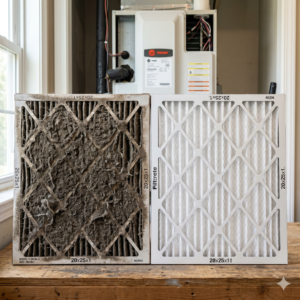
Filters are your first line of defense. The wrong filter can reduce airflow and strain the system.
- Choose a filter with a balanced MERV rating suitable for your system.
- Avoid very high-restriction filters unless your system is designed for them.
- Replace filters on schedule, not only when they look dirty.
Improper filters are a common cause of dust buildup and airflow complaints that get mistaken for duct contamination.
Basic Duct Maintenance Tools Worth Owning
You do not need specialized machines to maintain ducts at a basic level. A small set of tools can help you manage visible issues safely.
Cleaning and Inspection Essentials
- Microfiber cloths for grilles and accessible surfaces.
- A household vacuum with soft brush attachment.
- A flashlight to inspect visible sections.
Sealing Materials for Visible Leaks
Air leaks near registers or accessible joints pull dust into the system.
- Mastic sealant for visible gaps (apply sparingly).
- UL-rated foil tape (not standard duct tape).
Seal only what you can clearly see and reach. Do not open walls or ceilings.
Airflow Management Accessories (Use With Caution)
- Vent deflectors to direct air away from walls or windows.
- Balancing dampers if already installed and accessible.
Avoid over-adjusting vents. Closing too many registers can increase pressure and worsen dust pull-in.
Insider Guidance to Spot Duct Cleaning Scams
Duct cleaning is one of the most mis-sold HVAC services. Knowing how professionals work helps you identify red flags.
Evaluate the Promised Service Duration
Real duct cleaning takes time. If a service claims to clean an entire home in 30–60 minutes, be cautious.
- Whole-home cleaning typically requires several hours.
- Time depends on property size and duct complexity.
Assess the Cleaning Method Quality
Quality cleaning is methodical, not cosmetic.
- Surface vacuuming at registers only is not duct cleaning.
- Brushing should be controlled, not aggressive.
System-Wide Negative Pressure Is a Key Indicator
Professional cleaning uses controlled negative pressure to pull debris out safely.
- Without negative pressure, debris can spread into rooms.
- Portable vacuums alone are insufficient for full systems.
Proof of Work Should Be Internal, Not Just Visual
Be wary of “before and after” photos showing only clean registers.
- Ask for documentation of internal sections.
- Look for evidence across main trunks and branches.
Professional documentation focuses on what was removed, not just what looks shiny.
When Duct Cleaning Should Be Skipped
Not every home needs duct cleaning. In many cases, cleaning adds no value and may introduce risk.
Light Dust Alone Is Normal
A thin layer of dust inside ducts does not mean contamination. If airflow is strong and rooms stay clean with regular housekeeping, cleaning is unnecessary.
No Airflow Issues or Odors
If there are no signs of restricted airflow, persistent odors, or moisture, focus on filters and register cleaning instead.
No Evidence of Contamination or Infestation
Without mold growth, pest activity, or renovation debris, professional cleaning may be postponed.
Recently Cleaned or New Systems
Newly installed or recently serviced systems rarely benefit from immediate cleaning.
A Practical At-Home Dust Test to Decide Next Steps
This simple test helps you judge whether DIY care is sufficient.
- Clean registers thoroughly.
- Install a new, appropriate filter.
- Run the system normally for 7–10 days.
Then check:
- Do registers quickly show thick dust again?
- Is airflow weaker than before?
- Do odors persist?
If yes, deeper issues may exist. If no, routine maintenance is likely enough.
Situations That Justify Professional Duct Cleaning
Professional cleaning becomes reasonable when specific conditions are present.
- Visible mold growth inside ducts or near coils.
- Persistent odors that cleaning registers cannot fix.
- Heavy debris after renovation or construction.
- Confirmed pest infestation.
- Severe airflow imbalance across rooms.
In these cases, professional tools and methods are needed to avoid spreading contaminants.
Routine Duct Maintenance Checklist
Use this checklist to keep ducts in good condition over time.
- Change or clean filters on schedule.
- Clean supply and return grilles every 1–3 months.
- Inspect visible duct sections and seals periodically.
- Monitor airflow and odors seasonally.
- Plan professional inspection if symptoms persist.
Long-Term Timing for Professional Duct Cleaning
There is no universal schedule. For most homes, professional duct cleaning is considered every few years—or only when conditions justify it. Homes with pets, smokers, allergies, or recent renovations may require it sooner.
The key is decision-making based on evidence, not marketing.
When to Stop DIY and Tell the Price
DIY duct care has limits. Stop and consult professionals when:
- Dust returns rapidly despite proper filters.
- Odors persist after basic cleaning.
- You see signs of moisture or mold.
- Airflow remains uneven across rooms.
At that point, continuing DIY attempts risks damage and wasted time. Getting a clear inspection and price discussion is the smarter move.
Conclusion
Effective duct cleaning tips are about clarity and restraint. Clean what you can safely reach, manage airflow with the right filters, and seal visible leaks—but avoid aggressive tools and unnecessary services. Learn how to spot scams by focusing on methods, duration, and proof of work rather than surface results. Most importantly, know when cleaning is unnecessary and when evidence supports professional help.
By following these principles, you protect indoor air quality, maintain airflow, and avoid costly mistakes. Duct care works best when it is measured, evidence-based, and aligned with how your system actually operates.