




An inline air duct fan is often searched by homeowners and facility managers who feel something is “off” with their airflow—rooms that never feel fresh, bathrooms that stay humid, HVAC systems that cool unevenly, or enclosed spaces where heat and odor build up faster than expected. Unlike surface-mounted exhaust fans, an inline air duct fan works quietly inside the ducting itself, making it a practical solution when ventilation problems need to be solved without adding noise or visual disruption.
Table of Contents
ToggleWhat an Inline Air Duct Fan Is and How It Works
An inline air duct fan is a mechanical ventilation device installed directly inside an air duct. Instead of pushing air from a wall or ceiling grille, it pulls or pushes air through the duct line itself. This design allows the fan to assist airflow over a longer distance and through more complex duct layouts.
The fan housing sits between duct sections, usually hidden above ceilings, in service shafts, or within mechanical rooms. Air flows through the fan rather than across it, which helps maintain stable pressure and reduces turbulence. This is why inline air duct fans are often quieter and more efficient than conventional exhaust fans.
Because of their placement, inline fans are commonly used as:
- Supplementary ventilation for homes with weak airflow
- Airflow boosters for HVAC systems
- Controlled ventilation for enclosed or sensitive environments
Problems an Inline Air Duct Fan Is Designed to Solve
Most people do not search for an inline air duct fan out of curiosity. They search because a specific problem keeps repeating. Understanding the problem first helps determine whether this type of fan is the right solution.
Weak or Inconsistent Airflow in Living Spaces
In many homes, airflow weakens as air travels farther from the main HVAC unit. Rooms at the end of duct runs may feel warmer, stuffier, or less ventilated. An inline air duct fan placed strategically along the duct can boost airflow to these areas without overworking the main system.
Excess Humidity and Poor Exhaust in Bathrooms
Bathrooms are one of the most common use cases. Standard ceiling exhaust fans often struggle to push moist air through long or winding ducts. An inline air duct fan helps extract humidity efficiently, reducing condensation, mold risk, and lingering odors.
Temperature Imbalance Across Rooms
When airflow is uneven, temperature control becomes inconsistent. Some rooms cool faster while others lag behind. Inline fans help stabilize airflow, allowing conditioned air to reach its intended zones more evenly.
Odor and Heat Control in Enclosed Spaces
In utility rooms, storage areas, or grow spaces, heat and odor can accumulate quickly. Inline air duct fans are often chosen because they can run continuously or on demand while maintaining low noise levels.
Why Homeowners and Professionals Choose Inline Air Duct Fans
There are many ventilation options available, but inline air duct fans are chosen for specific reasons that align closely with real-world pain points.
Quiet Operation
Because the fan motor is installed away from occupied spaces, noise is significantly reduced. This makes inline air duct fans suitable for bedrooms, bathrooms, and living areas where constant fan noise would be disruptive.
Hidden Installation
The fan remains out of sight, preserving interior aesthetics. Only grilles or vents are visible, which is especially important in finished residential spaces.
Targeted Airflow Control
Inline fans can be placed exactly where airflow assistance is needed, rather than forcing the entire system to work harder. This targeted approach often improves comfort without excessive energy use.
Versatility Across Use Cases
The same basic fan concept can support bathroom ventilation, HVAC airflow boosting, or controlled environments, depending on how it is configured and controlled.
Understanding Selection Basics Without Overcomplication
Choosing the right inline air duct fan does not require memorizing technical formulas, but it does require understanding a few core principles.
Airflow Capacity Matching the Problem
The fan’s airflow capacity must align with the size of the space and the resistance of the duct system. A fan that is too weak will not solve the issue, while an oversized fan may create noise, pressure imbalance, or unnecessary energy use.
Instead of focusing on exact numbers, think in terms of purpose:
- Small spaces with short ducts need modest airflow assistance
- Long duct runs or multiple bends require stronger support
- Heat or odor-heavy spaces benefit from steady, controlled extraction
Motor Efficiency and Longevity
Motor type affects both performance and operating cost. Efficient motors generate less heat, operate more smoothly, and tend to last longer under continuous use. This becomes important when the fan runs daily or automatically.
Fan Design and Duct Compatibility
Not all inline fans perform the same in complex duct layouts. Some are better suited for straight runs, while others handle resistance from bends and branches more effectively. Matching fan design to duct complexity prevents airflow loss and vibration issues.
Estimating Needs Without Turning It Into a Math Exercise
One of the biggest concerns users have is choosing the “right size” fan. While professionals use calculations, homeowners can make reasonable decisions by focusing on symptoms and layout.
Ask these questions:
- Is airflow weak only at the end of the duct?
- Does humidity linger longer than expected?
- Is the duct run long or full of bends?
- Is the fan meant to run continuously or only when triggered?
If the answer to several of these is yes, an inline air duct fan is likely needed, and professional guidance can help refine the choice without trial and error.
Placement and Installation Strategy That Actually Works
Even the best inline air duct fan will underperform if installed poorly. Placement and installation strategy matter as much as fan selection.
Optimal Distance From the Source
Installing the fan too close to the vent may increase noise and turbulence. Too far away, and airflow assistance weakens. A balanced distance allows smooth air movement while keeping sound levels low.
Correct Mounting Orientation
The fan must be aligned with airflow direction. Incorrect orientation reduces efficiency and can strain the motor. Secure mounting also prevents vibration transfer to duct walls.
Condensation Prevention
In humid environments, condensation can form inside ducts. Proper insulation, slope consideration, and drainage planning help prevent moisture buildup that could damage the fan or ducting.
Efficient Duct Layout
Reducing sharp bends, unnecessary length, and restrictions improves airflow. Sometimes minor duct adjustments deliver significant performance gains when combined with an inline fan.
Automation and Control Options That Improve Comfort
Modern inline air duct fans are often paired with control systems that make them more efficient and user-friendly.
Humidity-Based Activation
In bathrooms or laundry areas, humidity sensors trigger the fan automatically when moisture rises and turn it off once levels normalize. This prevents overuse and protects indoor air quality.
Temperature-Based Control
For heat management, temperature sensors activate ventilation when thresholds are reached. This is common in enclosed or equipment-heavy spaces.
Variable Speed Management
Speed controllers allow users to balance airflow, noise, and energy use. Lower speeds reduce noise and extend motor life, while higher speeds handle peak demand.
Common Troubleshooting Scenarios and What They Mean
Understanding common issues helps users know when maintenance is needed and when professional inspection is the better choice.
Vibration or Rattling
This often indicates loose mounting, misalignment, or duct resonance. Addressing mounting stability usually resolves the issue.
Unexpected Noise Increase
Noise may increase due to debris buildup, worn components, or airflow restriction. Early cleaning and inspection prevent further damage.
Reduced Airflow Over Time
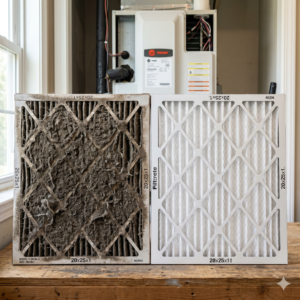
Dust accumulation in ducts or filters can reduce airflow. Routine inspection and cleaning restore performance.
Fan Runs but Problem Persists
This may indicate incorrect placement, insufficient capacity, or a broader HVAC issue. In such cases, system-level evaluation is needed.
Routine Maintenance That Keeps Performance Stable
Inline air duct fans require minimal but consistent maintenance.
- Periodic inspection for dust and debris
- Checking mounting and vibration points
- Ensuring sensors and controls function correctly
Ignoring maintenance can shorten lifespan and reduce effectiveness, turning a good solution into a recurring problem.
Comparing Use-Case Paths to Choose the Right Configuration
To help readers decide quickly, it helps to compare common use cases and their typical needs.
Bathrooms and Moisture-Prone Areas
Priority: humidity control, quiet operation, automatic triggering. Inline fans paired with humidity sensors work best.
HVAC Airflow Support
Priority: airflow boosting, temperature balance, compatibility with existing ducts. Inline fans placed mid-run stabilize comfort.
Climate-Controlled or Enclosed Spaces
Priority: heat and odor management, continuous or scheduled operation. Inline fans with variable speed control offer flexibility.
When Professional Assessment Makes Sense
If airflow issues persist, duct layouts are complex, or automation integration is desired, professional evaluation helps avoid incorrect installation or sizing. In many cases, the fan is only one part of a broader airflow and indoor air quality solution.
Conclusion
An inline air duct fan is not just a piece of hardware. It is a targeted solution for specific airflow, humidity, and temperature challenges. When chosen and installed correctly, it improves comfort, protects indoor air quality, and reduces strain on HVAC systems.
The key is matching the fan to the problem, installing it with intent, and supporting it with proper control and maintenance. By understanding the different use-case paths—whether bathroom ventilation, HVAC airflow support, or controlled environments—you can quickly identify the configuration that makes the most sense for your space and avoid solutions that overcomplicate or underdeliver.