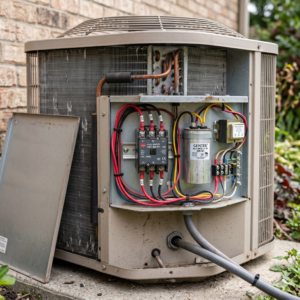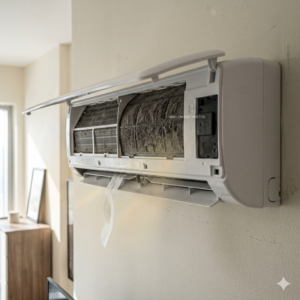





The term ac duct split often creates confusion because it sounds similar to both ductless split AC systems and full central air conditioning. Many homeowners and property managers search this term while trying to understand whether it is a different product, a marketing label, or a technical system type. In reality, an AC duct split usually refers to a concealed or slim-duct split system—a hybrid solution that combines the efficiency of a mini-split with the cleaner look of hidden ductwork.
Table of Contents
ToggleWhat Is an AC Duct Split System
An ac duct split is a type of split air conditioning system where the indoor unit is concealed above a ceiling, inside a bulkhead, or in an attic space, and distributes air through short, compact ducts to one or several rooms. Unlike a fully ducted central AC, the duct runs are limited in length and serve a smaller zone.
From a functional point of view, it sits between two familiar options:
- Ductless mini-split: visible indoor unit mounted on a wall or ceiling.
- Central AC: large air handler connected to extensive ductwork serving the entire property.
An AC duct split takes the outdoor unit and inverter efficiency of a mini-split, but hides the indoor unit and airflow distribution, giving a cleaner interior appearance without the complexity of a full central system.
Why People Get Confused About AC Duct Split
User confusion usually comes from how the term is used inconsistently. Some installers use “duct split” to describe any split AC with ducts, while others use it specifically for slim-duct or concealed units.
The key clarification is this: an ac duct split is not the same as a traditional central AC, and it is not the same as a standard wall-mounted split. It is designed for short duct runs, limited zones, and moderate airflow reach.
This distinction matters because choosing the wrong system type can lead to poor airflow, higher energy use, or maintenance difficulties later.
AC Duct Split vs Ductless Mini-Split
Understanding the difference between an AC duct split and a ductless mini-split helps resolve most user doubts.
| Aspect | AC Duct Split | Ductless Mini-Split |
|---|---|---|
| Indoor unit visibility | Hidden above ceiling or bulkhead | Visible wall or ceiling-mounted unit |
| Air distribution | Via short ducts and discreet grilles | Direct airflow from indoor unit |
| Interior aesthetics | Very clean, minimal visual impact | Unit always visible in room |
| Zoning | One small zone or closely connected rooms | One indoor unit per room or zone |
The main reason people choose an AC duct split over a ductless unit is visual integration. If you want cooling without seeing the AC unit, duct split systems are often the preferred compromise.
AC Duct Split vs Full Central AC
Another common comparison is between an ac duct split and a full central air conditioning system.
| Aspect | AC Duct Split | Central AC |
|---|---|---|
| Duct length | Short, compact ducts | Long, extensive duct network |
| Coverage | Single zone or few rooms | Entire property |
| Installation complexity | Moderate | High |
| Energy efficiency | High due to limited duct losses | Depends heavily on duct quality |
A duct split is not a replacement for central AC in large villas or buildings, but it is often ideal for apartments, townhouses, or selective zones where full ducting would be excessive.
Decision-Fit Checklist for AC Duct Split Systems
Before choosing an ac duct split, it helps to walk through a simple decision-fit checklist.
Visibility and Interior Design
If you want cooling without visible indoor units, a duct split is a strong candidate. Only slim grilles are visible, making it easier to integrate with modern interiors.
Zoning Capability
Duct split systems work best for one zone or a few closely connected rooms. If you need independent control for many rooms, multiple systems or a different approach may be better.
Installation Space
You need sufficient ceiling void, bulkhead, or attic space to place the concealed indoor unit. Limited space can restrict options.
Airflow Reach
These systems are designed for short duct runs. If airflow must travel long distances, performance will drop.
Home Layout Suitability
Open layouts or rooms located close together are ideal. Long corridors or widely separated rooms are not.
Technical Considerations You Should Not Ignore
Static Pressure Limits
An AC duct split has limited static pressure compared to central systems. This means it cannot push air effectively through long or complex ductwork. Exceeding these limits leads to weak airflow and noisy operation.
Ceiling or Attic Placement
Where the indoor unit is placed affects performance and serviceability. Poor placement can make future maintenance difficult and increase operating noise.
Filter Access and Servicing
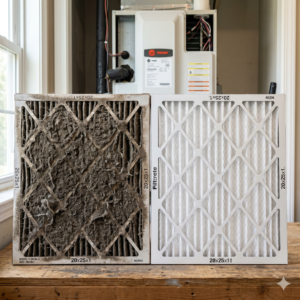
Filters still need regular cleaning. A good installation always includes accessible filter panels. Without this, maintenance becomes neglected, affecting air quality and efficiency.
Drainage and Insulation
Because the unit is concealed, proper drainage slope and insulation are critical. Poor drainage design can cause condensation leaks that damage ceilings and interiors.
Interior Aesthetic Integration
Supply and return grille placement must be planned carefully. Poorly positioned grilles can cause drafts, uneven cooling, or visual imbalance.
Cost Versus Value Perspective
When people ask about the cost of an ac duct split, the more useful question is often about value rather than numbers.
The total cost typically reflects:
- The indoor and outdoor unit type
- The complexity of concealed installation
- Duct fabrication and insulation quality
- Drainage and finishing work
While installation effort is higher than a ductless mini-split, operational efficiency is often better than poorly designed central systems. Energy savings come from shorter duct runs, inverter-driven compressors, and zoned cooling logic.
To understand current pricing ranges and what affects them, it is best to tell the price by reviewing updated service references rather than relying on assumptions. You can find structured information on system options through professional AC installation and replacement services.
Common Installation Risks to Avoid
Condensation Problems
Incorrect insulation or drainage design is one of the most common long-term issues. Condensation leaks often appear months after installation and damage ceilings.
Poor Duct Design
Oversized or poorly routed ducts reduce airflow efficiency. Short, well-sealed ducts are essential for duct split systems.
Inadequate Service Access
If technicians cannot access filters, coils, and drain trays easily, maintenance gets skipped. This directly affects reliability and air quality.
Ignoring Air Hygiene
Because the system is hidden, internal dust and moisture can build up unnoticed. Periodic cleaning and inspection are essential. In cases where hygiene becomes an issue, professional AC deep cleaning helps restore safe operation.
How AC Duct Split Fits Into Long-Term Comfort Planning
An ac duct split is often chosen by people who want a balance between aesthetics, efficiency, and practicality. It works best when planned as part of the interior and HVAC layout from the beginning.
For long-term reliability, pairing proper installation with regular inspection and care is important. Structured support such as AC maintenance and AMC services helps ensure that concealed systems continue to perform efficiently without hidden issues.
When Professional Guidance Matters
AC duct split systems are less forgiving than wall-mounted units when installed incorrectly. Small design mistakes can lead to airflow imbalance, condensation damage, or high noise levels.
Bio On Air helps address these risks through proper system assessment, installation planning, and long-term support. Problems related to airflow, hygiene, or concealed system access are best handled early before they affect performance and interiors. If you want to discuss whether an AC duct split is suitable for your layout, you can use the WhatsApp or Call button at the top right of this page for an initial conversation with our team.
Conclusion
The term ac duct split refers to a concealed or slim-duct split system that blends mini-split efficiency with hidden air distribution. It is not a full central AC, and it is not a standard ductless unit. Its value lies in clean interior aesthetics, efficient zoned cooling, and reduced duct losses—when designed correctly.
Understanding its limitations is just as important as understanding its benefits. Short duct runs, proper static pressure management, accessible servicing, and careful drainage design are critical to long-term reliability. When chosen for the right layout and installed with attention to detail, an AC duct split can be a highly effective and visually discreet cooling solution.