




When people compare split ac vs window ac maintenance, the question is rarely about which one cools better. The real concern is how much effort, time, and risk it takes to keep each system running reliably over the years. Many homeowners and tenants discover too late that maintenance requirements, DIY limits, and long-term upkeep costs can feel very different between split AC and window AC, even if both seem simple at first. This guide is written to clearly explain those differences, help you understand what you can safely maintain at home, and show when professional support becomes the smarter and safer choice.
Table of Contents
ToggleQuick Comparison: Split AC vs Window AC Maintenance
Before going deep, it helps to see the big picture. Split AC and window AC differ in structure, and that directly affects how they are maintained.
| Aspect | Split AC | Window AC |
|---|---|---|
| Maintenance effort | Moderate to high due to two units | Low to moderate due to single unit |
| DIY friendliness | Limited to basic tasks | More DIY-friendly for basic cleaning |
| Service frequency | Regular servicing recommended | Less frequent but still necessary |
| Technical risk | Higher if DIY goes too far | Lower but still present |
| Professional cost trend | Generally higher due to complexity | Generally lower due to simpler design |
This comparison already hints at why maintenance expectations differ. To truly understand it, we need to look at how each system is built and how air, moisture, and heat move through it.
Why Maintenance Is Different Between Split AC and Window AC
The maintenance difference between split AC and window AC is not about brand or cooling capacity. It comes down to physical design and system complexity.
A window AC is a single, compact unit. All components—cooling coil, compressor, fan, and drainage—are housed in one body. This makes access simpler and reduces the number of connections that can fail.
A split AC, on the other hand, is a two-unit system. It has:
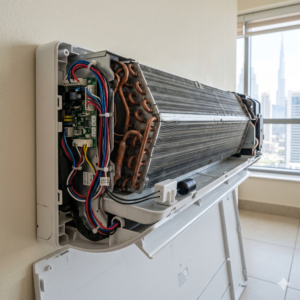
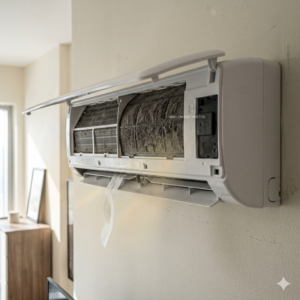
- An indoor unit that handles air circulation and cooling inside the room
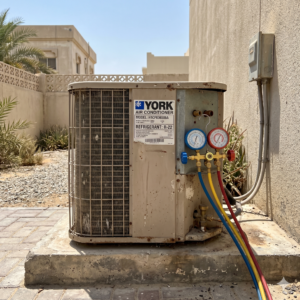
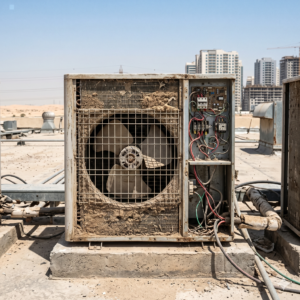
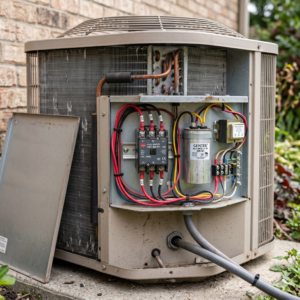
- An outdoor unit that releases heat and houses major mechanical components
These two units are connected by refrigerant lines, electrical wiring, and a drainage pipe. Each connection point adds maintenance responsibility and potential failure points.
This design difference explains why split AC maintenance usually requires more attention and why DIY limits appear sooner compared to window AC.
Maintenance Effort: What You Are Really Dealing With
When discussing split ac vs window ac maintenance, effort means how much physical access, time, and care are required to keep the unit healthy.
For window AC, most maintenance tasks happen at one location. You open the front panel, clean the filter, and visually inspect the interior. The outdoor side is usually just behind the wall, making it easier to check airflow and cleanliness.
Split AC requires effort in multiple areas:
- Indoor unit filter and coil cleanliness
- Drainage pipe condition and slope
- Outdoor unit clearance and cleanliness
- Electrical and refrigerant connections between units
Even if each task is not difficult on its own, the total effort adds up. This is why many users feel that split AC “needs more care,” especially in dusty or humid environments.
DIY Friendliness: What You Can Safely Do at Home
One of the biggest pain points for homeowners is knowing where DIY maintenance should stop. Doing too little leads to poor performance. Doing too much can cause damage.
Window AC DIY tasks that are generally safe:
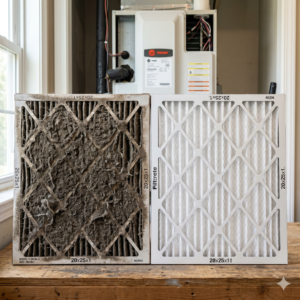
- Cleaning or washing the air filter
- Wiping accessible surfaces inside the unit
- Checking for visible dust buildup
- Ensuring the unit is properly tilted outward for drainage
Split AC DIY tasks that are generally safe:
- Cleaning the indoor air filter
- Wiping the front panel and vents
- Ensuring the outdoor unit is not blocked
- Visually checking the drain pipe outlet
Where DIY becomes risky is when users attempt coil disassembly, refrigerant handling, or electrical work. Split AC reaches this risk zone faster due to its multi-part system.
Service Frequency: How Often Each System Needs Attention
Maintenance frequency is not just about age. It is about environment, usage hours, and system exposure.
In general:
- Split AC benefits from more regular professional servicing, especially in dusty climates
- Window AC can tolerate slightly longer gaps between services, but neglect still leads to efficiency loss
Split AC indoor units trap fine dust on coils that are not easily accessible. Over time, this reduces heat exchange efficiency and forces the system to work harder.
Window AC units also collect dust, but their coil and blower are usually more accessible, making basic cleaning easier and delaying severe buildup.
Technical Risk: Understanding What Can Go Wrong
Technical risk refers to the chance of causing damage while attempting maintenance.
Split AC carries higher technical risk because:
- Incorrect drainage handling can cause water leaks inside walls
- Poor outdoor unit clearance can overheat the compressor
- Improper DIY cleaning can bend coils or damage sensors
Window AC technical risk is lower but not zero. Electrical components are still present, and improper tilting or sealing can lead to vibration, noise, or water ingress.
The key takeaway is not fear, but awareness. Knowing the risk helps you stop at the right point.
Airflow Paths and Drainage Design: Why Problems Appear
Airflow and drainage design explain many recurring maintenance issues.
Split AC airflow travels through a long path—from room air intake, across coils, through blowers, and out vents. Any dust buildup along this path reduces efficiency and can cause uneven cooling.
Drainage in split AC relies on a gravity-fed pipe. If slope is incorrect or algae builds up, water backs up and leaks indoors.
Window AC airflow and drainage are simpler. Water typically drains directly outside due to built-in tilt. This simplicity reduces failure points but does not eliminate them.
Home Maintenance Checklist for Split AC
Use this checklist to handle basic split AC upkeep safely:
- Clean air filters every few weeks depending on usage
- Wipe vents and front panel to reduce dust circulation
- Ensure outdoor unit has clear airflow on all sides
- Check drain pipe outlet for steady dripping during operation
- Listen for unusual noises from indoor or outdoor unit
These steps help maintain performance without crossing into risky territory.
Home Maintenance Checklist for Window AC
Window AC maintenance is simpler but still important:
- Clean or replace the air filter regularly
- Wipe internal surfaces and visible coils carefully
- Ensure the unit is slightly tilted outward
- Clean the chassis and outer vents
- Check sealing around the window frame
Good sealing reduces hot air infiltration and improves efficiency.
Cost Transparency: What Actually Drives Maintenance Cost
When comparing split ac vs window ac maintenance, cost is a major concern. Instead of focusing on numbers, it is more useful to understand what drives cost.
Key hidden factors include:
- Service type differences between basic cleaning and deep internal cleaning
- Cleaning methods required for coils and blowers
- Spare-part complexity and accessibility
- Labor time needed to access indoor and outdoor units
Split AC usually involves higher professional effort due to two units and more complex access. Window AC maintenance tends to be simpler and faster.
For accurate and updated service pricing, it is always better to ask for inspection-based estimates rather than assuming. You can check current references on our pricing page, as costs may change depending on system condition and service scope.
When to Stop DIY and Call a Professional
Knowing when to stop DIY is critical for safety and cost control.
You should stop DIY and call a professional if you notice:
- Electrical issues such as tripping breakers or burning smell
- Refrigerant-related symptoms like hissing sounds or oil stains
- Major performance drops despite clean filters
- Repeated water leakage or ice formation
These signs indicate issues that require tools, training, and experience beyond safe home maintenance.
Efficiency and Energy Savings from Regular Maintenance
Regular maintenance is not just about avoiding breakdowns. It directly affects energy efficiency.
A clean, well-maintained AC:
- Cools faster with less runtime
- Consumes less electricity
- Maintains consistent comfort
- Reduces strain on major components
Over time, these benefits often outweigh the effort and cost of proper maintenance.
When AC Maintenance Should Be Handled Properly
AC maintenance issues rarely resolve on their own. If neglected, small issues can reduce air quality, increase energy consumption, and lead to costly component failure. Bio On Air helps address both split AC and window AC maintenance through proper inspection, safe procedures, and clear explanations. Acting early is a preventive step that protects comfort and system lifespan. You can use the WhatsApp or Call button at the top right of this page to discuss your AC condition and understand the best next step.
Conclusion
Understanding split ac vs window ac maintenance is about knowing where effort, risk, and responsibility differ. Window AC is simpler and more DIY-friendly, but still needs regular care. Split AC offers better comfort and flexibility, but requires more attention due to its two-unit design and complex airflow and drainage paths.
The smartest approach is balanced: handle safe home maintenance confidently, but stop before crossing into risky repairs. When maintenance is done correctly—whether DIY or professional—it improves comfort, protects indoor air quality, and reduces long-term costs. Choosing the right maintenance approach early helps you enjoy reliable cooling without unnecessary stress.