




When comparing inverter ac vs split ac power consumption, most people are trying to answer one practical question: which option will actually save more electricity and money in daily use? In hot regions like the UAE, air conditioning is not used occasionally—it runs for many hours every day. Even small differences in efficiency, control, and usage patterns can translate into significant differences in monthly electricity bills, long-term costs, and system lifespan. This guide explains the comparison clearly, focusing on real-world power consumption, operating cost, installation considerations, and which option makes more sense for different usage needs.
Table of Contents
ToggleUnderstanding the Basic Difference Between Inverter AC and Split AC
Before comparing power consumption, it is important to clarify what these two terms actually mean, because many people mix them up.
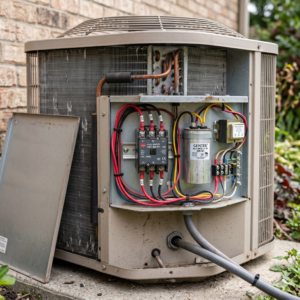
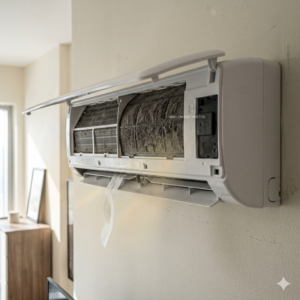
A split AC refers to the physical design: an indoor unit and an outdoor unit connected by refrigerant piping. Traditional split AC systems usually operate with a fixed-speed compressor. This means the compressor runs at full power when cooling is needed and shuts off completely once the set temperature is reached.
An inverter AC, on the other hand, refers to the type of compressor technology used. Inverter ACs are also split systems, but they use a variable-speed compressor. Instead of switching on and off repeatedly, the compressor adjusts its speed to maintain the desired temperature.
So the real comparison in inverter ac vs split ac power consumption is actually between inverter technology and non-inverter (fixed-speed) split AC systems.
How Power Consumption Works in a Non-Inverter Split AC
In a traditional non-inverter split AC, the compressor operates in a simple cycle:
- The AC turns on and the compressor runs at full capacity.
- The room cools down to the set temperature.
- The compressor turns off completely.
- When the room warms up again, the compressor restarts at full power.
This constant start-stop cycle consumes a high amount of electricity, especially during peak heat. Every time the compressor starts, it draws a large surge of power.
Key characteristics of non-inverter split AC power usage:
- Higher power spikes during startup
- Less precise temperature control
- More energy loss during frequent on-off cycles
- Higher stress on electrical components
While non-inverter split ACs are usually cheaper upfront, their operating cost can be significantly higher when used for long hours every day.
How Power Consumption Works in an Inverter AC
An inverter AC uses a different approach. Instead of switching the compressor on and off, it adjusts the compressor speed based on cooling demand.
The operating cycle typically looks like this:
- The AC starts and initially runs at higher speed to cool the room quickly.
- Once the desired temperature is reached, the compressor slows down.
- The AC maintains temperature by running continuously at low power.
This smooth operation avoids repeated startup surges and reduces wasted energy.
Key characteristics of inverter AC power usage:
- Lower average electricity consumption over time
- Stable indoor temperature
- Reduced electrical stress on components
- Higher efficiency during long operating hours
This is why inverter ACs are often marketed as energy-saving systems, especially for households or offices that use AC for extended periods.
Inverter AC vs Split AC Power Consumption Comparison Table
| Aspect | Inverter AC | Non-Inverter Split AC |
|---|---|---|
| Compressor type | Variable speed | Fixed speed |
| Startup power surge | Low | High |
| Average power consumption | Lower over long usage | Higher due to frequent restarts |
| Temperature stability | Very stable | Fluctuates |
| Best for long daily usage | Yes | No |
| Initial purchase cost | Higher | Lower |
Electricity Cost Comparison in Real Usage
Power consumption becomes more meaningful when translated into cost. Electricity bills are based on kilowatt-hours (kWh), not on whether the AC is inverter or non-inverter.
Below is a simplified comparison for a 1.5-ton AC running 8 hours per day:
| Type | Average Power Draw | Monthly Usage (8 hrs/day) | Relative Cost Impact |
|---|---|---|---|
| Inverter AC | 0.8–1.1 kW | 190–260 kWh | Lower |
| Non-Inverter Split AC | 1.3–1.6 kW | 310–380 kWh | Higher |
Over a full year, this difference can be substantial, especially in regions where AC usage is continuous for several months.
Initial Purchase Cost vs Long-Term Savings
One of the biggest decision points in the inverter ac vs split ac power consumption debate is upfront cost versus long-term savings.
Non-inverter split ACs usually cost less initially. This makes them attractive for short-term use or for rooms where AC is used occasionally.
Inverter ACs typically cost more upfront due to advanced electronics and compressor technology. However, this higher initial investment is often offset by:
- Lower monthly electricity bills
- Reduced wear and tear on components
- Longer compressor lifespan
For users who rely heavily on air conditioning, inverter ACs tend to be more cost-effective over several years.
Impact of Usage Patterns on Power Consumption
Usage habits play a major role in determining which option is better.
Inverter ACs are more efficient when:
- The AC runs for many hours continuously
- The room is frequently occupied
- Stable temperature is desired
Non-inverter split ACs may still be reasonable when:
- The AC is used for short periods only
- The room is used occasionally
- Initial budget is limited
This means there is no one-size-fits-all answer. The best choice depends on how and where the AC will be used.
Maintenance and Repair Cost Considerations
Maintenance cost is another important factor beyond electricity consumption.
Inverter AC systems use more electronic components, which can be more expensive to repair if they fail. However, because inverter compressors operate smoothly, they often experience less mechanical stress.
Non-inverter split ACs have simpler electronics but endure more frequent start-stop cycles, which can accelerate wear on compressors and electrical parts.
Proper maintenance, such as regular cleaning and inspections, helps both types operate efficiently and avoid unnecessary power consumption.
Noise Levels and Comfort Differences
Power consumption also affects comfort indirectly.
Inverter ACs tend to be quieter because the compressor runs at variable speeds instead of switching on and off loudly.
Non-inverter split ACs can be noisier during startup and shutdown cycles, which may disturb light sleepers or office environments.
Environmental Impact and Energy Efficiency
Lower power consumption also means reduced environmental impact. Inverter ACs generally produce fewer indirect carbon emissions because they use less electricity over time.
Many inverter models also support newer refrigerants and higher energy-efficiency ratings, making them more environmentally friendly options.
Which One Is Better for Different Scenarios
| Scenario | Better Choice |
|---|---|
| AC used 8–12 hours daily | Inverter AC |
| AC used occasionally | Non-inverter split AC |
| Bedroom or office with long occupancy | Inverter AC |
| Guest room or storage area | Non-inverter split AC |
Common Misconceptions About Inverter AC Power Consumption
Some people believe inverter ACs always consume less power in every situation. This is not entirely accurate.
Inverter ACs save energy mainly during steady operation. If the AC is turned on for very short periods repeatedly, the efficiency advantage may not be fully realized.
Proper sizing, installation, and usage habits are still essential for achieving real savings.
When Professional Advice Makes a Difference
Choosing between inverter and non-inverter ACs is not just about technology. Room size, insulation, usage patterns, and electrical infrastructure all matter.
Professional assessment helps ensure:
- Correct AC capacity selection
- Proper installation
- Efficient long-term operation
This reduces unnecessary power consumption and prevents performance issues.
Conclusion
The comparison of inverter ac vs split ac power consumption shows that inverter ACs generally offer lower electricity usage and better efficiency for long daily operation, while non-inverter split ACs may still suit short or occasional use.
The right choice depends on how often you use your AC, your budget, and your long-term priorities. By understanding both upfront costs and ongoing power consumption, you can make a decision that balances comfort, efficiency, and cost—especially in climates where air conditioning is essential rather than optional.