




Understanding split AC and window AC power consumption is one of the most important steps when choosing the right air conditioning system for your home or office. Many people focus only on the purchase price, but the real cost of an AC comes from daily electricity usage, long-term efficiency, maintenance needs, and how well the system matches the space. This article compares split AC and window AC in detail, with a strong focus on power consumption, operating cost, installation factors, and practical use cases, so you can make a decision based on real-world impact, not assumptions.
Table of Contents
ToggleWhy Power Consumption Matters More Than You Think
Air conditioners are among the highest electricity-consuming appliances in homes and offices, especially in hot climates where they run for long hours. Choosing the wrong type of AC can quietly increase your monthly electricity bill without delivering better comfort.
Power consumption affects:
- Monthly and yearly electricity bills
- Overall cost of ownership, not just purchase price
- System strain and lifespan
- Environmental impact due to higher energy use
This is why comparing split AC and window AC power consumption should go beyond simple watt numbers and include how the systems actually operate in daily use.
Basic Overview: Split AC vs Window AC
Before diving into power consumption, it is important to understand how both systems work.
What Is a Split AC?
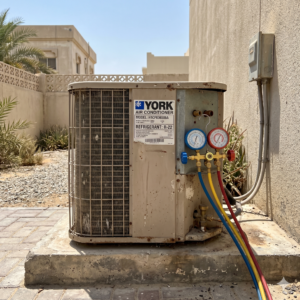
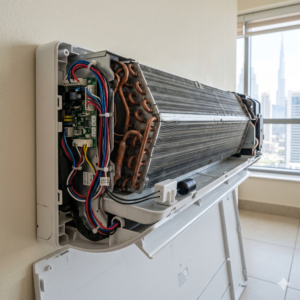
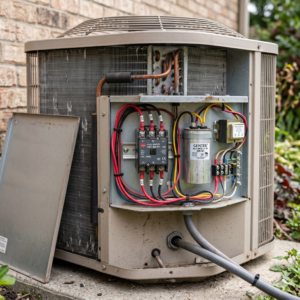
A split AC consists of two main units: an indoor unit that distributes cool air and an outdoor unit that releases heat. These units are connected through refrigerant piping and electrical wiring.
Split ACs are popular for their quiet operation, modern design, and higher efficiency options such as inverter technology.
What Is a Window AC?
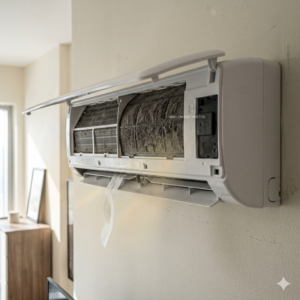
A window AC is a single, compact unit installed in a window or wall opening. It contains all components—compressor, condenser, and evaporator—inside one box.
Window ACs are simpler in design, usually cheaper upfront, and easier to install in certain settings.
Split AC and Window AC Power Consumption Explained
When comparing power consumption, it is important to separate two concepts:
- Rated power consumption – the electricity the AC uses when running at full capacity
- Actual power usage – how much electricity it consumes over time, based on usage patterns and efficiency
Typical Power Consumption Range
The table below shows a general comparison of power consumption for similar cooling capacities.
| AC Type | Cooling Capacity | Average Power Consumption | Daily Usage (8 hours) |
|---|---|---|---|
| Window AC | 1.5 ton | 1.4–1.6 kW | 11.2–12.8 kWh |
| Split AC (Non-Inverter) | 1.5 ton | 1.2–1.5 kW | 9.6–12.0 kWh |
| Split AC (Inverter) | 1.5 ton | 0.8–1.2 kW (variable) | 6.4–9.6 kWh |
From this comparison, split ACs—especially inverter models—generally consume less power over time than window ACs, even if the rated capacity is the same.
Why Split ACs Are Usually More Energy Efficient
The lower power consumption of split ACs is not accidental. It comes from several design and technology differences.
Inverter Technology
Many modern split ACs use inverter compressors. Instead of switching on and off repeatedly, the compressor adjusts its speed based on cooling demand.
This leads to:
- Lower power spikes
- More stable room temperature
- Reduced electricity waste
Window ACs, in contrast, are mostly non-inverter models that operate at fixed speed, consuming more power during continuous use.
Better Heat Exchange Efficiency
Split ACs have larger outdoor condenser units, which release heat more efficiently. Better heat exchange means the compressor works less to achieve the same cooling effect.
Window ACs are compact, and heat dissipation is less efficient, especially in poorly ventilated installations.
Monthly and Yearly Electricity Cost Comparison
Power consumption becomes more meaningful when translated into cost.
Below is an estimated cost comparison assuming:
- 1.5 ton AC
- 8 hours of daily usage
- Average electricity rate applied consistently
| AC Type | Monthly Energy Use | Estimated Monthly Cost | Estimated Yearly Cost |
|---|---|---|---|
| Window AC | 336–384 kWh | Higher | Highest |
| Split AC (Non-Inverter) | 288–360 kWh | Moderate | Moderate |
| Split AC (Inverter) | 192–288 kWh | Lowest | Lowest |
Over several years, the electricity savings from an inverter split AC can exceed the initial price difference.
Installation Cost and Its Impact on Total Expense
Power consumption is only part of the cost equation. Installation also plays a role.
Window AC Installation Cost
Window ACs usually have lower installation costs because they are self-contained units. However, they require:
- A suitable window or wall opening
- Structural modifications in some buildings
Poor installation can reduce efficiency and increase power consumption.
Split AC Installation Cost
Split AC installation is more complex, involving indoor and outdoor units, piping, and proper mounting. The upfront cost is higher, but correct installation significantly improves efficiency.
Professional AC installation and replacement ensures optimal airflow, refrigerant charge, and system balance, which directly affects long-term power consumption.
Maintenance and Its Effect on Power Consumption
Even the most efficient AC can consume excessive power if not maintained properly.
Window AC Maintenance
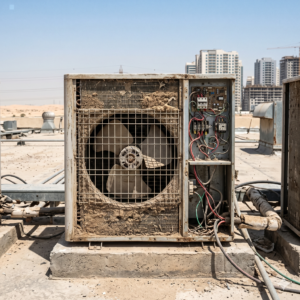
Window ACs are easier to access but often neglected. Dust buildup inside the unit reduces airflow and forces the compressor to work harder.
Split AC Maintenance
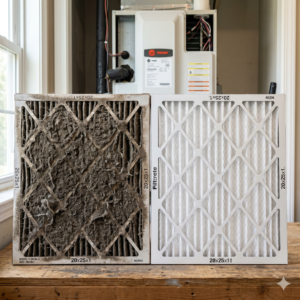
Split ACs require regular filter cleaning, coil maintenance, and occasional deep cleaning. When maintained correctly, they retain their efficiency for longer periods.
Scheduled AC maintenance and AMC services help prevent gradual efficiency loss that leads to higher power consumption.
Noise, Comfort, and Indirect Energy Use
While noise does not directly affect power consumption, it influences how people use the AC.
Window ACs are noisier because the compressor is inside the room. Users often lower the temperature to “feel” cooling faster, which increases energy use.
Split ACs operate more quietly, encouraging stable temperature settings that reduce unnecessary power draw.
Which One Is Better for Different Use Cases?
Small Rooms or Temporary Spaces
Window ACs may be suitable where:
- Usage is limited
- Initial cost must be low
- Long-term electricity cost is less critical
Bedrooms, Living Rooms, and Offices
Split ACs are better suited for spaces where:
- AC runs for many hours daily
- Noise comfort matters
- Lower long-term power consumption is important
Environmental Impact of Power Consumption
Lower power consumption does not only save money. It also reduces environmental impact.
Split ACs with inverter technology and newer refrigerants generally:
- Use electricity more efficiently
- Produce fewer indirect emissions
- Align better with energy-saving regulations
Common Myths About Split AC and Window AC Power Consumption
One common myth is that window ACs always consume less power because they are smaller. In reality, efficiency matters more than size.
Another myth is that inverter ACs are only beneficial for long usage. Even moderate daily use can benefit from reduced power spikes.
How to Reduce Power Consumption Regardless of AC Type
- Set realistic temperature levels instead of extreme cooling
- Keep doors and windows sealed
- Clean filters regularly
- Schedule periodic professional inspection
When Power Consumption Signals a Deeper Problem
If you notice a sudden increase in electricity bills without changes in usage, it may indicate issues such as refrigerant leakage, dirty coils, or airflow blockage.
Timely AC repair and professional inspection can restore normal power consumption and prevent further damage.
Conclusion
Comparing split AC and window AC power consumption reveals that the true cost of an air conditioner goes far beyond the purchase price. While window ACs may appear cheaper initially, their higher power consumption, noise, and lower efficiency often lead to higher long-term costs.
Split ACs—especially inverter models—offer better energy efficiency, lower electricity bills, quieter operation, and improved comfort. When combined with proper installation, regular maintenance, and correct usage habits, they provide better value over time.
The right choice depends on your space, usage pattern, and priorities. Understanding power consumption, operating cost, and maintenance needs helps you make a decision that supports both comfort and long-term savings.