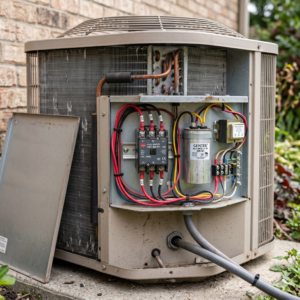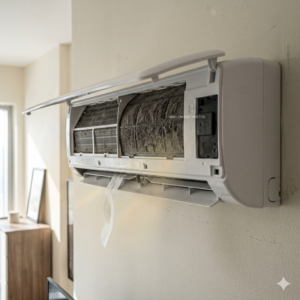





Searching for hvac repair prices usually means you are trying to answer one important question before making a decision: how much will this actually cost me, and what am I paying for? In many cases, HVAC repair feels confusing because prices vary widely, explanations are unclear, and the same problem can lead to very different quotations. This guide is written to remove that confusion by explaining HVAC repair pricing in a clear, practical way, using real scenarios so you can understand what affects the cost and how to avoid paying more than necessary.
Table of Contents
ToggleWhy HVAC Repair Prices Often Feel Unclear
One of the biggest frustrations homeowners and business owners face is that HVAC repair prices are rarely fixed. Two people with “the same problem” may receive very different quotations. This happens because HVAC repair pricing is influenced by multiple factors, not just the visible symptom.
Common reasons HVAC repair prices feel inconsistent include:
- Different levels of damage behind the same symptom
- System type (split AC, ducted, central HVAC, VRF)
- System size and capacity
- Indoor air quality condition (dust, mold, contamination)
- Spare part availability and refrigerant type
Understanding these factors helps you evaluate whether a quoted price makes sense or not.
How HVAC Repair Prices Are Usually Calculated
Professional HVAC repair pricing is not based on guesswork. A responsible provider typically calculates pricing after inspection, based on three main components:
- Diagnosis and labor: time and expertise required to identify and fix the issue
- Parts or materials: components that need cleaning, repair, or replacement
- Service complexity: accessibility, system layout, and safety requirements
This is why inspection before quotation is critical. Without inspection, any price is only an estimate, not a reliable cost.
HVAC Repair Price Categories (Simple Breakdown)
To make HVAC repair prices easier to understand, it helps to group them into categories based on repair complexity rather than guessing exact numbers.
1. Minor HVAC Repairs
Minor repairs address early-stage issues or routine adjustments. These are usually the most affordable repairs and are often preventive in nature.
Typical examples include:
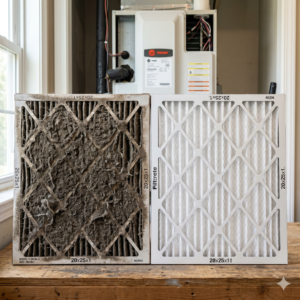
- Filter cleaning or replacement
- Thermostat calibration
- Basic airflow adjustment
- Minor electrical tightening or sensor adjustment
Typical price range: AED 230–450
These repairs are cost-effective because they prevent small issues from becoming expensive failures.
2. Moderate HVAC Repairs
Moderate repairs are required when the system still operates but performance is clearly reduced.
Common scenarios include:
- Weak or uneven cooling
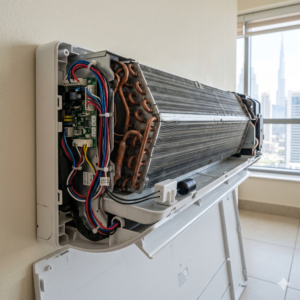
- Water leakage from indoor units
- Dust-restricted airflow
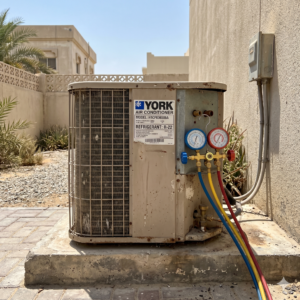
- Partial refrigerant loss
Solutions may involve coil cleaning, drain-line cleaning, or refrigerant top-up after inspection.
Typical price range: AED 320–650
This category is where many people hesitate, but delaying these repairs often leads to higher costs later.
3. Comprehensive HVAC Repairs
Comprehensive repairs are required when internal components are damaged or malfunctioning.
Examples include:
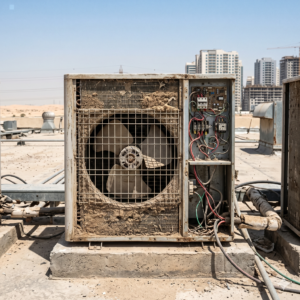
- Fan motor repair or replacement
- Control board (PCB) repair
- Leak detection and sealing
- Electrical component repair
Typical price range: AED 450–1,350
These repairs require technical expertise and proper diagnostic tools. Incorrect handling at this stage can cause further damage.
4. Major Component Replacement
Major repairs involve high-value components and are usually considered only after inspection confirms that repair is still viable.
Typical examples include:
- Compressor replacement
- Major system upgrades
- Critical component failure in older systems
Typical price range: AED 900–3,600
At this stage, professionals should also explain whether repair is cost-effective compared to replacement.
Scenario Simulation: What HVAC Repair Prices Look Like in Real Life
Scenario 1: AC Running but Not Cooling Well
You notice your AC runs continuously, but the room never feels cool.
Possible causes:
- Dirty coils or filters
- Restricted airflow
- Low refrigerant
After inspection, the technician finds dirty coils and partial airflow blockage.
Likely solution: coil cleaning and airflow correction
Estimated cost: AED 320–650
If this issue is ignored, the compressor works harder, increasing electricity consumption and risk of failure.
Scenario 2: Water Leaking from Indoor Unit
Water dripping from the AC is a common concern.
Possible causes:
- Clogged drain line
- Frozen coil due to airflow issues
- Improper drainage slope
Likely solution: drain-line cleaning and coil inspection
Estimated cost: AED 320–650
Ignoring water leaks can damage walls, ceilings, and internal AC components.
Scenario 3: AC Works After Gas Refill but Fails Again
This is one of the most frustrating scenarios.
Root cause is often refrigerant leakage rather than “low gas.”
Likely solution: leak detection, sealing, and proper gas recharge
Estimated cost: AED 450–810
Repeated refilling without fixing the leak leads to wasted money and system damage.
Scenario 4: Loud Noise and Vibration
Unusual noise often indicates mechanical stress.
Possible causes:
- Fan motor wear
- Loose mounting
- Bearing failure
Likely solution: fan motor repair or replacement
Estimated cost: AED 450–1,350
Delaying repair can result in secondary damage to other components.
Scenario 5: Older HVAC System with Frequent Breakdowns
Repeated repairs within a short time are a warning sign.
In such cases, professionals should compare:
- Total repair cost over time
- Energy efficiency losses
- Remaining system lifespan
Possible outcome: major repair or system replacement
Estimated cost: AED 900–3,600
This scenario requires honest evaluation, not pressure to repair at all costs.
Why DIY Attempts Often Increase HVAC Repair Prices
Many people try DIY fixes to save money. While basic tasks like filter cleaning are safe, deeper DIY repairs often backfire.
Common DIY risks include:
- Incorrect diagnosis
- Damage to sensitive components
- Improper refrigerant handling
- Electrical safety hazards
In real cases, DIY attempts often turn a minor repair into a moderate or major one, increasing total HVAC repair prices.
How to Control HVAC Repair Costs Long Term
The most effective way to manage HVAC repair prices is prevention.
Practical cost-control steps include:
- Regular filter cleaning
- Early attention to unusual noise or smells
- Periodic professional inspection
- Seasonal performance checks
Preventive maintenance reduces emergency repairs, improves energy efficiency, and extends system lifespan.
When HVAC Repair Should Be Handled Properly
HVAC issues rarely resolve on their own. Delaying action often results in poorer indoor air quality, higher energy bills, and more expensive repairs. Bio On Air helps manage HVAC repair prices by focusing on accurate inspection, safe repair methods, and clear cost explanation before work begins. Acting early is a preventive decision that usually saves money over time. You can use the WhatsApp or Call button at the top right of this page to discuss your HVAC condition and understand the most reasonable next step.
Conclusion
Understanding hvac repair prices becomes much easier when you see how costs are connected to real conditions, not just symptoms. Minor issues are affordable when handled early, while delays often push repairs into higher price categories. Transparent inspection, correct diagnosis, and preventive care are the keys to controlling costs.
Instead of asking only “how much does it cost,” it is more helpful to ask “what problem is being solved and how can I prevent it from returning.” With the right approach, HVAC repair becomes a planned, manageable expense rather than a repeated financial surprise.