




When people search for ac temperature highest, they are usually trying to understand one very practical question: how high can an AC temperature be set while still remaining effective, safe, and reasonable for daily use. This question often comes up when trying to save electricity, avoid overcooling, prevent AC damage, or maintain comfort in hot climates like the UAE. Knowing the exact temperature limits and realistic ranges helps you make better decisions for comfort, health, and long-term system performance.
Table of Contents
ToggleWhat Does “AC Temperature Highest” Actually Mean?
The phrase ac temperature highest can be interpreted in several ways, and this is where confusion often starts. Some people mean the highest temperature that can be set on the AC remote. Others mean the highest temperature that is still comfortable. Some are asking about the highest safe temperature for the AC system itself.
To be clear, there are three different concepts you should separate:
- The maximum temperature setting allowed by the AC controller
- The highest recommended temperature for comfort and health
- The highest practical temperature for energy efficiency and system stability
Each of these has a different answer, and understanding the difference prevents misuse of the AC and unrealistic expectations.
The Maximum Temperature Setting on Most AC Units
From a technical standpoint, most modern residential and commercial AC units allow temperature settings within a fixed range. In general:
- The lowest temperature setting is usually around 16°C to 18°C
- The highest temperature setting is usually around 30°C
This means that for most split ACs, central systems, and ducted units, the highest temperature you can set on the remote control is 30°C. Some older models may cap at 28°C, while a few newer smart systems may allow settings up to 31°C or 32°C, but these are less common.
So if you are looking for the literal answer to ac temperature highest in terms of settings, the correct and safe answer for most systems is:
30°C is the highest standard AC temperature setting.
Why AC Manufacturers Limit the Maximum Temperature
You might wonder why AC systems do not allow settings higher than 30°C. After all, room temperatures in hot climates can easily exceed that.
The reason is simple: AC systems are designed to cool, not to heat the room to extreme levels. Once the set temperature is close to the natural indoor temperature, the AC effectively stops cooling and switches to standby or low-load operation.
Setting the AC above 30°C would not provide any meaningful benefit because:
- The AC compressor would rarely activate
- The system would no longer regulate humidity properly
- Temperature control would become inaccurate
In short, temperatures above 30°C defeat the purpose of using an AC system at all.
The Highest Recommended AC Temperature for Comfort
While 30°C may be the highest possible setting, it is not the highest recommended temperature for comfort. Human comfort depends on temperature, humidity, air movement, and activity level.
For most people, especially in hot and humid climates, comfort starts to decline significantly above certain temperatures.
Based on thermal comfort studies and practical indoor guidelines:
- 26°C to 27°C is considered the upper comfortable range for most people
- 28°C may still be tolerable with good airflow and low humidity
- 29°C to 30°C often feels uncomfortable for extended periods
This means that although 30°C is technically the highest AC temperature setting, it is usually too warm for normal living or working conditions.
AC Temperature Highest for Energy Saving: The Practical Limit
One of the main reasons people search for ac temperature highest is energy saving. Raising the set temperature reduces compressor workload and lowers electricity consumption.
However, there is a practical limit where energy savings stop being meaningful because comfort and air quality suffer.
In real-world usage:
- 24°C to 25°C is the most balanced range for comfort and efficiency
- 26°C offers noticeable energy savings with minimal comfort loss
- 27°C is often the highest “safe” energy-saving temperature for long use
Above 27°C, many users start compensating by using fans, opening doors, or lowering the temperature again, which cancels out energy savings.
Is It Safe to Set AC at the Highest Temperature?
Yes, setting your AC to its highest temperature (around 30°C) is technically safe for the system. It does not damage the compressor or internal components.
However, “safe” does not always mean “useful.” At such a high setting:
- The AC may stop dehumidifying effectively
- Indoor air may feel heavy or stale
- Mold risk can increase in humid environments
This is especially important in places like the UAE, where humidity control is just as important as cooling.
AC Temperature Highest vs Indoor Humidity
Temperature and humidity are closely connected. An AC does more than cool the air; it also removes moisture.
When the AC is set very high:
- The compressor runs less often
- Moisture removal decreases
- Relative humidity may rise indoors
This is why a room can feel uncomfortable even at 27°C or 28°C if humidity is high. The air feels sticky, heavy, and tiring.
From a practical perspective, the highest AC temperature that still controls humidity well is usually around 26°C to 27°C.
Highest AC Temperature for Sleeping
Sleep comfort is another common reason for adjusting AC temperature.
For sleeping:
- 24°C to 26°C is ideal for most adults
- 26°C to 27°C may work with light bedding and good airflow
- 28°C or higher often disrupts sleep quality
Although you can technically set the AC to 30°C at night, it usually leads to poor sleep due to heat retention and humidity.
Highest AC Temperature for Offices and Workspaces
In offices, comfort affects productivity.
Most workplace guidelines recommend:
- 23°C to 25°C for active office environments
- 26°C as the upper acceptable limit
At temperatures above 26°C, concentration drops and fatigue increases. This makes 30°C impractical for work settings.
Why Setting AC Too High Can Backfire
It seems logical that higher AC temperature equals lower electricity cost. But this is not always true.
Setting the AC too high can cause:
- Frequent manual adjustments
- Increased use of fans or secondary cooling
- Doors and windows opening more often
These behaviors reduce the efficiency gains you expected from raising the temperature.
AC Temperature Highest During Absence or Vacation
When leaving home for a short time, many people ask what the highest AC temperature should be.
For absence periods:
- 28°C to 30°C is reasonable if humidity is controlled
- Completely turning off AC may allow humidity buildup
In humid climates, keeping the AC at a high temperature rather than fully off helps prevent mold and odors.
Differences Between AC Types and Maximum Temperature
Not all AC systems behave the same way.
- Split ACs: usually cap at 30°C
- Central AC systems: often controlled by thermostats with similar limits
- Smart AC systems: may allow more precise scheduling but still respect the 30°C upper limit
Regardless of type, the practical comfort ceiling remains similar.
Common Myths About AC Temperature Highest
Several myths cause confusion:
- Myth: Setting AC to 30°C saves maximum energy
Reality: 26–27°C is often more efficient in real use - Myth: Higher temperature always means healthier air
Reality: Poor humidity control can worsen air quality - Myth: AC should be turned off instead of set high
Reality: High humidity can cause mold and odor issues
How to Choose the Best “Highest” AC Temperature for Your Situation
Instead of looking for one number, consider your situation:
- For daily comfort: 24–26°C
- For energy saving with comfort: 26–27°C
- For short absence: 28–30°C
- For sleep: 24–26°C
This approach gives better results than always using the maximum setting.
When AC Performance Affects Temperature Accuracy
If your AC struggles to reach even moderate temperatures, the issue may not be the setting.
Common causes include:
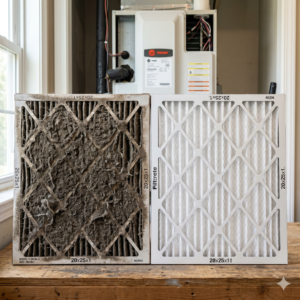
- Dirty filters or coils
- Low refrigerant
- Airflow blockage
- Poor insulation
In these cases, raising the set temperature does not fix the root problem.
When Temperature Control Problems Need Professional Attention
If your AC cannot maintain stable temperature even at higher settings, or if humidity remains high, the system may need inspection.
Ignoring these signs can lead to:
- Higher electricity usage
- Unhealthy indoor air
- Faster system wear
Addressing the cause early is usually simpler and less expensive.
Conclusion
The answer to ac temperature highest depends on what you are really asking. Technically, most AC systems allow a maximum setting of 30°C. Practically, the highest temperature that still offers comfort, humidity control, and energy efficiency is usually between 26°C and 27°C.
Using the highest possible setting is safe but rarely useful for daily living. Comfort, air quality, and system performance are better balanced when temperature is chosen based on activity, humidity, and usage patterns. By understanding the exact temperature limits and realistic ranges, you can use your AC more efficiently, avoid discomfort, and protect your system in the long term.