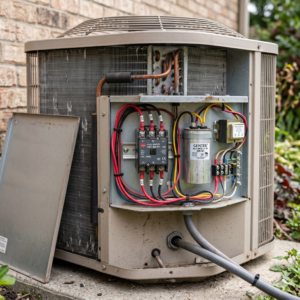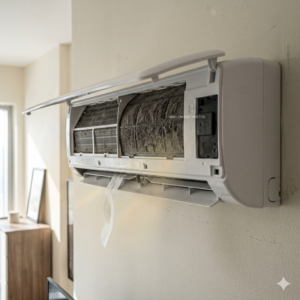





Searching for inverter ac hot and cold usually means your AC no longer delivers stable comfort. One moment it cools properly, then suddenly it blows warm air, switches modes unexpectedly, or struggles to maintain temperature. In the UAE climate, this problem quickly becomes frustrating because inverter AC systems are expected to be efficient, stable, and reliable. When they start alternating between hot and cold behavior, it often signals underlying issues that should not be ignored. This article explains the 7 most common inverter AC hot and cold problems, why they happen, and how each one can be solved in a practical and realistic way.
Table of Contents
Toggle#1 Incorrect Thermostat or Remote Control Settings
One of the most overlooked causes of inverter ac hot and cold behavior is incorrect thermostat or remote control configuration. Inverter systems rely heavily on sensor feedback to regulate compressor speed. If the settings are wrong, the AC may behave unpredictably.
Common setting-related issues include:
- AC accidentally set to Auto Mode, causing it to switch between cooling and heating.
- Temperature set too close to room temperature, triggering frequent mode adjustments.
- Conflicting schedules or smart thermostat commands.
Many users assume the AC is malfunctioning when the issue is simply a mode conflict. Before assuming hardware failure, always confirm that the unit is set to Cool Mode with a reasonable temperature difference from the room.
If the issue persists even after resetting settings, it may indicate sensor or control problems rather than user error.
#2 Dirty Filters and Restricted Airflow
Restricted airflow is one of the most common physical causes of inverter AC instability. Inverter systems adjust compressor speed based on how efficiently heat is exchanged. When airflow is blocked, the system cannot regulate properly.
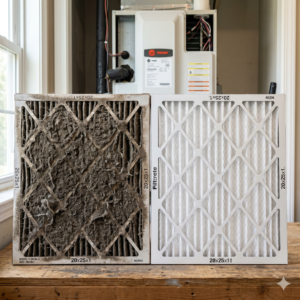
Dirty filters cause:
- Reduced airflow across the evaporator coil
- Incorrect temperature sensing
- Overcompensation by the inverter compressor
This often results in cold air at first, followed by warmer air as the system struggles to stabilize. Over time, the AC may appear to switch between hot and cold behavior.
Cleaning or replacing filters regularly can solve this issue early. However, if dust has already accumulated deeper inside the system, airflow problems may persist even after filter cleaning.
#3 Refrigerant Level Imbalance or Minor Leaks
Inverter AC systems are highly sensitive to refrigerant levels. Even small imbalances can cause unstable cooling behavior.
When refrigerant is low or uneven:
- The AC may cool initially, then lose cooling power.
- Compressor speed fluctuates excessively.
- The system struggles to maintain a steady temperature.
This often feels like the AC is blowing cold air, then warm air, then cold again. Unlike non-inverter systems, inverter ACs do not simply stop cooling when gas is low; they attempt to compensate.
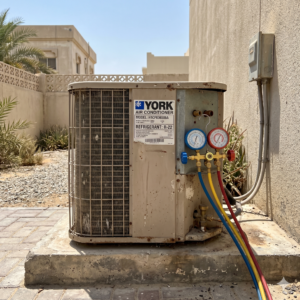
Professional refrigerant inspection and proper handling are essential. A simple top-up without checking for leaks can temporarily mask the issue but will not solve the root cause.
#4 Sensor Problems or Faulty Temperature Feedback
Inverter AC operation depends on accurate sensor feedback. If temperature sensors malfunction, the system receives incorrect data and adjusts compressor speed incorrectly.
Common sensor-related symptoms include:
- AC cooling strongly for short periods, then weakening suddenly
- Room feeling warmer or colder than the set temperature
- Frequent cycling between different output levels
Sensor issues are difficult to detect without proper diagnostic tools. Repositioning or recalibrating sensors may help in some cases, but faulty sensors usually require replacement.
Ignoring sensor issues can lead to increased energy consumption and unnecessary strain on the inverter board.
#5 Electrical or Inverter Board Instability
The inverter board is the brain of the system. It controls compressor speed, power flow, and operational stability. Electrical irregularities can cause erratic behavior.
Common causes include:
- Voltage fluctuations or unstable power supply
- Aging inverter boards
- Loose electrical connections
When the inverter board struggles to regulate power, the AC may alternate between strong cooling and weak output, giving the impression of hot and cold air switching.
This issue should not be ignored. Continued operation with electrical instability can lead to permanent board damage, which is one of the most expensive AC repairs.
#6 Oversized or Undersized Inverter AC for the Space
System sizing plays a major role in inverter AC behavior. An incorrectly sized unit can never stabilize properly.
If the AC is oversized:
- It cools the room too quickly
- Shuts down or reduces output prematurely
- Creates uneven temperature distribution
If the AC is undersized:
- It runs continuously at high load
- Fails to maintain cooling
- Overheats and reduces output
Both situations can feel like inverter ac hot and cold behavior. The solution is not repeated repair, but proper load assessment and system evaluation.
#7 Lack of Preventive Maintenance and Internal Dirt Buildup
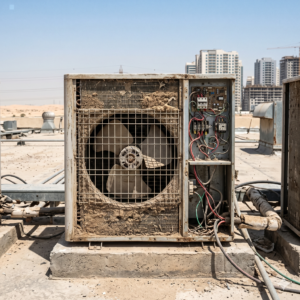
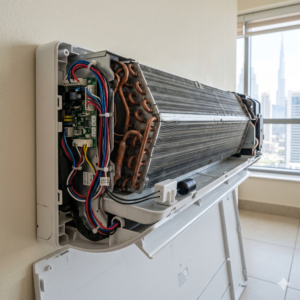
Inverter AC systems require consistent maintenance to perform correctly. Internal dirt buildup affects heat exchange, airflow, and sensor accuracy.
Without maintenance:
- Cooling becomes inconsistent
- Energy consumption increases
- Components wear out faster
Many inverter AC issues start small and gradually worsen. By the time users notice hot and cold behavior, the system is already under stress.
Regular inspection, internal cleaning, and performance checks help prevent these issues before they escalate.
Other Important Things to Know About Inverter AC Hot and Cold Issues
DIY Fixes vs Professional Diagnosis
Some basic checks, such as cleaning filters or verifying remote settings, are safe DIY steps. However, inverter AC systems are complex. Attempting deeper repairs without proper tools can worsen the issue.
Common DIY risks include:
- Misdiagnosing refrigerant or sensor issues
- Damaging electronic components
- Voiding manufacturer warranties
Professional diagnosis ensures that the real cause is identified before parts are replaced unnecessarily.
Why Inverter AC Problems Often Feel Confusing
Unlike traditional AC systems that operate in simple on-off cycles, inverter ACs constantly adjust output. When something goes wrong, the behavior appears inconsistent rather than completely broken.
This is why users often describe the problem as “sometimes cold, sometimes hot.” Understanding this difference helps avoid panic and incorrect conclusions.
How to Prevent Inverter AC Hot and Cold Problems
Preventive steps that reduce the risk of recurrence include:
- Regular filter cleaning
- Periodic professional inspection
- Monitoring unusual noise or behavior early
- Ensuring stable power supply
Preventive care not only improves comfort but also extends the lifespan of inverter components.
When Inverter AC Issues Should Be Handled Properly
Inverter AC hot and cold behavior rarely fixes itself. If ignored, it can lead to poor indoor comfort, increased electricity bills, and irreversible damage to sensitive electronic components. Bio On Air helps address these issues through accurate inspection, safe repair procedures, and clear explanations so you understand what is happening and why. Acting early is a preventive step that protects both comfort and cost. You can use the WhatsApp or Call button at the top right of this page to discuss your inverter AC symptoms with our team.
Conclusion
Experiencing inverter ac hot and cold behavior is a clear sign that your system is struggling to regulate itself properly. While the symptoms may seem confusing, the causes are usually traceable to settings, airflow restriction, refrigerant imbalance, sensor errors, electrical instability, incorrect sizing, or lack of maintenance.
The key is not to treat the symptom alone, but to identify and solve the underlying cause. Early inspection, proper maintenance, and informed decisions help prevent repeated discomfort and costly damage. In a climate where AC performance directly affects daily life, understanding how inverter systems behave and responding correctly ensures long-term comfort, efficiency, and peace of mind.