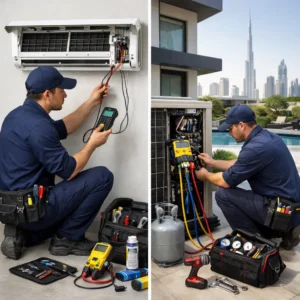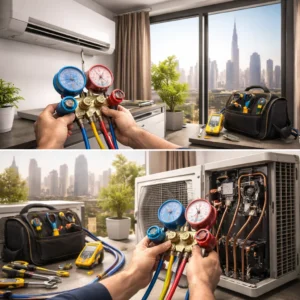





If you are searching why water drops from ac indoor unit, it usually means your AC is leaking inside your home. In Dubai’s climate, this is a common issue caused by dust, humidity, or system imbalance. This guide explains the real causes, how to stop it safely, and when to take action before damage spreads.
Table of Contents
ToggleWhy Water Drops from AC Indoor Unit in Dubai Homes
Water leakage from an indoor AC unit is not random. It is almost always a sign that the system’s normal condensation process is not working properly.
Every AC unit produces water as part of cooling. Warm air passes over cold evaporator coils, creating condensation (similar to water droplets on a cold glass). Normally, this water flows through a drain line and exits safely.
When something blocks or disrupts this process, water starts dripping inside your room.
In Dubai, this happens more often due to:
- Fine dust and sand entering the system
- High humidity levels, especially near coastal areas
- Continuous AC usage for long hours
Most Common Causes of AC Indoor Water Leakage
1. Clogged Drain Line from Dust and Sand
This is the most common reason in the UAE.
Over time, dust, sand particles, and debris accumulate inside the drain line. This blocks the path where condensation water should flow out.
Once blocked:
- Water backs up inside the unit
- Drain pan overflows
- Water starts dripping from the indoor unit
This issue builds up gradually and is often unnoticed until leakage starts.
2. Dirty Air Filters Causing Frozen Coils
When air filters are clogged with dust, airflow becomes restricted.
This causes:
- Evaporator coils to become too cold
- Ice formation on coils
- Ice melting into excess water
When the ice melts, it produces more water than the system can drain, leading to leakage.
3. Improper Installation or Poor Unit Leveling
If the indoor unit is not installed at the correct angle, water may not flow toward the drain pipe properly.
Instead, it collects and eventually leaks out.
This is common in:
- Recently installed AC units
- Units that have shifted over time
- Low-quality installations
4. Cracked or Damaged Drain Pan
The drain pan collects condensation before it exits through the drain pipe. If it is cracked or rusted:
- Water leaks directly from the unit
- Dripping may occur even without blockage
5. Low Refrigerant Leading to Ice Formation
Low refrigerant levels can cause coils to freeze, similar to dirty filters.
This results in:
- Ice buildup
- Sudden melting
- Excess water leakage
In such cases, proper AC repair handling is required to fix the root issue.
Quick Symptom-Based Diagnosis Guide
| Symptom | Most Likely Cause |
|---|---|
| Slow dripping water | Partial drain blockage |
| Heavy water leakage | Fully clogged drain line |
| Water + weak airflow | Dirty filter or frozen coil |
| Water after AC stops | Ice melting from coils |
| Leak from one side only | Improper unit leveling |
Immediate Steps to Stop Water Damage
If you notice water leaking from your AC, act quickly to prevent damage.
1. Turn Off the AC
This stops further condensation and prevents additional leakage.
2. Clean Visible Water
Wipe or absorb water to avoid damage to flooring, furniture, or walls.
3. Check Air Filters
If filters are dirty, clean them. This may restore airflow and reduce freezing.
4. Inspect Drain Pipe (If Accessible)
If you can safely access the drain pipe, check for visible blockage.
Do not force cleaning if you are unsure—it may cause further damage.
DIY Fix vs Professional Service
| Situation | DIY Possible | Professional Needed |
|---|---|---|
| Dirty filter | Yes | No |
| Minor drain blockage | Sometimes | Recommended |
| Refrigerant issue | No | Yes |
| Installation problem | No | Yes |
| Repeated leakage | No | Yes |
As a general rule, if the issue repeats or involves internal components, professional inspection is the safer choice.
How Dubai Climate Makes AC Leaks Worse
Dubai’s environment creates ideal conditions for AC drainage problems.
Dust and Sandstorms
Fine particles easily enter AC systems and settle in drain lines and filters.
High Humidity
Higher humidity increases condensation, producing more water than usual.
Continuous AC Usage
AC systems run for long hours, increasing wear and buildup over time.
This combination makes regular cleaning and maintenance essential.
Estimated Repair Cost in Dubai
The cost depends on the root cause of the issue.
| Issue | Estimated Cost (AED) |
|---|---|
| Drain line cleaning | 150 – 350 |
| Filter cleaning / replacement | 50 – 200 |
| Coil cleaning | 250 – 600 |
| Refrigerant refill | 300 – 800 |
| Full AC inspection & repair | 200 – 1,000+ |
Note: Prices are slightly below general market estimates and may vary depending on system condition and service scope.
Risks of Ignoring AC Water Leakage
1. Mold Growth
Moist environments encourage mold formation, which affects air quality.
2. Electrical Hazards
Water can reach electrical components, increasing risk of short circuits.
3. Structural Damage
Walls, ceilings, and furniture can be damaged by prolonged moisture exposure.
4. Increased Repair Costs
Small issues can develop into major system failures if ignored.
Prevention Tips for UAE Homes
- Clean filters every 2–4 weeks
- Schedule regular AC maintenance
- Keep drain lines clear
- Monitor early signs of leakage
Preventive care reduces both repair frequency and long-term cost.
Why Early Action Matters
AC water leakage is rarely a one-time issue. It is usually a sign of an underlying problem that will worsen over time if ignored.
Addressing it early:
- Prevents further damage
- Maintains air quality
- Reduces repair costs
If you are experiencing water leakage or early warning signs, it is important not to ignore them. Problems like blocked drainage, hidden dirt buildup, or internal system imbalance can quickly lead to mold growth, electrical risks, and higher repair costs. With the right approach, these issues can be resolved safely and effectively. If you need clarity about your AC condition, you can use the WhatsApp or Call button on the top right to connect with the Bio On Air team and understand the most suitable next step.
Conclusion
Understanding why water drops from ac indoor unit helps you act quickly and prevent damage. Most causes are related to drainage, airflow, or system condition. By identifying symptoms early and taking the right steps, you can protect your AC system, your home, and your indoor air quality.