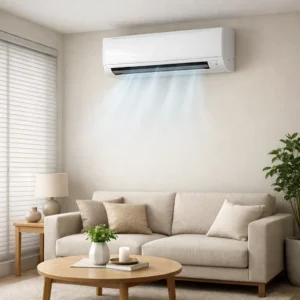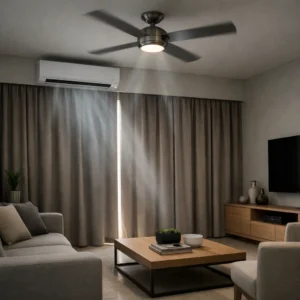





Many people ask which AC temperature is best for sleep because they wake up feeling tired, sweaty, too cold, or uncomfortable even after sleeping for several hours. In hot climates, especially in the UAE, air conditioning is not optional during sleep—it directly affects body temperature, breathing comfort, sleep depth, and overall recovery. Setting the AC too cold or too warm can quietly disrupt your sleep cycle, increase energy consumption, and even cause health discomfort over time. This guide explains the exact temperature range that works best for sleep, why it works, and how to adjust your AC properly for better rest.
Table of Contents
ToggleWhat Is the Best AC Temperature for Sleep
The most widely recommended and scientifically supported AC temperature for sleep is between 24°C and 26°C (75°F to 79°F).
This range is considered ideal because it supports the body’s natural sleep process. During sleep, your core body temperature naturally drops. An environment that is too warm prevents this drop, while an environment that is too cold forces your body to work harder to stay warm.
For most adults:
- 24°C feels cool and comfortable for people who prefer colder sleep
- 25°C is the most balanced temperature for deep, uninterrupted sleep
- 26°C works well for energy efficiency and sensitive sleepers
The exact best point within this range depends on humidity, airflow, bedding, and personal sensitivity, which we will explore in detail below.
Why Temperature Matters So Much During Sleep
Sleep is not just about closing your eyes. Your body goes through multiple sleep stages, including light sleep, deep sleep, and REM sleep. Each stage is affected by temperature.
When the room is too warm:
- Your body struggles to cool down
- You wake up more frequently
- Sweating increases and causes discomfort
- Sleep becomes lighter and less restorative
When the room is too cold:
- Your muscles may tense
- Breathing can feel dry or uncomfortable
- You may wake up with a stiff neck or sore throat
- Your body uses extra energy to maintain warmth
The right AC temperature creates a stable environment where your body does not need to fight the surroundings. This allows deeper sleep and better recovery.
Exact Temperature Recommendation Based on Sleep Science
Sleep specialists and thermal comfort studies consistently show that the human body sleeps best when the surrounding air temperature supports heat release from the body.
The optimal sleep temperature range:
- 24–26°C for adults
- 25–27°C for elderly individuals
- 24–25°C for people who sweat easily
Temperatures below 22°C are often too cold for long sleep periods unless bedding and clothing are adjusted carefully. Temperatures above 27°C tend to reduce sleep quality, especially in humid environments.
How Humidity Changes the Ideal AC Temperature
Temperature alone does not determine comfort. Humidity plays a major role in how warm or cool a room feels.
High humidity makes the air feel warmer because sweat cannot evaporate effectively. Low humidity can make the air feel colder and dry.
For sleeping comfort:
- Ideal humidity range: 40%–60%
- High humidity (>60%) may require setting AC closer to 24°C
- Low humidity (<40%) may feel comfortable at 26°C
If your AC cools but does not control humidity well, you may feel uncomfortable even at the “right” temperature. This is why proper AC maintenance and airflow balance matter for sleep quality.
Does Sleeping at 22°C or Lower Improve Sleep
Many people believe that colder is always better for sleep. This is a common misconception.
While short exposure to cool air can feel refreshing, sleeping for 6–8 hours at 20–22°C can cause:
- Dry throat and nasal passages
- Muscle stiffness
- Increased risk of waking up cold
- Higher energy consumption
For most people, temperatures below 23°C are unnecessary and may reduce sleep quality unless specific medical or personal conditions require cooler air.
Is 26°C Too Warm for Sleeping
For many people, 26°C is not too warm, especially when airflow is good and humidity is controlled.
26°C can be ideal when:
- You use breathable bedding
- The AC provides consistent airflow
- Humidity is below 55%
- You prefer moderate cooling
In fact, 26°C is often recommended for energy efficiency while still supporting healthy sleep.
Best AC Temperature for Babies and Children
Babies and young children are more sensitive to temperature changes.
Recommended sleep temperature for children:
- 24–26°C for infants
- 24–25°C for toddlers
Extremely cold rooms can increase discomfort and dryness, while overly warm rooms may increase sweating and restlessness. Gentle airflow and stable temperature are more important than extreme cooling.
Best AC Temperature for Elderly People
Older adults often have reduced ability to regulate body temperature.
Recommended range:
- 25–27°C
Rooms that are too cold can increase joint stiffness and respiratory discomfort. Slightly warmer settings with good air circulation are safer and more comfortable.
How Bedding and Clothing Affect Sleep Temperature
Your AC temperature does not work alone. Bedding and sleepwear significantly influence comfort.
If you sleep at 24°C:
- Use light blankets
- Wear breathable cotton sleepwear
If you sleep at 26°C:
- Use thinner sheets
- Avoid heavy blankets
Adjusting bedding is often easier and healthier than lowering AC temperature too much.
Airflow Direction Matters More Than You Think
Even at the correct temperature, direct airflow hitting your body can disrupt sleep.
Best practices:
- Do not point AC vents directly at the bed
- Use swing mode for even distribution
- Avoid strong fan speed during sleep
Uneven airflow can make one part of the body cold while the rest feels warm, leading to discomfort.
Energy Efficiency and Sleep Temperature
Lower AC temperatures significantly increase electricity consumption.
Every 1°C reduction below 25°C can increase energy use by approximately 6–10%.
Setting your AC between 25–26°C:
- Supports healthy sleep
- Reduces energy waste
- Protects AC components from overuse
Consistent moderate settings are better than extreme cooling.
Why You Still Feel Uncomfortable at the “Right” Temperature
If your AC is set to 25°C but you still sleep poorly, the issue may not be temperature alone.
Common hidden issues:
- Dirty filters reducing airflow
- Blocked ducts
- Uneven cooling between rooms
- Poor humidity control
In such cases, system cleaning, airflow balancing, or maintenance may be needed to restore proper sleep comfort.
How to Adjust AC Settings for Better Sleep
Practical setup tips:
- Set temperature between 24–26°C
- Use sleep or eco mode if available
- Set fan speed to low or auto
- Ensure filters are clean
These adjustments often improve sleep quality without lowering temperature further.
When AC Issues Start Affecting Your Sleep
If you frequently wake up feeling hot, cold, dry, or congested, your AC system may not be functioning optimally.
Sleep-related AC issues can lead to:
- Chronic fatigue
- Reduced concentration
- Increased allergy symptoms
- Higher electricity bills
These problems usually worsen over time if not addressed.
When Sleep Comfort Requires Professional Attention
Sleep discomfort linked to AC performance rarely resolves on its own. Poor airflow, dust buildup, or incorrect cooling patterns can silently affect health and energy usage. Bio On Air helps address these issues by inspecting airflow, temperature balance, and indoor air quality to ensure your AC supports healthy sleep. Acting early prevents discomfort, system strain, and long-term inefficiency. If sleep comfort is becoming a daily problem, you can use the WhatsApp or Call button at the top right of this page to discuss your AC setup with our team.
Conclusion
So, which AC temperature is best for sleep? For most people, the answer is clear: 24–26°C. This range supports the body’s natural cooling process, improves sleep depth, and avoids the discomfort caused by extreme temperatures. However, temperature alone is not enough. Humidity, airflow direction, bedding, and system cleanliness all play a role in how comfortable you feel throughout the night.
Instead of lowering the AC excessively, focus on balance. A well-maintained AC set to a moderate temperature will help you fall asleep faster, stay asleep longer, and wake up feeling refreshed. In hot climates, sleeping well is not a luxury—it is a daily necessity, and the right AC setup makes all the difference.