




A wall mounted ac is one of the most popular cooling solutions for homes and small commercial spaces, especially in regions with long, hot seasons like the UAE. Many people consider it because it looks clean on the wall, cools efficiently, and does not require complex ductwork. However, confusion often arises when comparing wall mounted AC units with window units, understanding what “ductless” really means, choosing the right capacity, estimating realistic costs, and deciding the best placement. This guide is written to clarify those points step by step, so you can move toward purchase and installation with confidence, not guesswork.
Table of Contents
ToggleWhat a Wall Mounted AC Really Is (And What It Is Not)
A wall mounted AC usually refers to a ductless mini-split indoor unit that is installed high on a wall and connected to an outdoor condenser via refrigerant pipes and electrical wiring. It is important to clarify this early because many people mix wall mounted AC units with window AC units simply because both are visible on a wall.
A wall mounted mini-split system is different from a window unit in several key ways:
- It does not block a window or require cutting into a window frame.
- It separates the noisy compressor (outdoor unit) from the indoor space.
- It uses refrigerant piping instead of sitting as one combined unit.
Understanding this distinction helps avoid wrong expectations about noise, efficiency, and visual impact.
Wall Mounted AC vs Window AC (Clear and Practical Comparison)
Many users start with the question: “Is a wall mounted AC the same as a window AC?” The answer is no, and the differences matter in daily use.
Installation Differences
A window AC is installed by fitting the entire unit into a window opening or wall cutout. This often requires modifying the window frame and can reduce natural light. A wall mounted mini-split, on the other hand, requires drilling a small hole for piping and mounting the indoor unit securely on the wall. The outdoor unit is placed outside, usually on a balcony, roof, or exterior wall.
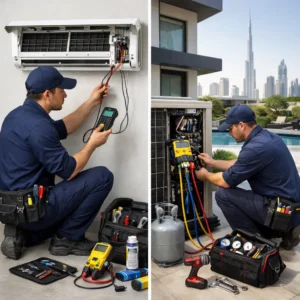
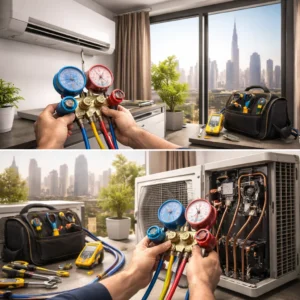
Because of this, professional installation is more critical for wall mounted AC systems. Proper mounting, refrigerant handling, and drainage setup are essential for long-term reliability. This is why most users rely on professional AC installation and replacement services rather than DIY installation.
Visual Impact
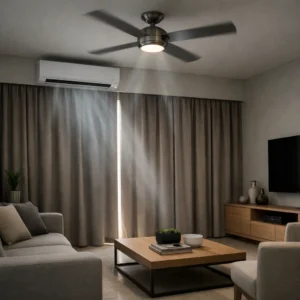
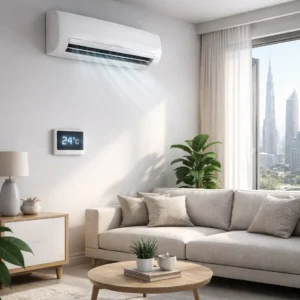
Window AC units are bulky and clearly visible, both inside and outside. They often block part of the window and can affect room aesthetics. A wall mounted AC sits higher on the wall, blends more cleanly into modern interiors, and leaves windows unobstructed.
For people who care about interior design, this visual difference is often a deciding factor.
Noise Levels
Window units contain the compressor inside the same casing, which means more noise indoors. Wall mounted mini-splits move the loud components outside, making indoor operation noticeably quieter. This is especially important for bedrooms, home offices, and living rooms.
Understanding “Ductless” in Wall Mounted AC Systems
The term “ductless” can be confusing. It does not mean there is no air movement; it means the system does not rely on large duct networks running through ceilings or walls.
In a ductless wall mounted AC:
- Air is cooled directly at the indoor unit.
- There is minimal energy loss compared to ducted systems.
- Installation is simpler and more flexible.
This makes wall mounted AC units ideal for apartments, villas, retrofits, and spaces where adding ducts would be expensive or impractical.
Right-Sizing a Wall Mounted AC (Simple and Realistic Guidance)
One of the biggest mistakes users make is choosing the wrong size. A wall mounted AC that is too small will run constantly without cooling properly. One that is too large may cool too quickly, cycle on and off, and fail to control humidity.
Instead of complex calculations, here is a simplified approach:
- Small bedrooms usually need lower capacity units.
- Living rooms and open areas require higher capacity.
- Very large or open-plan spaces may need multiple units.
However, room size alone is not enough. Environmental factors also affect capacity needs:
- Sun exposure: rooms facing direct sunlight need more cooling.
- Ceiling height: higher ceilings increase air volume.
- Insulation quality: poor insulation increases heat gain.
- Occupancy and appliances: more people and electronics add heat.
This is why professional assessment during installation is valuable. A technician can consider these factors and recommend the right configuration instead of relying on room size alone.
Realistic Cost Structure of a Wall Mounted AC (Without Numbers)
When planning for a wall mounted AC, many users ask, “How much does it cost?” The more useful question is, “What am I paying for?”
The total cost usually includes several components:
The AC Unit Itself
This includes the indoor wall mounted unit and the outdoor condenser. Price varies based on brand, capacity, inverter technology, and additional features such as smart controls or heating capability.
Professional Installation
Unlike window units, wall mounted AC systems should not be installed casually. Proper installation involves:
- Secure wall mounting
- Correct refrigerant piping and insulation
- Electrical connection
- Condensate drainage setup
Incorrect installation can lead to water leakage, poor performance, and reduced lifespan. This is why professional installation is not optional, but necessary.
Energy Efficiency Considerations
Higher efficiency models may cost more upfront but reduce electricity consumption over time. In a climate where AC runs for many hours daily, this can significantly affect long-term operating cost.
Maintenance and Long-Term Care
Routine filter cleaning, periodic inspection, and occasional deep cleaning are part of ownership. Services such as AC maintenance and AMC help keep the system efficient and prevent sudden breakdowns.
Best Placement Strategy for Wall Mounted AC Units
Placement affects comfort, efficiency, and maintenance ease. Poor placement can cause uneven cooling, drafts, or maintenance difficulties.
Airflow Comfort
The unit should be placed where airflow can distribute evenly across the room. Avoid positioning it directly above beds or seating areas where cold air may blow directly onto people.
Accessibility for Filter Cleaning
Filters need regular cleaning. The unit should be reachable without special equipment, allowing routine maintenance without hassle.
Proper Condensate Drainage
Water produced during cooling must drain smoothly. Improper slope or blocked drainage can cause leaks and wall damage. Correct placement simplifies reliable drainage.
Features That Actually Matter in Wall Mounted AC Units
Marketing brochures often list many features, but only some truly affect comfort and efficiency.
Inverter Technology
Inverter AC units adjust compressor speed based on cooling demand. This results in:
- More stable room temperature
- Lower energy consumption
- Quieter operation
Heating Capability
Some wall mounted AC units include heating mode. While heating demand is limited in the UAE, this feature can be useful during cooler months or in specific indoor environments.
Smart Controls
Smart controls allow scheduling, remote operation, and usage monitoring. When used properly, they help improve comfort and avoid unnecessary runtime.
Pros and Cons of Wall Mounted AC (A Realistic View)
Pros
- Zoned cooling allows different rooms to be cooled independently.
- Quieter indoor operation compared to window units.
- High energy efficiency, especially with inverter models.
- Modern appearance that suits contemporary interiors.
Cons
- Higher upfront cost compared to window AC units.
- Permanent installation affects wall structure.
- Requires professional installation and servicing.
- Outdoor unit placement must be planned carefully.
This balanced view helps users avoid unrealistic expectations and choose based on real needs.
Maintenance Reality for Wall Mounted AC Systems
Maintenance is not complicated, but it is essential. Neglecting it leads to reduced cooling, poor air quality, and higher electricity use.
Basic maintenance includes:
- Regular filter cleaning
- Checking for unusual noise or smell
- Ensuring drainage is clear
Periodic professional servicing helps detect issues early and maintain efficiency.
Decision Support Checklist Before Buying and Installing
- Confirm the unit type is ductless mini-split, not a window unit.
- Assess room size and environmental factors.
- Plan indoor and outdoor unit placement.
- Choose features that affect real comfort and efficiency.
- Schedule professional installation and maintenance.
When Professional Support Makes the Difference
Choosing and installing a wall mounted AC involves more than buying a unit. Correct sizing, placement, and installation determine long-term comfort and cost. Bio On Air supports users through assessment, professional installation, and ongoing maintenance to ensure systems perform safely and efficiently. If you want to discuss your space, usage patterns, or installation options, you can use the WhatsApp or Call button at the top right of this page to speak with our team.
Conclusion
A wall mounted ac offers efficient, quiet, and flexible cooling when chosen and installed correctly. Understanding the difference between ductless mini-splits and window units, sizing the system realistically, planning placement carefully, and focusing on features that matter help you avoid costly mistakes. With proper installation and regular maintenance, a wall mounted AC can provide consistent comfort, better energy efficiency, and cleaner indoor air for years, making it a practical long-term solution rather than a short-term fix.