




A refrigerant leak fix is one of the most misunderstood topics in air conditioning repair. Many people notice weak cooling and assume the solution is simple—just add more refrigerant. In reality, refrigerant leaks are not only a performance issue but also a safety, legal, and long-term cost concern. Whether a leak can be fixed with DIY methods, requires a licensed professional, or makes system replacement more practical depends on several technical and practical factors. This article explains, step by step, what refrigerant leaks really mean, how they are diagnosed and repaired, what options exist, and how to decide the most responsible solution.
Table of Contents
ToggleWhat a Refrigerant Leak Really Means
Refrigerant is the working fluid that allows your AC system to absorb heat from indoor air and release it outside. It circulates in a closed loop between the indoor and outdoor units. Under normal conditions, refrigerant does not get “used up” or disappear.
If refrigerant levels are low, it means one thing: there is a leak somewhere in the system. Adding refrigerant without fixing the leak only restores cooling temporarily. The gas will escape again, often faster than before.
This is why a refrigerant leak fix is not the same as a refrigerant recharge. Recharge is a step that comes after the leak is properly identified and repaired. Without repair, recharge is not a real solution.
Can Refrigerant Leaks Be Fixed DIY?
Many homeowners search for DIY refrigerant leak fixes, especially online. Videos and products often promise quick results using sealants or simple tools. However, it is important to understand where DIY stops being safe or legal.
In most regions, including the UAE, handling refrigerant is regulated. Refrigerants such as R22, R410A, and R32 are pressurized gases that can be harmful if released improperly. They can cause frostbite, respiratory issues, or contribute to environmental damage.
DIY approaches usually fail because:
- The exact leak location is unknown.
- Leaks are often microscopic and internal.
- Pressurized systems require specialized tools.
- Improper handling can damage compressors or valves.
Basic DIY actions such as checking for visible oil stains or listening for hissing sounds may help identify symptoms, but they do not fix the problem. Any action involving refrigerant removal, sealing, or recharging should be handled by licensed professionals.
Legal and Safety Considerations of Refrigerant Handling
Refrigerants are controlled substances because of their environmental and safety impact. Venting refrigerant into the air is illegal in many jurisdictions and can result in penalties.
Licensed technicians are required to:
- Recover refrigerant safely using approved equipment.
- Prevent release into the atmosphere.
- Use correct refrigerant type and quantity.
- Pressure-test and verify system integrity.
From a safety perspective, refrigerant contact can cause cold burns, oxygen displacement in confined spaces, and damage to system components if handled incorrectly. These risks make professional repair not just recommended, but necessary.
How Technicians Locate and Confirm Refrigerant Leaks
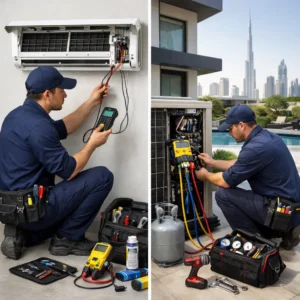
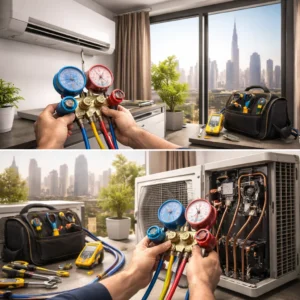
A proper refrigerant leak fix begins with accurate leak detection. Professional technicians use multiple methods depending on system type and suspected leak size.
Common detection techniques include:
- Visual inspection: oil residue around joints, coils, or valves.
- Electronic leak detectors: sensors that detect refrigerant molecules.
- Pressure testing: nitrogen pressurization to identify pressure drops.
- Soap bubble testing: applied to joints to reveal bubbling.
- UV dye testing: dye added to refrigerant, visible under UV light.
Professional diagnosis is critical because misidentifying the leak point can lead to repeated failure. A confirmed leak location determines whether repair is feasible or replacement is more practical.
Why Refrigerant Recharge Alone Is Not a Real Fix
Refrigerant recharge restores cooling temporarily, but it does not address the underlying problem. This approach often leads to repeated service calls and rising costs.
Risks of recharge-only solutions include:
- Repeated refrigerant loss.
- Compressor overheating due to low pressure.
- Moisture entering the system.
- Higher long-term repair costs.
A legitimate refrigerant leak fix always includes leak detection, repair, pressure testing, and then correct recharging. Anything less is a temporary patch, not a solution.
Repair Option 1: Stop-Leak Sealants
Stop-leak sealants are chemical additives designed to seal very small leaks from inside the system. They are marketed as a quick and affordable fix.
Advantages:
- Lower upfront cost.
- Minimal disassembly.
- May work on microscopic leaks.
Risks and limitations:
- Not effective for larger leaks.
- May clog expansion valves or capillary tubes.
- Can contaminate recovery equipment.
- Often considered temporary.
Stop-leak products are generally used as a last resort for aging systems where full repair is not economical. They are not recommended for newer or high-efficiency systems.
Repair Option 2: Mechanical Brazing or Welding
When a leak is located in copper tubing, joints, or coils, mechanical repair such as brazing or welding may be possible.
This method involves:
- Recovering refrigerant safely.
- Cleaning and preparing the leak area.
- Brazing or welding with appropriate materials.
- Pressure testing the repair.
- Recharging with correct refrigerant.
Advantages:
- Durable and long-lasting.
- Restores system integrity.
- Suitable for accessible leak points.
Risks:
- Heat damage if performed incorrectly.
- Not feasible on thin or corroded coils.
- Labor-intensive.
This method is often the most reliable repair option when conditions allow.
Repair Option 3: Full Component Replacement
If the leak is located in a major component such as the evaporator coil, condenser coil, or compressor housing, replacement may be required.
Situations where replacement is preferred:
- Multiple leak points.
- Severe corrosion.
- Thin or damaged coil material.
- Previous repair attempts failed.
Component replacement has higher upfront cost but significantly improves reliability and efficiency. In many cases, it is more cost-effective than repeated repairs.
Cost Comparison: Detection vs Repair vs Replacement
Understanding cost structure helps set realistic expectations.
- Leak detection: typically the lowest cost, essential for diagnosis.
- Minor repair (brazing): moderate cost, high reliability.
- Sealant use: low cost, higher risk.
- Component replacement: higher cost, long-term stability.
Professional AC gas refill and leak repair services usually combine detection, repair, and recharge into a structured process to avoid repeat failure.
Reliability and Risk Comparison of Each Fix Method
| Method | Reliability | Risk Level | Best Use Case |
|---|---|---|---|
| Recharge Only | Low | High | Temporary emergency only |
| Stop-Leak Sealant | Low to Medium | Medium | Old systems, small leaks |
| Brazing/Welding | High | Low | Accessible copper leaks |
| Component Replacement | Very High | Low | Severe or recurring leaks |
When Repair No Longer Makes Sense
There are situations where repairing a refrigerant leak is technically possible but financially impractical.
Replacement may be more practical when:
- The system is very old.
- Multiple components show corrosion.
- Refrigerant type is obsolete.
- Repair cost approaches replacement cost.
In these cases, continuing to repair may lead to repeated expenses without long-term reliability.
Professional Guidance and Preventive Perspective
Refrigerant leaks are not just mechanical failures. They are signs of system aging, corrosion, vibration stress, or improper installation.
Professional technicians do more than fix the leak. They evaluate why it happened and whether prevention steps such as vibration control, improved insulation, or routine inspection can reduce future risk.
When Refrigerant Leak Issues Should Be Addressed Properly
Refrigerant leaks do not fix themselves. If ignored, they can lead to poor cooling, rising energy bills, compressor damage, and environmental harm. Bio On Air helps handle refrigerant leak fix cases through proper leak detection, safe repair methods, and clear explanation of options so you can choose responsibly. Acting early reduces long-term cost and prevents system failure. You can use the WhatsApp or Call button at the top right of this page to discuss your AC condition with our team.
Conclusion
A refrigerant leak fix is not about adding gas—it is about restoring the integrity of a closed system. DIY methods are limited and risky, while professional repair ensures safety, legality, and reliability. Understanding the difference between temporary fixes and real solutions helps you avoid repeated costs and system damage.
Whether the right solution is brazing, component replacement, or system upgrade depends on leak location, system age, and overall condition. With proper diagnosis and transparent guidance, refrigerant leak problems can be resolved responsibly, protecting comfort, efficiency, and long-term value.