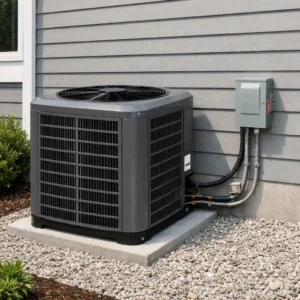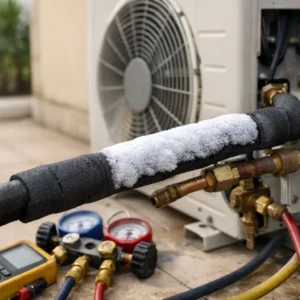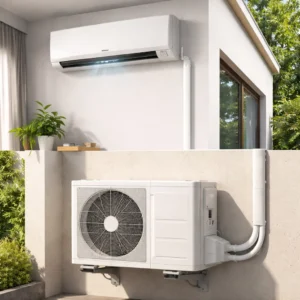





Searching for refrigerant leak detector liquid usually means you are dealing with a cooling problem that does not stay fixed. The system may cool for a short time after a gas refill, then lose performance again, or you may notice oil traces, pressure drops, or inconsistent cooling. In HVAC systems, refrigerant does not disappear on its own. If it is low, there is a leak somewhere. Liquid-based refrigerant leak detection methods remain one of the most practical, reliable, and widely used ways to confirm leaks, especially during on-site inspection and repair.
Table of Contents
ToggleWhat Is a Refrigerant Leak Detector Liquid
A refrigerant leak detector liquid is a specially formulated solution designed to visually reveal gas leaks in pressurized refrigeration and air conditioning systems. Unlike electronic sniffers that rely on sensors, liquid detectors work by reacting to escaping gas, producing visible signs such as bubbles or fluorescent traces.
Liquid-based leak detection has been used in HVAC work for decades because it is simple, cost-effective, and highly reliable when applied correctly. Even with the availability of advanced electronic detectors, many professional technicians still rely on liquid detectors as a confirmation tool, especially when accuracy and visual proof are required.
There are two main categories of refrigerant leak detector liquid:
- Bubble-based leak detection liquids
- UV dye-based leak detection liquids
Each method has its strengths, limitations, and ideal use cases, which we will explore in detail.
Bubble-Based Refrigerant Leak Detection Liquids
Bubble solutions are the most common and widely recognized type of refrigerant leak detector liquid. They are applied directly to suspected leak points such as pipe joints, valves, brazed connections, flare fittings, and service ports.
When refrigerant escapes under pressure, it passes through the liquid layer and forms bubbles. The size, speed, and consistency of these bubbles provide valuable clues about leak severity.
How Bubble Detection Works
Bubble detection relies on basic physics. Pressurized gas escaping from a small opening displaces the liquid, forming bubbles. High-quality solutions are formulated to create stable, visible bubbles even for very small leaks.
Technicians usually apply the liquid using:
- Spray bottles
- Brush applicators
- Squeeze bottles with directed nozzles
Once applied, the area is observed closely for bubble formation.
Micro-Bubble Sensitivity Explained
One of the most important characteristics of a good refrigerant leak detector liquid is micro-bubble sensitivity. This refers to the ability of the liquid to form extremely small, slow-growing bubbles when very small leaks are present.
Low-quality solutions may only show bubbles for large leaks. High-quality bubble liquids, however, can reveal pinhole leaks that would otherwise go unnoticed.
Micro-bubble sensitivity is critical because:
- Small leaks still cause refrigerant loss over time
- Early detection prevents compressor damage
- Repeated gas refills without fixing leaks increase cost
Non-Corrosive and Material-Safe Formulas
Another essential quality of a professional refrigerant leak detector liquid is that it must be non-corrosive. HVAC systems use a combination of metals such as copper, aluminum, brass, and steel.
A poor-quality liquid can:
- Cause corrosion over time
- Damage protective coatings
- Leave residue that attracts dirt or moisture
Professional-grade bubble solutions are formulated to be:
- pH neutral or near-neutral
- Safe for copper, aluminum, and steel
- Non-reactive with refrigerant oils
This makes them suitable for repeated use during maintenance and repair.
Adhesion on Pipes and Joints
Adhesion refers to how well the liquid stays on the surface being tested. A good leak detector liquid should cling to vertical pipes, overhead joints, and curved surfaces without immediately dripping away.
Strong adhesion improves accuracy by:
- Allowing longer observation time
- Preventing missed leaks due to runoff
- Making micro-bubbles easier to see
This is especially important in tight mechanical rooms or ceiling-mounted systems.
UV Dye-Based Refrigerant Leak Detection Liquids
UV dye detection is a different approach that focuses on tracing refrigerant leaks over time rather than immediate visual bubbling.
In this method, a small amount of fluorescent dye is injected into the refrigeration system. The dye circulates with the refrigerant and oil. When a leak occurs, dye escapes and leaves a visible trace at the leak point.
How UV Dye Detection Works
After injecting the dye:
- The system is run under normal operating conditions
- Dye circulates with refrigerant and compressor oil
- Leaks release dye externally
- A UV lamp is used to inspect components
Under ultraviolet light, the dye fluoresces, making leaks visible even if the leak is not actively releasing gas at the time of inspection.
Refrigerant and Oil Compatibility
UV dyes must be compatible with both the refrigerant type and the compressor oil used in the system.
Modern HVAC systems use various refrigerants such as:
- R22 (older systems)
- R410A
- R32
- R134a and others
They also use different oils such as mineral oil, POE oil, or PAG oil. Using the wrong dye can cause chemical incompatibility, reduce lubrication, or damage components.
Professional UV dyes clearly specify:
- Compatible refrigerants
- Compatible oil types
- Maximum recommended dosage
When UV Dye Detection Is Most Useful
UV dye detection is especially useful when:
- Leaks are intermittent
- Leaks occur under operating vibration
- Leaks are in hidden or hard-to-access areas
- Long-term monitoring is needed
It is less suitable for quick confirmation during emergency repairs but highly effective for identifying recurring or elusive leaks.
Comparison: Liquid Leak Detectors vs Electronic Leak Detectors
Technicians often choose between liquid-based detectors and electronic sniffers. Each method has strengths and limitations.
| Aspect | Liquid Detectors | Electronic Sniffers |
|---|---|---|
| Detection method | Visual confirmation | Sensor-based gas detection |
| Precision | Very high at exact point | High but can give false positives |
| Reliability | Consistent when applied correctly | Dependent on calibration and environment |
| Cost | Low | Medium to high |
| Best use case | Confirming leak location | Scanning large areas quickly |
| Limitations | Needs access to joints | Sensitive to airflow and contaminants |
In practice, many professionals use both. Electronic detectors help locate the general area, while liquid detectors confirm the exact leak point.
Pressure Requirements for Effective Liquid Leak Detection
Liquid-based detection relies on pressure differential. If system pressure is too low, refrigerant may not escape forcefully enough to form visible bubbles.
Important considerations include:
- The system must be pressurized
- Detection is easier on high-pressure side
- Testing after nitrogen pressure testing is common
In some repair scenarios, technicians pressurize the system with dry nitrogen to safely test for leaks without releasing refrigerant.
Visual Confirmation and Interpretation of Results
Interpreting bubble behavior is part of technician skill.
- Fast-growing large bubbles usually indicate significant leaks
- Slow, fine bubbles suggest micro-leaks
- Foaming without bubble growth may indicate residue, not a leak
Proper lighting, patience, and stable application are critical for accurate interpretation.
Safety Considerations When Using Refrigerant Leak Detector Liquids
Although most professional liquids are safe, basic precautions should always be followed:
- Avoid spraying directly into eyes or skin
- Wear gloves when working in confined spaces
- Ensure adequate ventilation
- Clean residue after testing if required
When using UV dyes, eye protection is important when working with UV lamps.
Commonly Trusted HVAC Leak Detection Liquid Brands
Professional technicians often rely on trusted brands known for consistency and safety. Commonly used brands include:
- Big Blu leak detection solution
- RectorSeal Leak Detector
- Nu-Calgon EasySeal (application-specific)
- Inficon bubble solutions
For UV dye detection, brands often specify compatibility with modern refrigerants and oils, which is critical for safe use.
Why Liquid Leak Detection Remains Relevant Today
Despite advances in electronic detection, liquid-based refrigerant leak detection remains a core HVAC practice because it provides undeniable visual proof. When a bubble forms or dye appears, there is no ambiguity.
This makes liquid detection especially valuable for:
- Customer communication and transparency
- Repair verification
- Training and quality control
Conclusion
A refrigerant leak detector liquid is one of the most practical tools in HVAC diagnostics. Bubble solutions offer immediate visual confirmation with high precision, while UV dyes provide long-term tracking for difficult or intermittent leaks. Understanding micro-bubble sensitivity, non-corrosive formulations, adhesion, and compatibility is essential for effective use.
When used correctly and combined with proper pressure testing and safety practices, liquid-based leak detection helps prevent repeated refrigerant loss, protects system components, and supports accurate repair decisions. Whether for routine maintenance or complex troubleshooting, liquid leak detectors remain a reliable, cost-effective solution in modern HVAC work.