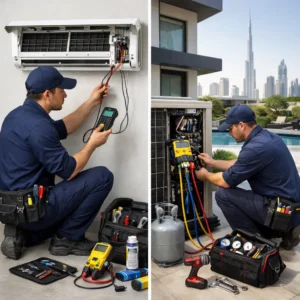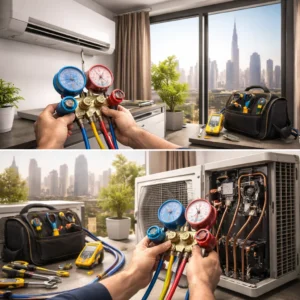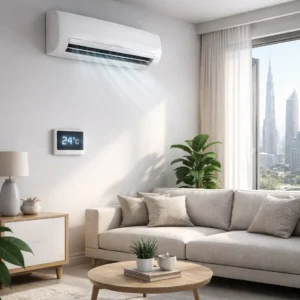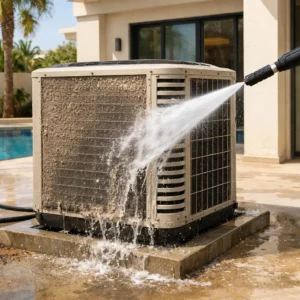





The rise of new ac technology is changing how cooling works in hot climates like the UAE. In Dubai, where AC runs almost year-round, modern systems are no longer just about cooling—they focus on efficiency, air quality, and smarter energy use. This guide explains the latest technologies and what actually makes a difference in real conditions.
Table of Contents
ToggleWhy New AC Technology Matters in the UAE
In many countries, AC is used seasonally. In the UAE, it is a daily necessity. Systems often run 8–24 hours per day, especially during summer.
This creates three major challenges:
- High electricity consumption (DEWA bills)
- Continuous wear on AC components
- Indoor air quality concerns due to sealed environments
New AC technology is designed to solve these problems—not just by cooling faster, but by cooling smarter and more efficiently.
Inverter and Variable Speed Compressor Technology
One of the most important advancements in modern AC systems is inverter technology. Unlike traditional AC units that turn on and off repeatedly, inverter systems adjust their speed based on demand.
How It Works
Instead of running at full power all the time, the compressor changes speed depending on the room temperature.
- High speed when cooling is needed
- Low speed when temperature is stable
Why It Matters in Dubai
In high-temperature climates, AC systems often run continuously. Traditional systems waste energy by cycling on and off, while inverter systems maintain a stable temperature.
Key benefits:
- Lower energy consumption
- Reduced wear and tear
- More stable indoor temperature
In real UAE conditions, inverter systems can significantly reduce energy usage compared to older fixed-speed units.
T3 Rated Systems for Extreme Heat
Not all AC systems are designed for extreme climates. T3-rated AC units are specifically built for high ambient temperatures like those in the UAE.
What Is T3 Rating
T3 systems are tested to perform efficiently in temperatures above 45°C.
Why Standard Systems Fail
Many imported AC units are designed for milder climates. In UAE conditions, they may:
- Lose cooling efficiency
- Overheat and shut down
- Consume more power
Real Advantage
T3-rated systems maintain performance even during peak summer heat, making them more reliable for long-term use.
Smart AI-Driven Cooling Features
Modern AC systems are becoming smarter with AI-driven features that adapt to user behavior and environment.
Occupancy Detection
Some systems detect whether a room is occupied and adjust cooling accordingly.
- Reduce cooling when room is empty
- Increase comfort when someone enters
Predictive Cooling
AI systems can learn your daily patterns and adjust cooling automatically.
Example:
- Pre-cool room before you arrive home
- Reduce cooling during sleeping hours
Smart Control Integration
Many AC systems now connect to mobile apps or smart home systems.
This allows you to:
- Control temperature remotely
- Monitor usage
- Optimize energy consumption
Integration with Energy Monitoring Systems
In Dubai, electricity costs are a major concern. New AC systems can integrate with home energy monitoring tools to help reduce DEWA bills.
These systems allow you to:
- Track energy consumption in real time
- Identify inefficient usage patterns
- Adjust cooling behavior accordingly
This turns AC from a passive appliance into an active energy management tool.
Advanced Indoor Air Quality Technology
Cooling alone is no longer enough. Indoor air quality is becoming a major focus of new AC technology.
HEPA Filtration
High-efficiency filters can capture fine particles such as dust, pollen, and allergens.
UV-C Sterilization
UV-C light technology is used inside AC systems to reduce bacteria and microbial growth.
Self-Cleaning Evaporators
Some systems include automatic cleaning functions that remove moisture and prevent mold buildup.
These features are especially important in the UAE, where sealed environments can trap pollutants indoors.
For deeper cleaning beyond built-in features, solutions like AC deep cleaning are often required to maintain hygiene inside the system.
Modern Refrigerants and Environmental Impact
New AC systems are moving toward environmentally friendly refrigerants.
R-32 Refrigerant
- Lower environmental impact compared to older gases
- More energy efficient
R-454B Refrigerant
- Next-generation low GWP refrigerant
- Designed for future sustainability standards
These refrigerants not only reduce environmental impact but also improve system efficiency.
Hybrid and Solar-Assisted Cooling Systems
Another emerging trend is hybrid cooling systems that combine traditional AC with renewable energy sources.
Solar-Assisted AC
These systems use solar panels to offset electricity consumption.
Hybrid Systems
Some systems switch between power sources based on availability and cost.
While still developing in the UAE market, these technologies show potential for reducing long-term energy costs.
Compatibility with District Cooling Systems
In many UAE developments, district cooling systems are used instead of individual AC units.
New AC technologies are designed to integrate with these systems by:
- Optimizing airflow distribution
- Improving energy efficiency
- Enhancing indoor comfort
This ensures better performance in buildings using centralized cooling infrastructure.
Which Technologies Actually Save Money
Not all new features provide real value. Some are practical, while others are mainly marketing.
| Technology | Real Value |
|---|---|
| Inverter Compressor | High – reduces energy consumption |
| T3 Rating | High – essential for UAE climate |
| Smart AI Features | Moderate – useful but depends on usage |
| UV-C Sterilization | Moderate – supports hygiene |
| Solar AC | Situational – depends on setup |
The most impactful upgrades are inverter technology and T3-rated systems, especially for long-term savings.
Common Misconceptions About New AC Technology
Some features sound advanced but do not always deliver practical benefits.
- Smart features do not replace maintenance
- Air purification is not a substitute for cleaning
- Energy savings depend on usage behavior
Understanding these limitations helps avoid unrealistic expectations.
When Should You Upgrade to New AC Technology
You should consider upgrading if:
- Your AC is over 10–15 years old
- Electricity bills are consistently high
- Cooling performance is unstable
- You experience frequent breakdowns
Modern systems can provide better performance and efficiency compared to older units.
Long-Term Impact of Choosing the Right Technology
Choosing the right AC technology affects more than just cooling.
- Lower operational costs
- Improved indoor comfort
- Better air quality
- Reduced environmental impact
It is a long-term investment in both comfort and efficiency.
If you are considering upgrading or improving your AC system, it is important to understand that technology alone does not guarantee performance. Installation quality, maintenance, and system condition all play a role. Ignoring airflow issues, internal dirt, or system inefficiencies can reduce the benefits of even the most advanced AC unit. With the right approach, these factors can be addressed early to ensure consistent performance and energy efficiency. If you need guidance on your current system or planning an upgrade, you can use the WhatsApp or Call button on the top right to connect with the Bio On Air team and understand the most suitable next step based on your situation.
Conclusion
New ac technology is transforming cooling in the UAE by improving efficiency, air quality, and energy control. By focusing on proven features like inverter systems and T3-rated units, you can achieve better performance, lower costs, and a more comfortable indoor environment.