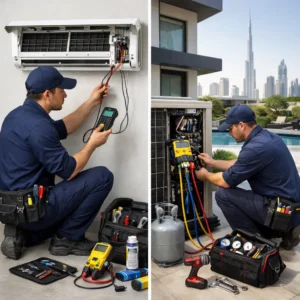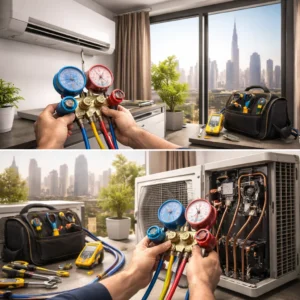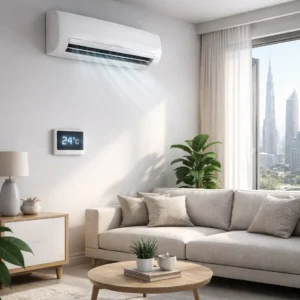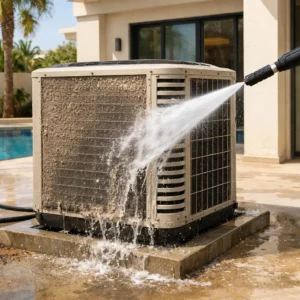





Experiencing a new ac cooling problem can be confusing and frustrating, especially when the system is newly installed or recently replaced. Many people assume a new AC should work perfectly for years, so when cooling feels weak, uneven, or uncomfortable, it often creates doubt: is the unit defective, was the installation wrong, or is something else affecting performance? In hot climates like the UAE, even a small cooling issue in a new AC can quickly impact comfort, sleep quality, productivity, and electricity costs. This article explains the most common new AC cooling problems, why they happen, and what practical solutions actually work.
Table of Contents
ToggleWhy New AC Cooling Problems Happen More Often Than Expected
A common misunderstanding is that new AC cooling problems are rare. In reality, many cooling issues appear within the first weeks or months after installation. This does not always mean the AC unit is faulty. In most cases, the issue is related to setup, airflow, calibration, or environmental factors rather than the machine itself.
New AC systems are more sensitive to installation quality and system balance. Modern units are designed to be energy-efficient, which means they rely heavily on correct airflow, proper refrigerant levels, and accurate control settings. When one part of the system is slightly off, cooling performance can drop noticeably.
Understanding the root cause early is important. Ignoring early symptoms can lead to higher energy consumption, faster wear on components, and ongoing discomfort that should not exist with a new system.
Common Signs of a New AC Cooling Problem
Before diving into specific causes, it helps to recognize the most common signs that indicate a cooling issue in a new AC:
- The AC runs continuously but the room never feels cool enough
- Some rooms cool properly while others remain warm
- Airflow feels weak even at higher fan settings
- The AC turns on and off frequently
- Electricity bills are higher than expected for a new system
- The air feels humid, stuffy, or uncomfortable
If you notice one or more of these signs, the problem is usually solvable—but only if the correct cause is identified.
Issue 1 Incorrect Thermostat Settings or Calibration
One of the simplest but most overlooked causes of a new AC cooling problem is thermostat setup. New systems often come with advanced digital thermostats that require proper configuration.
Common thermostat-related issues include:
- Thermostat set to the wrong mode (fan instead of cooling)
- Incorrect temperature calibration
- Thermostat placed in a poor location (near heat sources)
- Incorrect scheduling or eco-mode settings
When the thermostat is not reading room temperature accurately, the AC may stop cooling too early or run inefficiently. This often makes the room feel warmer than expected even though the system is technically working.
Solution: Check that the thermostat is set to cooling mode, verify the target temperature, and ensure it is not exposed to direct sunlight or heat. If calibration is off, a technician can recalibrate or reposition the thermostat.
Issue 2 Improper AC Size for the Space
Another common cause of new AC cooling problems is incorrect sizing. A new AC that is too small or too large for the space will struggle to maintain comfort.
If the AC is too small:
- It runs continuously without reaching the desired temperature
- Cooling feels weak during peak heat hours
- Energy consumption increases due to constant operation
If the AC is too large:
- It cools the room too quickly and shuts off
- Humidity remains high because the unit does not run long enough
- Temperature feels uneven or uncomfortable
Solution: Proper load calculation is essential before installation. If sizing is incorrect, adjustments such as airflow balancing or, in severe cases, system replacement may be needed.
Issue 3 Poor Airflow Due to Installation Issues
Airflow problems are one of the most frequent reasons a new AC does not cool properly. Even a high-quality unit cannot perform well if air cannot move efficiently.
Common airflow-related causes include:
- Blocked or partially closed vents
- Improper duct connections
- Kinked or crushed flexible ducts
- Incorrect fan speed settings
In newly installed systems, ducts may not be properly sealed or aligned. This causes cool air to escape before reaching the room, making the AC seem weak.
Solution: Inspect vents and ducts for obstructions or leaks. Airflow balancing and duct sealing often resolve these issues quickly.
Issue 4 Refrigerant Level Problems in New Systems
Many people assume refrigerant issues only happen in older AC units. In reality, a new AC cooling problem can also be caused by incorrect refrigerant charge.
Common refrigerant-related issues include:
- Undercharged system due to installation error
- Minor leaks at connection points
- Incorrect refrigerant type used
When refrigerant levels are not correct, the AC cannot absorb and release heat effectively. This results in weak cooling, longer run times, and higher energy use.
Solution: Refrigerant levels must be checked using proper tools. If a leak exists, it should be fixed before adding refrigerant to avoid recurring problems.
Issue 5 Dirty or Restricted Air Filters
It may seem surprising, but even a new AC can suffer from dirty filters. Construction dust, renovation debris, or poor indoor air conditions can clog filters quickly.
Restricted filters cause:
- Reduced airflow
- Lower cooling efficiency
- Higher strain on the blower motor
Solution: Check and clean or replace filters regularly, especially during the first months after installation. Clean filters are essential for proper cooling and air quality.
Issue 6 High Heat Load Inside the Space
Sometimes the problem is not the AC, but the environment. New AC cooling problems often appear when internal heat load is higher than expected.
Sources of excess heat include:
- Large windows with direct sunlight
- Poor insulation
- High occupancy or heavy appliance use
- Open doors or frequent air leakage
In these cases, the AC is working as designed, but the cooling demand exceeds what the system can comfortably handle.
Solution: Improve insulation, reduce heat gain where possible, and ensure doors and windows are properly sealed.
Issue 7 Duct Design or Distribution Problems
Uneven cooling in a new AC system is often caused by duct design issues. Some rooms may receive too much air while others receive too little.
This results in:
- Hot and cold spots within the same home
- Constant thermostat adjustments
- Reduced comfort despite a new system
Solution: Duct balancing and redesign can help distribute air more evenly. This is especially important in villas and larger apartments.
Issue 8 Electrical or Control System Issues
Modern AC systems rely heavily on electronic controls. Wiring issues, sensor faults, or incorrect control settings can all cause cooling problems.
Common symptoms include:
- AC turning on and off unexpectedly
- Fan running without cooling
- Inconsistent temperature control
Solution: Electrical diagnostics should be performed by a professional to avoid damage to sensitive components.
Issue 9 Drainage and Moisture Problems
Improper drainage can affect cooling indirectly. If moisture builds up inside the system, airflow and heat exchange efficiency drop.
Signs include:
- Water leakage
- Musty odors
- Reduced cooling performance
Solution: Ensure drain lines are properly installed, sloped, and free of blockages.
Issue 10 New AC Needs Time to Stabilize
In some cases, a new AC cooling problem is temporary. New systems may require a short adjustment period as components settle and settings are optimized.
This is especially common when:
- The AC is installed during extreme weather
- The space is newly occupied
- Initial settings are not yet fine-tuned
Solution: Monitor performance over a short period and make adjustments as needed with professional guidance.
How to Prevent New AC Cooling Problems
Prevention is always easier than correction. Simple steps can help ensure your new AC performs as expected:
- Schedule a post-installation inspection
- Clean filters regularly
- Monitor airflow and room temperature consistency
- Address small issues early
When Professional Help Is Necessary
While some checks can be done yourself, many new AC cooling problems require professional evaluation. Incorrect handling of refrigerant, electrical components, or duct systems can cause long-term damage.
Bio On Air helps address new AC cooling problems through proper inspection, accurate diagnosis, and clear explanation of what the system needs. Early intervention often prevents higher costs, energy waste, and ongoing discomfort. If you notice persistent cooling issues, you can use the WhatsApp or Call button at the top right of this page to discuss your situation with our team.
Conclusion
A new ac cooling problem does not always mean your system is defective. In most cases, the issue is related to setup, airflow, environment, or calibration rather than the AC unit itself. By understanding common problems and their solutions, you can avoid unnecessary frustration and protect your investment.
Addressing cooling issues early helps maintain comfort, control energy costs, and extend the lifespan of your AC. With the right diagnosis and preventive approach, a new AC system should deliver consistent, efficient, and healthy cooling for years to come.