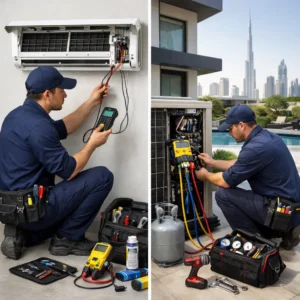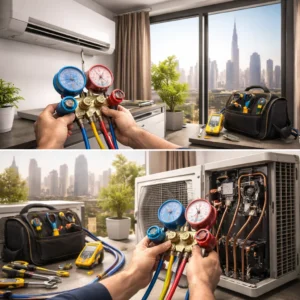





Understanding indoor air quality pollutants in Dubai is essential for maintaining a healthy home environment. In a region where homes are sealed, air-conditioned, and exposed to dust and humidity, pollutants can build up silently. This guide explains the most common pollutants, their sources, health effects, and practical ways to reduce exposure.
Table of Contents
ToggleWhat Are Indoor Air Quality Pollutants
Indoor air quality (IAQ) pollutants are harmful particles, gases, or biological substances that exist inside enclosed spaces. In Dubai, these pollutants behave differently compared to other regions due to constant AC use, limited ventilation, and environmental dust.
Unlike outdoor pollution, indoor pollutants tend to stay trapped. This means even small sources can build up over time and affect breathing comfort, health, and overall indoor air safety.
Why Indoor Air Quality Is a Bigger Issue in Dubai
Many people assume pollution is mainly an outdoor problem. However, in Dubai, indoor air can often be more polluted than outdoor air.
This is due to several regional factors:
- Homes remain closed for long periods to preserve cooling
- AC systems run continuously
- Dust from the desert enters and settles inside
- Humidity and condensation create ideal conditions for microbial growth
This combination creates an environment where pollutants are not only present but also continuously recirculated through the AC system.
Most Common Indoor Air Quality Pollutants in Dubai
1. Particulate Matter from Desert Dust
Fine dust particles are one of the most common pollutants in Dubai homes. These particles enter through doors, windows, and even through ventilation systems.
Particulate matter includes:
- PM10 (coarse dust particles)
- PM2.5 (fine particles that can enter lungs)
These particles accumulate inside ducts, filters, furniture, and surfaces. Over time, they can be redistributed into the air whenever the AC runs.
2. Volatile Organic Compounds (VOCs)
VOCs are gases released from everyday products such as:
- Furniture and wood materials
- Paints and coatings
- Cleaning products
- Air fresheners
Formaldehyde is one of the most common VOCs found in indoor environments. It is often released from pressed wood furniture and adhesives.
These compounds are invisible and can build up in poorly ventilated homes.
3. Biological Contaminants (Mold and Bacteria)
Biological pollutants are a major concern in UAE homes due to humidity and AC usage.
Common sources include:
- Mold inside AC ducts
- Moisture buildup in drain pans
- Dust mixed with humidity inside filters
Once mold forms inside the system, it can spread through airflow into different rooms.
4. Combustion Gases from Indoor Activities
Indoor cooking and appliances can release gases such as:
- Carbon monoxide (CO)
- Nitrogen dioxide (NO2)
These gases are more concentrated in poorly ventilated kitchens and enclosed spaces.
Dubai-Specific Hidden Sources of Indoor Pollutants
AC Duct Contamination
One of the most overlooked sources of indoor air pollution is the AC duct system.
Over time, ducts accumulate:
- Dust and debris
- Mold spores
- Bacteria and allergens
Every time the AC runs, these contaminants can circulate back into your living space. This is why proper AC duct cleaning is often essential in improving indoor air quality.
Bukhoor and Incense Smoke
Bukhoor is widely used in UAE homes for fragrance. However, it releases fine particles and smoke that remain suspended in indoor air.
Frequent use without proper ventilation can increase indoor particulate levels significantly.
Outdoor Sand Infiltration
Dust storms and wind carry fine sand particles into buildings. Even well-sealed homes are not completely protected.
These particles settle inside ducts, carpets, and furniture, becoming a continuous source of indoor pollution.
Indoor Air Quality Standards in Dubai
To understand whether your indoor air is safe, it is important to refer to recognized standards.
WHO Air Quality Guidelines
- PM2.5: 15 µg/m³ (24-hour average)
- PM10: 45 µg/m³ (24-hour average)
Typical Indoor Comfort Benchmarks
- CO2: below 1000 ppm
- Relative humidity: 40% – 60%
- Temperature: 22–24°C
In many Dubai homes, these levels can be exceeded due to poor ventilation and system contamination.
Health Symptoms Linked to Poor Indoor Air Quality
Indoor air pollution does not always show immediate effects. However, long-term exposure can lead to noticeable symptoms.
- Frequent sneezing or allergies
- Dry throat and irritation
- Headaches and fatigue
- Breathing discomfort
- Worsening asthma symptoms
If symptoms improve when you leave your home and return when you come back, indoor air quality may be a contributing factor.
How HVAC Systems Influence Indoor Air Quality
Your AC system plays a major role in air circulation. It can either improve or worsen air quality depending on its condition.
If the system is not maintained:
- Dust accumulates inside ducts
- Filters become clogged
- Moisture leads to microbial growth
This turns the AC system into a distribution channel for pollutants.
Practical Ways to Reduce Indoor Air Pollutants
1. Regular AC Maintenance
Routine maintenance ensures filters, coils, and airflow systems remain clean.
Well-maintained systems:
- Trap dust effectively
- Prevent buildup inside ducts
- Improve cooling efficiency
2. Improve Filtration
Using higher-quality filters helps capture fine particles.
Options include:
- Standard mesh filters (basic)
- High-efficiency filters (better particle capture)
3. Control Humidity Levels
Humidity control is essential to prevent mold growth.
Maintaining indoor humidity between 40–60% reduces microbial risk.
4. Manage Ventilation Carefully
Opening windows can help, but in Dubai, outdoor air may bring dust.
Ventilation should be controlled and balanced with filtration.
5. Reduce Indoor Pollutant Sources
- Limit use of strong chemicals
- Choose low-VOC products
- Use bukhoor in moderation
When You Need Professional Indoor Air Quality Testing
In some cases, basic cleaning and maintenance are not enough.
You should consider professional testing if:
- Persistent odor remains
- Allergy symptoms continue
- Visible mold is present
- Air feels heavy or stale
What Indoor Air Quality Testing Includes
Professional IAQ testing typically measures:
- Particulate levels (PM2.5, PM10)
- VOC concentration
- Humidity and temperature
- Mold spore presence
- CO2 levels
This helps identify hidden issues that are not visible during normal inspection.
Long-Term Impact of Ignoring Indoor Air Quality
Poor indoor air quality can lead to:
- Chronic respiratory issues
- Reduced comfort at home
- Higher AC energy consumption
- Frequent system breakdowns
Over time, these effects can become more difficult and expensive to manage.
Why Early Action Matters
Indoor air problems often develop slowly. By the time symptoms appear, pollutants may already be deeply embedded in the system.
Addressing issues early helps prevent long-term damage and ensures a healthier environment.
If you are noticing signs of poor air quality such as persistent dust, unusual odors, or breathing discomfort, it is important not to ignore them. Indoor pollutants can accumulate inside your AC system, circulate through your home, and affect both health and system performance. Early action helps prevent more serious issues, including mold growth and higher energy consumption. If you need clarity about your indoor air condition, you can use the WhatsApp or Call button on the top right to connect with the Bio On Air team and understand the most suitable next step.
Conclusion
Indoor air quality pollutants in Dubai are influenced by dust, humidity, and continuous AC usage. By understanding common sources, health effects, and preventive strategies, you can maintain a cleaner, healthier indoor environment and ensure your AC system supports—not harms—your air quality.