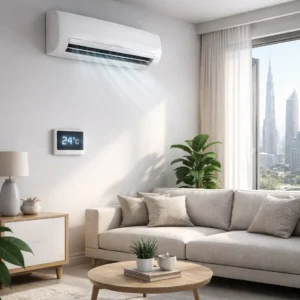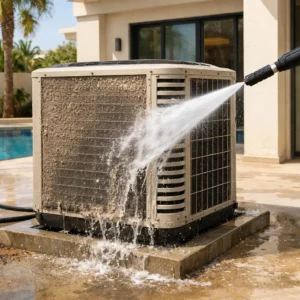





An effective indoor air quality inspection checklist is essential in Dubai, where sealed indoor environments, continuous AC use, humidity, and dust can quietly impact air quality. This guide provides a ready-to-use checklist tailored to UAE conditions, including inspection steps, IAQ limits, and clear actions you can follow.
Table of Contents
ToggleWhy Indoor Air Quality Inspection Matters in Dubai
Indoor environments in the UAE behave differently from many other regions. Homes and offices are often tightly sealed to maintain cooling efficiency, which limits natural air exchange. Combined with high outdoor humidity and dust, this creates conditions where contaminants can accumulate.
Common indoor air issues include:
- Dust recirculation through AC systems
- Hidden mold growth due to condensation
- Odors from stagnant air or organic buildup
- Chemical pollutants from materials and cleaning products
This is why a structured inspection checklist is not optional—it is necessary for maintaining a healthy indoor environment.
Indoor Air Quality Inspection Checklist (Ready to Use)
1. Visual Inspection for Moisture and Mold
- Check walls, ceilings, and corners for discoloration
- Look for black, green, or brown spots near AC vents
- Inspect window edges and silicone seals for mold
- Check under sinks and inside cabinets for dampness
- Observe ceiling areas near AC ducts for stains
Moisture is the primary trigger for mold growth in UAE indoor environments.
2. Dust and Surface Condition Check
- Inspect AC vents for visible dust buildup
- Check furniture surfaces for rapid dust accumulation
- Observe return air grills for blockage
- Look inside ducts (if accessible) for debris
Excessive dust often indicates airflow issues or dirty duct systems.
3. Odor Detection
- Check for musty smell when AC starts
- Identify chemical or artificial odors
- Notice if smell disappears when leaving the space
Persistent odor is often a sign of microbial growth or poor ventilation.
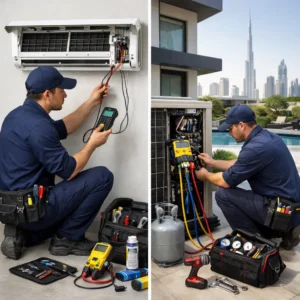
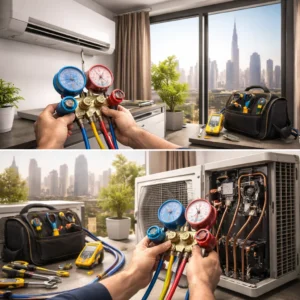
4. HVAC System Inspection
- Check AC filters for dirt and blockage
- Inspect condensate drain tray for standing water
- Ensure drainage lines are not clogged
- Check cooling coils for dirt buildup
- Inspect fresh air intake (if available)
HVAC systems are the main pathway for air circulation, making them critical in IAQ inspection.
5. Ventilation and Airflow Check
- Ensure vents are not blocked by furniture
- Check airflow strength in each room
- Confirm presence of fresh air intake system
- Observe if some rooms feel stagnant or stuffy
6. Temperature and Humidity Measurement
- Measure indoor temperature
- Measure relative humidity
- Check for condensation on windows or surfaces
Recommended UAE indoor range:
- Temperature: 22°C – 24°C
- Humidity: 40% – 60%
Humidity above 60% increases mold risk significantly.
7. Air Quality Parameter Testing
For deeper inspection, consider measuring these IAQ parameters:
| Parameter | Recommended Limit | Impact |
|---|---|---|
| CO2 | < 1000 ppm | Ventilation indicator |
| PM2.5 | < 35 µg/m³ | Respiratory health |
| TVOCs | < 500 µg/m³ | Chemical exposure |
| Formaldehyde | < 0.1 ppm | Irritation and long-term risk |
These limits align with general recommendations from ASHRAE 62.1 and regional IAQ practices.
8. Occupant Health Symptoms Tracking
- Frequent sneezing or coughing indoors
- Eye or throat irritation
- Headaches or fatigue at home
- Symptoms improve when leaving the space
Human symptoms are often the earliest indicator of poor air quality.
HVAC-Specific Audit Points (Detailed)
Since HVAC systems control indoor air circulation, a deeper audit is essential.
- Filter condition (clean or clogged)
- Coil cleanliness
- Drain tray hygiene
- Duct internal cleanliness
- Air balancing across rooms
Issues in these areas can directly affect air quality and system efficiency.
Common IAQ Problems Found in UAE Homes
- Dust accumulation due to desert environment
- Condensation-driven mold growth
- Closed indoor environment with limited ventilation
- Improper AC maintenance
These factors often combine, making IAQ problems gradual but persistent.
Inspection Frequency for UAE Properties
| Property Type | Recommended Frequency |
|---|---|
| Residential Apartment | Every 6–12 months |
| Villa | Every 6 months |
| Commercial Space | Every 3–6 months |
More frequent inspections may be needed if symptoms or visible issues appear.
Action Steps After Inspection
If Minor Issues Are Found
- Clean or replace AC filters
- Improve ventilation
- Reduce indoor humidity
If Moderate Issues Are Found
- Perform duct cleaning
- Deep clean AC system
- Address airflow imbalance
If Severe Issues Are Found
- Mold remediation may be required
- Professional IAQ testing recommended
- Full HVAC system inspection needed
In cases where duct contamination or airflow issues are suspected, a proper AC duct cleaning process may be necessary to restore air quality.
When to Call Certified Professionals
You should consider professional inspection if:
- Mold is visible or suspected
- Odor persists despite cleaning
- Health symptoms continue
- Airflow remains weak or uneven
Professional tools can detect issues that are not visible during basic inspection.
Printable Indoor Air Quality Checklist
You can use the checklist below for routine inspection:
| Item | Status |
|---|---|
| Mold or moisture signs | ✔ / ✘ |
| Dust buildup on vents | ✔ / ✘ |
| Odor presence | ✔ / ✘ |
| Filter condition | ✔ / ✘ |
| Drain tray cleanliness | ✔ / ✘ |
| Airflow balance | ✔ / ✘ |
| Temperature within range | ✔ / ✘ |
| Humidity within range | ✔ / ✘ |
This checklist can be printed or saved for regular use.
Long-Term Benefits of Regular IAQ Inspection
- Healthier indoor environment
- Better AC performance
- Lower energy consumption
- Reduced risk of mold growth
If you are noticing early signs of poor indoor air quality such as dust buildup, odor, or discomfort, it is important to address them early rather than waiting for the issue to worsen. Problems related to airflow, hidden contamination, and humidity can gradually affect both health and AC performance. Taking action early helps prevent larger repairs and ensures a safer indoor environment. If you need clarity about your indoor air condition or next steps, you can use the WhatsApp or Call button on the top right to connect with the Bio On Air team and discuss your situation.
Conclusion
Using a structured indoor air quality inspection checklist helps you identify problems early and maintain a safe indoor environment in UAE conditions. With regular inspection and proper action, you can improve air quality, protect your health, and ensure long-term AC efficiency.