




Searching for how to make ac hot often means you are trying to solve a comfort problem, not experiment with your AC. Maybe the room feels too cold at night, the weather has changed, or you are using an AC system that supports heating but you are not sure how to activate it correctly. In many homes and apartments, especially in the UAE, AC systems are designed mainly for cooling, which creates confusion when people want warmer air. This guide explains 9 practical and safe ways to understand how to make AC blow warm air, what is realistically possible, and when trying to force heat from an AC can actually damage the system.
Table of Contents
Toggle#1 Check If Your AC Has a Real Heating Mode
The most important thing to understand when searching for how to make ac hot is this: not all AC units are designed to produce heat. In the UAE, many split and central AC systems are cooling-only models.
To check if your AC supports heating:
- Look at the remote control for a HEAT or sun symbol.
- Check the user manual or model number online.
- See if the AC changes airflow behavior when switching modes.
If your AC does not have a heating function, it cannot safely produce hot air. Trying to force it using incorrect settings or external hacks can cause electrical stress and internal damage.
#2 Use Heat Mode Correctly (Not Auto or Cool)
Some users think setting the AC to “Auto” will make it warm when the room feels cold. This is a common misunderstanding.
When using an AC with heating capability:
- Select Heat Mode explicitly.
- Set the temperature higher than room temperature.
- Wait several minutes for the system to switch cycles.
Heating mode works differently from cooling. The AC may pause briefly before blowing warm air. If you switch modes too quickly or keep changing settings, the system may not stabilize.
#3 Adjust Fan Speed to Support Warm Air Distribution
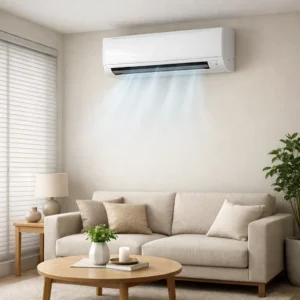
Even when heat mode is active, warm air may feel weak or uneven. Fan speed plays an important role.
For better warm airflow:
- Set fan speed to medium or high.
- Avoid very low fan settings at the beginning.
- Allow air to circulate across the room.
Warm air needs movement to spread evenly. Low fan speed can make it feel like the AC is not heating at all, even when it is.
#4 Clean Filters to Prevent Cold Draft Illusion
Dirty filters can block airflow and create the illusion that the AC is blowing cold air, even in heat mode.
When filters are clogged:
- Airflow becomes weak.
- Heat does not circulate properly.
- The unit may feel inconsistent.
Cleaning or replacing filters helps the system deliver whatever temperature it is producing—cool or warm—more effectively.
#5 Understand Why Cooling-Only AC Cannot Be “Hacked” to Heat
One of the biggest myths around how to make ac hot is that cooling-only AC units can be modified or “tricked” to blow hot air.
In reality:
- Cooling-only ACs lack heat-exchange components for heating.
- Electrical load is not designed for heating cycles.
- Internal damage can occur if forced.
Using unsafe methods—such as blocking airflow or altering wiring—can damage compressors, control boards, and safety sensors.
#6 Use Room Temperature Control Instead of Extreme Settings
Setting extremely high temperatures does not make the AC heat faster. It often causes system stress.
Best practice:
- Increase temperature gradually.
- Allow the system to stabilize.
- Avoid frequent on-off switching.
Stable settings help the system operate efficiently and reduce wear.
#7 Improve Room Heat Retention Instead of Forcing the AC
Sometimes the problem is not the AC—it is the room losing heat too quickly.
To help warm air stay inside:
- Close doors and windows.
- Use curtains or blinds at night.
- Reduce drafts from gaps.
These steps improve comfort without pushing the AC beyond its design limits.
#8 Know When the AC Is Malfunctioning in Heat Mode
If your AC has heating mode but still blows cold air, there may be a technical issue.
Common causes include:
- Faulty reversing valve.
- Control board errors.
- Sensor calibration problems.
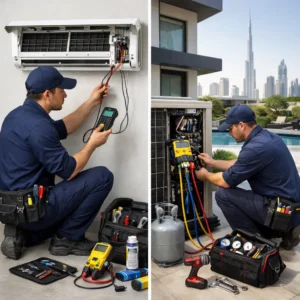
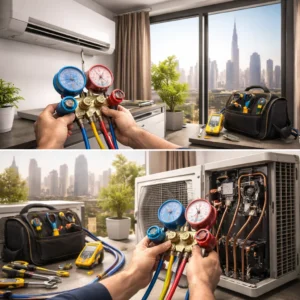
In these cases, professional inspection is required. Attempting DIY fixes can worsen the problem.
#9 Consider System Design and Installation Limits
Some AC systems are installed for cooling efficiency only, even if they technically support heating.
Factors that affect heating performance:
- Outdoor unit placement.
- System sizing.
- Duct layout and airflow balance.
If heating performance has always been weak, the issue may be design-related rather than operational.
Other Important Things About Making AC Blow Hot Air
Common Misunderstandings About AC Heating
Many people assume all ACs work like heaters. In reality, AC heating relies on heat pump technology, which is not present in all systems.
This misunderstanding often leads to frustration and unsafe attempts to modify equipment.
Cost Risks of Forcing Heating from the AC
Trying to force heat from a cooling-only AC can lead to:
- Compressor damage.
- Electrical faults.
- Higher repair costs.
What seems like a small comfort issue can quickly become an expensive repair.
When to Consider Professional Advice
If you are unsure whether your AC supports heating or why heat mode is not working properly, professional inspection is the safest step.
Bio On Air helps assess system capability, explain realistic options, and prevent damage caused by incorrect operation.
When AC Operation Should Be Handled Carefully
Trying to make an AC blow hot air without understanding system limits can reduce indoor comfort, increase energy consumption, and cause permanent system damage. Bio On Air helps evaluate whether heating is possible, safe, and efficient for your specific AC setup. Acting early helps avoid unnecessary repairs and ensures your system is used as designed. You can use the WhatsApp or Call button at the top right of this page to discuss your AC setup with our team.
Conclusion
Understanding how to make ac hot starts with knowing what your AC can and cannot do. Not all AC units support heating, and forcing warm air from a cooling-only system is unsafe. By using correct modes, maintaining airflow, and improving room heat retention, you can maximize comfort without damaging your system.
If heating performance is unclear or inconsistent, professional guidance is the safest way forward. Correct operation protects your AC, your comfort, and your long-term costs—especially in systems designed primarily for cooling.