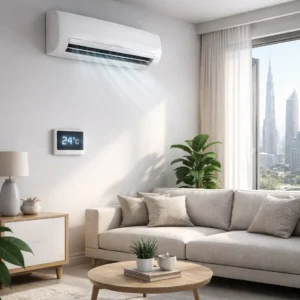





Knowing how to check indoor air quality is essential if you want a healthy and comfortable home in the UAE. With sealed apartments, constant AC usage, and high humidity, indoor air can quietly become polluted. This guide explains simple ways to check air quality, when to use tools, and when professional testing is needed.
Table of Contents
ToggleWhy Indoor Air Quality Matters More in UAE Homes
Indoor environments in the UAE are very different from outdoor desert conditions. Most homes are tightly sealed to maintain cooling efficiency, which limits natural ventilation. This creates a situation where indoor air gets recycled continuously.
Over time, pollutants can build up, including:
- Dust and fine particles (PM2.5 and PM10)
- Mold spores due to humidity and condensation
- Volatile organic compounds (VOCs) from furniture and cleaning products
- Carbon dioxide (CO₂) from poor ventilation
This makes it important to regularly assess indoor air quality instead of assuming it is clean.
Quick Ways to Check Indoor Air Quality at Home
1. The Smell Test
Your nose is often the first indicator. If you notice a musty, damp, or “stale” smell when entering a room, it may indicate mold growth or poor ventilation.
Other smells to watch for:
- Chemical or plastic smell (possible VOCs)
- Dusty or “dirty sock” odor when AC starts
- Persistent unpleasant smell that does not go away
2. Visual Inspection
Look for visible signs around your home:
- Black or green spots near AC vents or ceilings
- Dust buildup around air vents and furniture
- Condensation on windows or walls
- Discoloration in corners or behind furniture
These signs often indicate hidden air quality issues.
3. Health Symptoms Check
Your body can also signal poor air quality.
- Frequent sneezing or coughing indoors
- Eye or throat irritation
- Headaches or fatigue
- Symptoms improve when you leave the house
If symptoms appear only indoors, air quality may be the cause.
4. Dust Accumulation Speed
If surfaces become dusty again within 1–2 days after cleaning, it suggests that particles are continuously circulating in the air.
This is often linked to dirty ducts or poor filtration.
Using Air Quality Monitors at Home
Consumer air quality monitors provide a more measurable way to check indoor conditions.
Common parameters measured:
| Parameter | What It Indicates |
|---|---|
| PM2.5 | Fine particles that affect lungs |
| CO₂ | Ventilation efficiency |
| VOC | Chemical pollutants |
| Humidity | Risk of mold growth |
Typical acceptable indoor ranges:
- PM2.5: below 12 µg/m³ (good)
- CO₂: below 1000 ppm
- Humidity: 40% – 60%
These devices are useful for ongoing monitoring but may not detect all hidden contaminants.
Simple DIY Methods to Check Air Quality
1. Tissue or Airflow Test
Hold a light tissue near AC vents. Weak or inconsistent airflow may indicate blocked ducts or dirty filters.
2. White Surface Test
Place a white cloth near vents for a few hours. Visible dust accumulation suggests poor filtration or duct contamination.
3. Humidity Observation
If rooms feel sticky or humid despite AC use, moisture levels may be too high, increasing mold risk.
4. AC Performance Check
Weak cooling or longer running time can indicate airflow issues that also affect air quality.
Professional Indoor Air Quality Testing
When basic checks are not enough, professional testing provides deeper insight.
Professional testing typically includes:
- Air sampling for mold spores
- Surface sampling for contamination
- Particle concentration measurement
- VOC analysis
- CO₂ and oxygen level testing
Samples are often sent to laboratories for detailed analysis.
What Laboratory Analysis Includes
Lab-based testing provides detailed information about contaminants.
- Identification of mold species
- Spore concentration levels
- Chemical pollutant breakdown
- Airborne particle composition
This helps determine the severity and source of indoor air problems.
Common Indoor Pollutants in UAE Homes
1. Mold and Fungal Growth
Humidity and condensation make mold one of the most common indoor pollutants in the UAE.
2. Particulate Matter (Dust)
Fine dust particles from outside and inside sources circulate through AC systems.
3. VOCs (Chemical Pollutants)
Released from furniture, paints, and cleaning products.
4. Carbon Dioxide (CO₂)
High levels indicate poor ventilation and stale air.
Signs You Need Professional Air Quality Testing
- Persistent musty smell
- Recurring allergies or respiratory issues
- Visible mold growth
- Unexplained discomfort indoors
- Recent renovation or water damage
These situations usually require deeper inspection beyond DIY methods.
How to Improve Indoor Air Quality
1. Improve Filtration
Use high-quality air filters and replace them regularly.
2. Maintain Your AC System
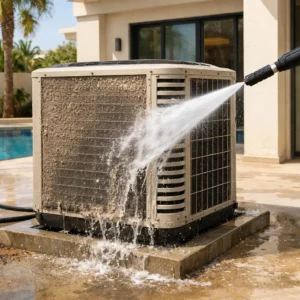
Regular servicing helps remove dust and contaminants from internal components.
Understanding proper AC maintenance practices can significantly improve air quality.
3. Clean Air Ducts
Duct cleaning removes accumulated dust and pollutants from the airflow system.
4. Control Humidity
Keep humidity between 40% and 60% to prevent mold growth.
5. Use Air Purifiers
Air purifiers help reduce particles and improve air cleanliness.
Local Benchmarks for Indoor Air Quality
While exact standards may vary, general guidelines used internationally and in UAE environments include:
- PM2.5 below 12 µg/m³
- CO₂ below 1000 ppm
- Humidity between 40%–60%
Maintaining these levels helps ensure a healthy indoor environment.
Long-Term Approach to Air Quality
Indoor air quality is not a one-time check. It requires ongoing monitoring and maintenance.
Key long-term practices:
- Regular AC servicing
- Periodic duct cleaning
- Monitoring humidity levels
- Ensuring proper ventilation
If you are noticing signs of poor indoor air quality, it is important to address them early rather than waiting for symptoms to worsen. Hidden pollutants like dust, mold, and chemical compounds can affect health, reduce AC efficiency, and lead to long-term system issues. With the right approach, these problems can be identified and resolved effectively. If you need clarity about your indoor air condition or possible causes, you can use the WhatsApp or Call button on the top right to connect with the Bio On Air team and understand the most suitable next step.
Conclusion
Knowing how to check indoor air quality helps you detect problems early and maintain a healthier home environment. By combining simple checks, monitoring tools, and professional testing when needed, you can ensure clean air, better comfort, and long-term system performance.