




Understanding how ac temperature works helps you use your air conditioner more efficiently, avoid common comfort problems, and prevent unnecessary wear on the system. Many people assume that lowering the temperature setting simply makes the AC “work harder” or cool faster, but the reality is more complex. AC temperature control is a combination of sensors, airflow, heat exchange, and system design, all working together to maintain indoor comfort while managing energy use.
Table of Contents
ToggleWhat AC Temperature Really Means
When you set a temperature on your AC remote or thermostat, you are not directly controlling how cold the air becomes. Instead, you are telling the system what indoor temperature you want to maintain. The AC then works to remove heat from the indoor space until the air around the thermostat reaches that target.
This distinction is important because many people expect colder air to blow out when they set a lower number. In reality, most residential AC systems blow air at a relatively consistent temperature range. The system cycles on and off based on how far the room temperature is from the set point.
In simple terms, the temperature setting controls when the AC runs, not how cold the air is.
The Basic Principle Behind AC Cooling
To understand how ac temperature works, you first need to understand the basic cooling principle. An air conditioner does not create cold air. It removes heat from indoor air and releases that heat outside.
The core steps of this process are:
- Warm indoor air is drawn into the AC unit.
- Heat from the air is absorbed by the refrigerant.
- The cooled air is circulated back into the room.
- The absorbed heat is released outdoors.
Temperature control exists to decide how long and how often this cycle runs.
How the Thermostat Controls Temperature
The thermostat is the “brain” of temperature control. It continuously measures the air temperature around it and compares it to your set value.
When the room temperature is higher than the set temperature:
- The thermostat signals the AC to turn on.
- The cooling cycle starts.
When the room temperature reaches the set temperature:
- The thermostat signals the AC to stop or reduce operation.
This on-off behavior is called cycling. Proper cycling keeps the room comfortable while preventing unnecessary energy use.
If the thermostat is poorly placed—such as near a window, heat source, or direct airflow—the system may cycle incorrectly, leading to uneven cooling.
Why Lowering the Temperature Does Not Cool Faster
A very common misunderstanding about how ac temperature works is the idea that setting the temperature much lower will cool the room faster.
In most systems:
- The cooling output stays the same.
- The fan speed and refrigerant flow do not increase just because the set point is lower.
Setting the temperature lower simply means the AC will run longer before turning off. This can increase electricity consumption without improving comfort speed.
The only exception is systems with variable-speed compressors or smart controls, which can adjust output more dynamically.
The Role of the Compressor in Temperature Control
The compressor is the heart of the AC system. It controls how refrigerant moves and how much heat is removed.
There are different compressor behaviors:
- Single-speed: fully on or fully off.
- Two-stage: high and low operation levels.
- Variable-speed (inverter): adjusts output gradually.
In single-speed systems, temperature control relies heavily on cycling. In inverter systems, the compressor adjusts speed to maintain temperature more smoothly.
This is why inverter ACs often maintain steadier temperatures and use less energy.
How Sensors Affect AC Temperature Accuracy
Modern AC systems rely on sensors to measure temperature. These sensors are usually located:
- Inside the indoor unit.
- In the remote control (for some models).
- Within wall-mounted thermostats.
Sensor accuracy matters. If a sensor is faulty or covered in dust, the system may misread the room temperature.
This can cause:
- Overcooling.
- Undercooling.
- Frequent on-off cycling.
Proper cleaning and calibration help maintain accurate temperature control.
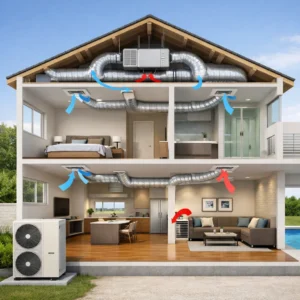
The Importance of Airflow in Temperature Regulation
Even if the AC temperature setting is correct, poor airflow can prevent proper cooling.
Airflow problems often come from:
- Dirty filters.
- Blocked vents.
- Clogged ducts.
- Weak fan performance.
Without proper airflow, cooled air cannot circulate effectively, causing hot spots and uneven temperature distribution.
This leads many people to lower the temperature further, which increases energy use without solving the real problem.
How Humidity Affects Perceived Temperature
Another key part of how ac temperature works is humidity control.
AC systems remove moisture as they cool. Lower humidity makes the air feel cooler, even at higher temperatures.
High humidity can cause:
- The room to feel warmer than it actually is.
- Sticky or uncomfortable air.
- Longer cooling cycles.
Proper dehumidification improves comfort without lowering the temperature setting.
Why Different Rooms Feel Different Temperatures
Many people notice that some rooms are cooler than others, even with the same temperature setting.
Common reasons include:
- Uneven airflow distribution.
- Room size differences.
- Sun exposure.
- Insulation quality.
The AC measures temperature in one location, but comfort depends on the entire space.
Balancing airflow and sealing insulation gaps often improves overall temperature consistency.
How AC Modes Affect Temperature Behavior
Most AC systems offer multiple modes that influence temperature behavior.
- Cool mode: standard cooling operation.
- Dry mode: focuses on reducing humidity.
- Auto mode: adjusts operation based on conditions.
- Fan mode: circulates air without cooling.
Dry mode can make a room feel cooler without lowering the temperature because it reduces humidity.
Auto mode allows the system to manage temperature more efficiently, especially in variable conditions.
Why AC Temperature Feels Different at Night
Many people notice temperature changes at night.
This happens because:
- Outdoor temperatures drop.
- Heat sources inside the home reduce.
- Humidity levels change.
Your AC may cycle differently at night, even with the same temperature setting.
Understanding this helps avoid unnecessary adjustments that disrupt sleep comfort.
How AC Temperature Impacts Energy Consumption
Temperature settings directly affect energy usage.
Lower settings mean:
- Longer run times.
- Higher electricity consumption.
- Increased wear on components.
Even a small increase in the set temperature can significantly reduce energy use without sacrificing comfort.
Common Temperature-Related AC Problems
When people misunderstand how ac temperature works, they often experience recurring issues.
Common problems include:
- AC runs constantly but never feels cold enough.
- Room cools too much and feels uncomfortable.
- Frequent on-off cycling.
- Uneven cooling across rooms.
These issues often relate to airflow, sensors, or system sizing rather than the temperature setting itself.
How Proper Maintenance Improves Temperature Control
Regular maintenance plays a major role in stable temperature control.
Maintenance helps by:
- Keeping sensors clean.
- Maintaining airflow.
- Ensuring refrigerant levels are correct.
- Preventing dust and moisture buildup.
A well-maintained system responds more accurately to temperature settings.
When Temperature Problems Are a Sign of Bigger Issues
Sometimes, temperature problems indicate deeper system issues.
Examples include:
- Incorrect AC sizing.
- Leaking refrigerant.
- Failing compressor.
- Damaged ductwork.
In these cases, adjusting the temperature setting will not solve the problem.
How to Use AC Temperature Settings More Effectively
Understanding how ac temperature works allows you to use your system more effectively.
Practical tips include:
- Set a comfortable, realistic temperature.
- Avoid constant adjustments.
- Use appropriate modes.
- Keep airflow paths clear.
These habits improve comfort and reduce strain on the system.
When AC Temperature Issues Should Be Addressed Properly
Temperature problems rarely fix themselves. If ignored, they can lead to poor indoor comfort, increased energy costs, and long-term system damage. Bio On Air helps address temperature-related AC issues through careful inspection, airflow evaluation, and safe technical handling. Acting early helps maintain stable comfort and prevent larger repairs. You can use the WhatsApp or Call button at the top right of this page to discuss temperature concerns with our team.
Conclusion
Understanding how ac temperature works changes how you interact with your air conditioner. Temperature control is not about forcing colder air, but about managing heat removal, airflow, humidity, and system response. When these elements work together, comfort becomes consistent and energy use stays reasonable.
By learning how thermostats, sensors, compressors, and airflow interact, you can avoid common mistakes like overcooling, constant adjustments, and unnecessary energy waste. More importantly, you gain the ability to recognize when temperature problems are simple usage issues and when they indicate deeper system faults. In climates where AC is essential, this knowledge helps you stay comfortable, efficient, and confident in how your system operates.