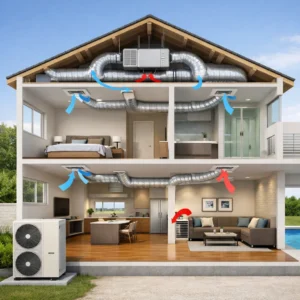





Home ac maintenance is often ignored until something feels wrong—cooling weakens, the air smells unusual, or the system starts making noises that were not there before. For homeowners, the biggest challenge is not only knowing what to do, but deciding when to act, what can be done safely on your own, and when professional help is the smarter option. This guide is designed to remove that uncertainty by giving you a clear decision checklist, a practical maintenance flow you can reuse, simple symptom-based troubleshooting, and everyday habits that reduce strain, energy waste, and long-term costs.
Table of Contents
Toggle#1 Immediate DIY vs Professional Decision Checklist
Before touching anything, homeowners should pause and make a quick decision: is this something safe to check visually, or does it already require professional handling? This checklist helps you decide without guesswork.
Basic Visual Checks You Can Do Safely
These checks do not require tools, disassembly, or technical skills. They help you understand whether the system is under basic stress or showing early warning signs.
- Airflow at vents: If airflow feels noticeably weaker than usual across multiple rooms, maintenance is likely needed.
- Filter appearance: A filter that looks dark, clogged, or dusty blocks airflow and strains the system.
- Indoor unit casing: Water stains, damp spots, or discoloration suggest moisture issues.
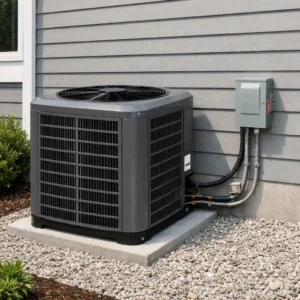
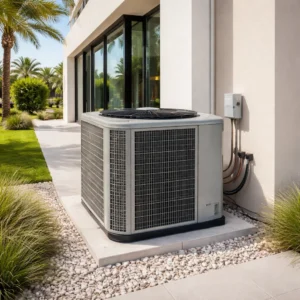
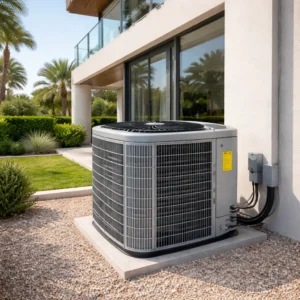
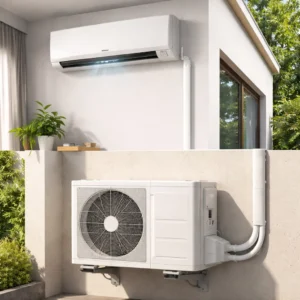
- Outdoor unit area: Leaves, dust, or stored items too close to the unit restrict heat release.
If issues are limited to dust, airflow restriction, or obvious neglect, basic maintenance may be enough. If you notice electrical smells, ice formation, or repeated shutdowns, stop and move to professional support.
Safety Shutoff Reminders
Anytime you notice abnormal behavior, safety comes first. Home ac maintenance should never involve risk.
- Turn off the system if you smell burning or strong electrical odors.
- Do not touch exposed wiring or open panels.
- If water is pooling near electrical components, stop operation.
These signs indicate the need for professional inspection rather than DIY handling.
#2 Filter Condition Indicators and What They Mean
The air filter is one of the most important and misunderstood parts of home ac maintenance. It is also one of the easiest to check.
Here is how to read filter condition visually:
- Light dust, still visible material: Cleaning or replacement soon will maintain airflow.
- Dark gray or black surface: Airflow is restricted and efficiency is already reduced.
- Filter bending or collapsing: Air pressure is stressing the system.
A clogged filter forces the AC to work harder, increases electricity usage, and can even contribute to coil freezing. Regular filter attention alone can prevent many emergency calls.
#3 A Phased Home AC Maintenance Flow You Can Reuse
One common pain point for homeowners is not knowing how often to do what. The solution is a phased approach organized by frequency and difficulty, so it doubles as a long-term reference.
Phase A Weekly to Monthly Light Tasks
These tasks are low effort and high impact.
- Visually check air filters.
- Ensure vents are not blocked by furniture or curtains.
- Listen for new or unusual sounds during startup.
These habits take minutes and help catch issues early.
Phase B Quarterly System Awareness Tasks
Every few months, homeowners should step back and look at system behavior.
- Compare cooling time with previous months.
- Notice any changes in room-to-room temperature balance.
- Check for new odors when the system starts.
If performance slowly declines, maintenance is usually needed before it becomes a repair issue.
Phase C Annual Professional Maintenance
This is where professional service plays a key role. Annual checks focus on internal components that homeowners cannot access safely.
Professional AC maintenance services typically include internal inspection, cleaning of critical components, airflow assessment, and system safety checks. This level of care reduces surprise breakdowns during peak usage.
#4 Symptom-Based Troubleshooting Using Simple If-Then Logic
Homeowners often experience symptoms without knowing what they point to. Using simple if-then logic removes confusion.
If the AC Is Noisy
- If the noise is light rattling, then airflow imbalance or loose panels may be the cause.
- If the noise is grinding or buzzing, then professional inspection is required.
If There Is an Unusual Smell
- If the smell is dusty or musty, then internal cleaning or duct hygiene may be needed.
- If the smell is sharp or electrical, then turn off the system and seek professional help.
In cases of recurring odors, hygiene-focused solutions such as AC deep cleaning may be necessary to remove buildup inside coils and housings.
If Cooling Feels Weak
- If airflow is weak everywhere, then filter or duct restriction is likely.
- If cooling drops suddenly, then refrigerant or component issues should be checked.
When weak cooling persists, professional AC repair ensures the real cause is addressed instead of temporary fixes.
If You See Water Leaks or Ice
- If water drips from the indoor unit, then drain blockage or coil issues may exist.
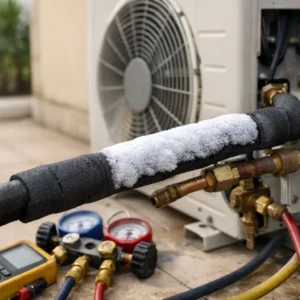
- If ice forms on pipes or coils, then stop operation and call a professional.
Ice buildup is a sign of airflow or refrigerant imbalance and should not be handled as DIY.
#5 Practical Efficiency Habits That Cost Nothing
Many homeowners assume efficiency improvements require upgrades or purchases. In reality, everyday habits can significantly reduce strain.
Airflow Habits
- Keep doors open where balanced cooling is needed.
- Avoid blocking vents with furniture.
- Do not close too many vents in unused rooms.
Thermostat Use Logic
Constantly changing thermostat settings forces the system to cycle inefficiently.
- Choose a stable temperature instead of frequent adjustments.
- Avoid setting extremely low temperatures to cool faster.
Outdoor Unit Awareness
- Keep the area around the outdoor unit clear.
- Avoid stacking items or allowing plants to grow too close.
These habits reduce heat buildup and improve efficiency without spending money.
#6 Financial Impact of Regular Home AC Maintenance
One of the strongest motivations for home ac maintenance is financial clarity. Regular care affects costs in several important ways.
First, maintenance improves operating efficiency. A clean, balanced system consumes less electricity to achieve the same cooling level. Second, maintenance prevents small issues from escalating into major component failure. Third, consistent care extends system lifespan, delaying costly replacements.
Rather than listing exact numbers, it is more useful to understand cost behavior: neglected systems cost more over time through higher bills, emergency repairs, and shortened lifespan. Preventive maintenance stabilizes spending and reduces uncertainty.
#7 Why Tracking Maintenance Matters More Than People Think
Many homeowners rely on memory when it comes to maintenance, which leads to missed tasks. A simple maintenance log solves this problem.
Your log does not need to be complex. It can include:
- Date of filter cleaning or replacement.
- Date of professional inspection.
- Notes on unusual symptoms.
This record helps you notice patterns and communicate clearly with technicians if service is needed.
#8 DIY Limits and When Professional Support Is Smarter
DIY maintenance is valuable, but it has clear limits. Homeowners should never handle refrigerant, internal electrical components, or sealed system parts.
Professional services such as AC maintenance and AMC are designed to cover what homeowners cannot safely do, while also providing expert assessment.
When maintenance crosses into repair territory, expert handling prevents further damage and protects safety.
#9 Connecting Maintenance to Repair and Air Quality
Home ac maintenance is closely linked to repair and air quality. Poor maintenance often leads to repair needs, while clean systems support healthier indoor air.
If maintenance is delayed too long, professional AC repair becomes necessary. If air hygiene is ignored, duct or deep cleaning may be required. Seeing these services as connected, not separate, helps homeowners make better decisions.
#10 A Calm, Practical Call to Act Early
AC issues rarely resolve on their own. Delaying maintenance can reduce air quality, increase energy use, and lead to avoidable breakdowns. Bio On Air helps homeowners manage these risks through structured maintenance, clear explanations, and responsible service. Acting early is a preventive step that protects comfort and long-term costs. If you want to discuss your system condition or decide whether maintenance is needed now, you can use the WhatsApp or Call button at the top right of this page to speak with our team.
Conclusion
Home ac maintenance is not about doing everything yourself or calling a technician for every concern. It is about knowing what to check, when to act, and how to keep the system balanced over time. By using a clear decision checklist, following a phased maintenance flow, responding to symptoms logically, and practicing simple efficiency habits, homeowners gain control instead of reacting to breakdowns.
Regular maintenance protects indoor comfort, reduces energy waste, and extends system lifespan. It also replaces uncertainty with clarity, helping you plan instead of panic. In a climate where AC is essential, thoughtful maintenance is one of the most practical investments a homeowner can make.