




Trying to fix an AC unit often starts with confusion and frustration. The AC is running but the room is still warm, the unit suddenly shuts off, water is leaking, or nothing happens at all when you lower the thermostat. Many of these situations feel urgent, especially in hot climates, but not every AC problem requires immediate professional repair. Some issues can be identified—or even fixed—through careful basic checks and simple maintenance. This guide is designed to help you understand what you can safely check and fix yourself, what tools and parts are commonly involved, and when it is critical to stop and call a licensed HVAC technician to avoid costly or dangerous damage.
Table of Contents
ToggleStart With Basic Initial Checks Before Any Repair
Before opening panels or touching internal components, always begin with simple checks. A surprising number of AC problems are caused by settings, power interruptions, or airflow restrictions rather than broken parts.
Check Thermostat Settings
The thermostat is the control center of your AC system. If it is incorrectly set, the AC may appear broken even though it is functioning normally.
- Make sure the thermostat is set to cool, not heat or fan-only mode.
- Set the temperature at least 3–5 degrees lower than the current room temperature.
- Check if the thermostat uses batteries and replace them if the display is weak or blank.
A faulty or misconfigured thermostat is one of the most common reasons people think they need to fix an AC unit, when the system itself is actually fine.
Confirm Power Supply and Circuit Breakers
If your AC does not turn on at all, the problem may be electrical rather than mechanical.
- Check your main electrical panel for tripped breakers.
- Reset the breaker once, but do not repeatedly reset it if it trips again.
- Check any dedicated AC disconnect switch near the outdoor unit.
Repeated breaker trips are a warning sign of electrical problems and should not be ignored.
Inspect Shut-Off Switches
Many indoor units have a safety shut-off switch near the air handler or service panel. This switch may accidentally be turned off during cleaning or maintenance.
If the switch is off, turning it back on may immediately restore operation.
Check Air Filters
Dirty air filters are one of the most common causes of poor cooling, frozen coils, and system shutdowns.
- Remove the filter and inspect it against light.
- If it looks clogged with dust, replace or clean it.
- Never run the AC without a filter installed.
Restricted airflow can cause the evaporator coil to freeze, making the AC blow warm air or stop cooling altogether.
Symptom-Based Troubleshooting to Fix an AC Unit
Once basic checks are done, the next step is matching symptoms with likely causes. This helps you decide whether a simple fix is possible or professional help is needed.
AC Is Running but Not Cooling
This is one of the most common complaints.
Possible causes:
- Dirty air filter
- Blocked condenser coils
- Thermostat misconfiguration
- Low refrigerant (professional-only)
DIY difficulty: Low to medium
You can safely clean filters and condenser coils. Refrigerant-related issues require a licensed technician.
AC Turns On and Off Frequently (Short Cycling)
Short cycling puts stress on components and increases energy consumption.
Possible causes:
- Clogged air filter
- Oversized AC unit
- Faulty thermostat
- Electrical control problems
DIY difficulty: Low for filter and thermostat checks, high for others
AC Does Not Turn On at All
Possible causes:
- Tripped breaker
- Shut-off switch turned off
- Blown fuse or failed capacitor
- Control board failure
DIY difficulty: Medium to high
Capacitor replacement is possible for experienced DIYers but requires strict safety precautions.
Water Leaking From the Indoor Unit
Possible causes:
- Clogged drain line
- Frozen evaporator coil
- Improper installation angle
DIY difficulty: Low to medium
Clearing a drain line is often a safe and effective DIY fix.
Unusual Noises (Buzzing, Clicking, Grinding)
Possible causes:
- Loose screws or panels
- Debris in the outdoor unit
- Failing fan motor or capacitor
DIY difficulty: Medium
Mechanical noises from inside the compressor should not be ignored.
Common DIY Repairs to Fix an AC Unit (With Safety Warnings)
Some AC repairs are within reach for careful homeowners. However, safety must always come first.
Replacing a Capacitor
The capacitor helps start the compressor and fan motor. A failed capacitor can prevent the AC from turning on.
Warning: Capacitors store electrical energy and can cause severe shock.
Basic steps:
- Turn off power at the breaker and disconnect switch.
- Discharge the capacitor using an insulated screwdriver.
- Replace with an identical-rated capacitor.
If you are unsure at any step, stop and call a professional.
Tightening Loose Electrical Connections
Loose connections can cause intermittent failures.
- Only inspect connections if power is fully disconnected.
- Do not modify wiring layouts.
Replacing a Contactor
The contactor controls power flow to the compressor.
DIY difficulty: Medium
This repair is possible but mistakes can damage expensive components.
Maintenance Actions That Function as Fixes
Many AC problems are actually maintenance issues that develop slowly.
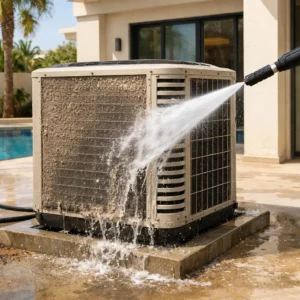
Cleaning Condenser Coils
Outdoor coils release heat. When they are dirty, cooling efficiency drops.
- Turn off power.
- Remove debris and gently wash coils with water.
- Avoid bending fins.
Clearing the Condensate Drain Line
Blocked drain lines cause leaks and shutdowns.
- Use a wet/dry vacuum or flushing solution.
- Install a drain pan tablet if recommended.
Cleaning Evaporator Coils (Light Cleaning Only)
Surface cleaning can improve airflow, but deep cleaning should be left to professionals.
Tools and Parts Commonly Needed for Simple AC Repairs
Having the right tools helps you work safely and accurately.
- Multimeter
- Insulated screwdrivers
- Replacement air filters
- Capacitor (exact match)
- Fin comb
- Wet/dry vacuum
Never substitute parts with incorrect ratings.
Red Flags That Require a Licensed HVAC Technician
Some AC problems should never be handled as DIY projects.
Refrigerant Leaks
Low refrigerant is not a “top-up” problem. It indicates a leak that must be located and repaired by a licensed technician.
Compressor Failure
The compressor is the heart of the AC system. Repair or replacement is complex and expensive.
Serious Electrical Issues
Burnt wiring, repeated breaker trips, or electrical smells are signs of serious danger.
Frozen Coils That Return Repeatedly
Recurring freezing often indicates airflow or refrigerant problems beyond basic maintenance.
When to Stop DIY and Call for Professional Help
If you feel unsure, unsafe, or stuck, stopping early can save money. Many major AC failures begin as small issues that were pushed too far without proper expertise.
Professional HVAC technicians have the tools, training, and licensing to handle refrigerant, electrical systems, and complex mechanical repairs safely.
Conclusion
Trying to fix an AC unit can be practical and effective when you start with the right approach. Basic checks such as thermostat settings, power supply, filters, and shut-off switches often solve simple problems. Symptom-based troubleshooting helps you identify whether a fix is within safe DIY limits or requires professional expertise.
Maintenance actions like cleaning coils and clearing drain lines often act as real fixes, restoring performance and preventing breakdowns. However, knowing when to stop is just as important. Refrigerant leaks, compressor issues, and serious electrical problems must always be handled by licensed HVAC technicians.
By understanding both your limits and your system, you can avoid unnecessary costs, reduce downtime, and keep your AC running safely and efficiently.