




energy efficiency homes in Dubai depend heavily on how you manage your AC system. With outdoor temperatures often exceeding 45–50°C, cooling is not optional—but efficiency is. This guide explains practical strategies to reduce DEWA bills without sacrificing comfort, combining thermostat habits, AC technology, maintenance, and smart usage tailored for UAE conditions.
Table of Contents
ToggleWhy Energy Efficiency Homes Matter in Dubai
In Dubai, air conditioning can account for up to 60–70% of household electricity usage. Unlike cooler climates, AC systems here run for long hours, often daily throughout the year. This makes energy efficiency not just a preference, but a necessity.
An inefficient system leads to:
- Higher DEWA bills every month
- Overworked AC components
- Reduced cooling performance
- Poor indoor air quality
On the other hand, an energy-efficient home does not mean sacrificing comfort. It means achieving the same comfort level with less energy.
The 24°C–26°C Rule Explained
One of the most effective strategies for energy efficiency homes is maintaining the correct thermostat setting.
The recommended range in Dubai is:
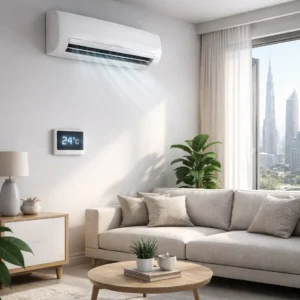
- 24°C – optimal balance between comfort and efficiency
- 25–26°C – maximum energy savings without noticeable discomfort
Many people believe that setting the AC to 18°C will cool the room faster. This is not true.
Your AC cools at a fixed rate. Lowering the temperature only forces the compressor to run longer, increasing energy consumption.
Key insight:
- Every 1°C increase can reduce energy usage by approximately 6–10%
This means setting your AC from 22°C to 25°C can significantly lower your electricity bill without sacrificing comfort.
Use Sleep Mode for Overnight Efficiency
Sleep mode is one of the most underutilized features in AC systems.
When activated, it:
- Gradually increases temperature during the night
- Reduces compressor workload
- Maintains comfortable sleeping conditions
Since your body requires less cooling while sleeping, this feature helps reduce unnecessary energy consumption.
In Dubai, where AC runs overnight for most households, this small adjustment can lead to noticeable monthly savings.
Inverter AC vs Traditional AC Systems
Choosing the right AC technology is a major factor in energy efficiency homes.
| Feature | Traditional AC | Inverter AC |
|---|---|---|
| Operation | On/Off cycles | Variable speed |
| Energy Use | High | Optimized |
| Comfort | Temperature fluctuation | Stable cooling |
| Efficiency | Lower | Up to 30–40% savings |
Traditional systems constantly turn on and off, consuming more energy. Inverter systems adjust their speed based on demand, maintaining consistent temperature with less energy usage.
If you are considering upgrading your system, understanding AC installation and replacement options can help you choose a more efficient solution.
Choosing High-Efficiency AC Units
Not all AC units are built for efficiency. When selecting a unit, consider:
- EER (Energy Efficiency Ratio)
- SEER (Seasonal Energy Efficiency Ratio)
- ESMA Star Rating (UAE standard)
In the UAE:
- 4-star units = good efficiency
- 5-star units = highest efficiency
Higher-rated units may have higher upfront cost, but they reduce electricity consumption significantly over time.
Monthly Filter Cleaning Is Non-Negotiable
Dubai’s dusty environment makes filter cleaning essential.
If filters are clogged:
- Airflow is restricted
- AC works harder
- Energy consumption increases by 15–20%
Simple action:
- Clean filters every 2–4 weeks
This is one of the easiest and most effective ways to improve efficiency.
Coil and Duct Cleaning for Real Efficiency
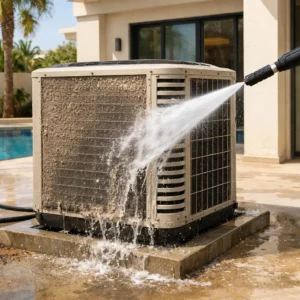
While filters are visible, internal components like coils and ducts accumulate dust and sand over time.
This buildup:
- Blocks airflow
- Reduces cooling efficiency
- Forces the system to work harder
Professional AC deep cleaning and duct cleaning remove hidden contaminants and restore airflow.
This directly improves efficiency and reduces energy consumption.
Close Curtains During Peak Heat Hours
Sunlight is one of the biggest contributors to indoor heat gain.
By closing curtains or blinds during peak hours:
- Heat entering the room is reduced
- Cooling load drops by 20–30%
This allows your AC to maintain temperature with less effort.
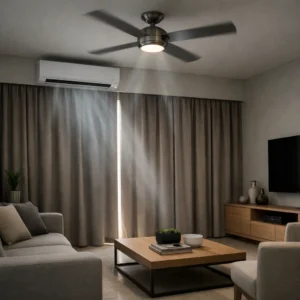
Use Ceiling Fans to Reduce Cooling Load
Ceiling fans do not cool the air—but they improve air circulation.
This creates a wind-chill effect, making the room feel cooler.
Benefits:
- Allows higher thermostat settings
- Reduces AC runtime
- Improves comfort without extra energy use
Combining fans with AC is a highly effective strategy in Dubai homes.
Smart Thermostats and Zoning Systems
Smart cooling technology helps avoid unnecessary energy usage.
Programmable thermostats allow you to:
- Set schedules for cooling
- Adjust temperature automatically
- Avoid cooling empty spaces
Zoning systems are especially useful in villas:
- Cool only occupied rooms
- Reduce energy waste in unused areas
This approach can significantly reduce electricity consumption.
Avoid Cooling Empty Spaces
One of the most common inefficiencies in UAE homes is cooling rooms that are not being used.
Simple strategies:
- Close doors to unused rooms
- Turn off AC in empty areas
- Use zoning where possible
This reduces unnecessary load on the system.
Seal Air Leaks and Improve Insulation
Cool air escaping from your home forces the AC to work harder.
Check for:
- Gaps in doors and windows
- Poor insulation
- Air leakage points
Fixing these issues helps maintain indoor temperature more efficiently.
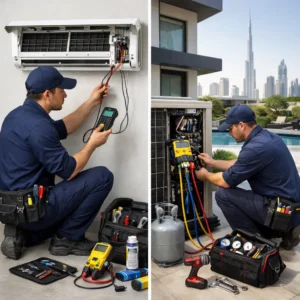
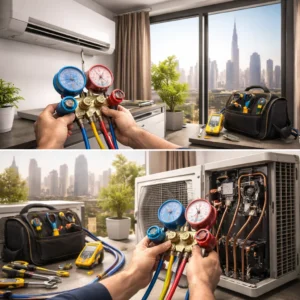
Regular Maintenance Improves Efficiency
Routine maintenance is essential for long-term efficiency.
A proper AC maintenance plan includes:
- System inspection
- Cleaning of internal components
- Performance checks
- Early problem detection
This prevents minor issues from becoming major energy drains.
Behavioral Habits That Impact Energy Use
Daily habits also play a major role in energy efficiency homes.
- Do not frequently change thermostat settings
- Avoid turning AC on and off repeatedly
- Keep doors and windows closed
- Use sleep mode at night
Consistency is key to efficient cooling.
Realistic Energy Savings in Dubai Homes
By combining the strategies above, most households can achieve:
- 15–30% reduction in energy consumption
- Lower monthly DEWA bills
- Improved indoor comfort
These savings come from small adjustments rather than drastic changes.
Common Mistakes That Reduce Efficiency
| Mistake | Impact |
|---|---|
| Setting AC too low | Increases energy usage |
| Ignoring maintenance | Reduces efficiency |
| Dirty filters | Forces AC to work harder |
| Cooling unused spaces | Wastes energy |
Combining Technology Maintenance and Habits
The most effective energy efficiency strategy is a combination of:
- Correct thermostat usage
- Efficient AC technology
- Regular maintenance
- Smart daily habits
No single solution works alone. Efficiency comes from combining all factors.
If you are looking to improve your home’s energy efficiency, it is important to address both system performance and daily usage habits. Inefficient cooling not only increases electricity bills but also places unnecessary stress on your AC system, leading to potential breakdowns and reduced lifespan. Issues like dirty ducts, clogged filters, or poor system setup can quietly reduce efficiency over time. By addressing these early, you can maintain comfort while reducing energy consumption. If you need clarity about your system performance or improvement options, you can use the WhatsApp or Call button on the top right to connect with the Bio On Air team and understand the most suitable next step.
Conclusion
Energy efficiency homes in Dubai rely on smart AC usage, proper maintenance, and efficient systems. By applying these practical strategies, you can reduce energy consumption, lower DEWA bills, and maintain comfortable indoor conditions even in extreme heat.