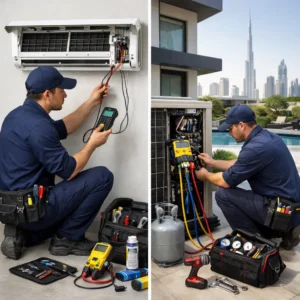
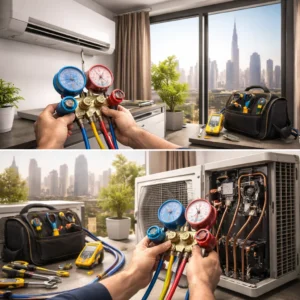
The question does new ac comes with gas is very common in the UAE, especially when you are installing a new unit or comparing quotes. The short answer is yes—but with conditions. In this guide, we explain exactly when AC units come pre-filled, when extra gas is needed, and how to avoid unnecessary charges during installation.
Table of Contents
ToggleDirect Answer Does New AC Comes with Gas
Yes, most new AC units come with refrigerant (gas) already filled from the factory. However, this only applies under standard installation conditions.
Manufacturers pre-charge units based on a specific pipe length, usually:
- Split AC: pre-filled for around 3–5 meters of piping
- Window AC: fully sealed and pre-filled
- Portable AC: fully pre-filled and ready to use
If your installation matches these conditions, you typically do not need to pay extra for gas.
Understanding How Factory Pre-Charging Works
AC units are charged at the factory with a precise amount of refrigerant based on design specifications. This ensures optimal cooling performance when installed correctly.
The outdoor unit usually contains the refrigerant. During installation, the gas is released into the system after proper connection and vacuuming.
This means the gas is already included in the product—not something that should always be charged separately.
Differences Between AC Types
Split AC Units
Split systems are the most common in UAE homes. These units:
- Come pre-filled with refrigerant
- Require pipe connection between indoor and outdoor units
- May need additional gas if piping exceeds standard length
Window AC Units
Window AC units are completely sealed systems.
- 100% pre-filled
- No additional gas required
- Plug-and-play installation
Portable AC Units
Portable units are also sealed and pre-charged.
- No installation gas required
- Ready to operate immediately
When You Will Need to Pay for Extra Gas
Even though new AC units come with gas, there are situations where additional refrigerant is required.
1. Long Pipe Runs
If the distance between indoor and outdoor units exceeds the standard factory length, extra gas is needed.
Typical additional charge:
- AED 50 – 100 per additional meter or gas top-up equivalent
2. Installation Errors or Leaks
If gas is lost due to improper installation, technicians may suggest a refill. However, this should not happen in a proper installation.
This is why correct AC gas refill handling is important when dealing with leaks.
3. Relocation of AC Units
If you move an AC unit from one location to another:
- Gas may be partially lost
- System needs recharging
This is common when re-installing used units.
Common Refrigerant Types Used in UAE
R410A
- Widely used in older and mid-range systems
- High pressure refrigerant
- Stable and efficient
R32
- Newer generation refrigerant
- More energy efficient
- Lower environmental impact
Both refrigerants are commonly used in UAE due to high cooling demand.
How to Check If Your AC Already Has Gas
You can verify factory charge using the unit label.
Look for:
- Refrigerant type (R410A or R32)
- Factory charge amount (in kg)
- Standard pipe length
This label is usually found on the outdoor unit.
Proper Installation Process (Critical Step)
Even if your AC comes with gas, proper installation is essential.
Correct installation includes:
- Vacuuming the system before releasing gas
- Ensuring no air or moisture inside pipes
- Leak testing connections
Skipping vacuuming can damage the system and reduce efficiency.
Common Gas Overcharging Tactics to Watch For
Some technicians may try to charge extra unnecessarily.
Red flags include:
- Saying gas is empty in a brand-new unit
- Adding gas without checking pressure
- Charging without explaining pipe length
In most standard installations, extra gas is not required.
Typical Installation Cost Factors in UAE
Installation costs may include:
- Basic installation (standard piping)
- Additional piping cost
- Bracket or mounting work
- Electrical connections
Gas cost should only be included if additional refrigerant is needed.
Why Proper Installation Matters More Than Gas
The biggest issue is not whether the AC has gas—but whether it is installed correctly.
Improper installation can lead to:
- Gas leakage
- Reduced cooling performance
- Higher electricity consumption
Correct installation ensures the factory gas works as intended.
How UAE Climate Affects AC Gas Usage
High temperatures and long operating hours increase system load. However, this does not mean gas is consumed or disappears.
Refrigerant is a closed-loop system:
- It circulates inside the system
- It does not get “used up”
If gas is low, it usually indicates a leak—not normal usage.
Signs Your AC Actually Needs Gas
- Weak cooling despite clean filters
- Ice formation on pipes
- Longer cooling time
- Hissing sound (possible leak)
These signs indicate a system issue, not normal gas depletion.
Common Misunderstandings About AC Gas
- Gas is not consumed like fuel
- New AC units do not need immediate refill
- Low gas always indicates a problem
Understanding this helps you avoid unnecessary charges.
Practical Example Real UAE Scenario
If you install a new split AC with standard piping (under 5 meters), you should not pay for gas.
If piping extends to 10 meters:
- Extra gas may be required
- Additional cost applies
This is the most common situation where extra charges are valid.
If you are installing a new AC or being asked to pay for additional gas, it is important to understand the actual reason behind the charge. In many cases, the unit already comes pre-filled, and extra gas is only needed under specific conditions like long piping or system leaks. Incorrect installation or unnecessary gas handling can lead to reduced performance, higher electricity bills, and long-term system damage. If you are unsure about your situation, you can use the WhatsApp or Call button on the top right to connect with the Bio On Air team and understand the correct approach before proceeding.
Conclusion
So, does new ac comes with gas? Yes, most new AC units are factory pre-filled. However, additional gas may be required depending on installation conditions. Understanding when extra charges are valid helps you avoid unnecessary costs and ensures proper system performance.