




Many people searching does ac change air are trying to understand if their AC is giving them fresh air or just circulating the same air. In the UAE, where homes stay closed and AC runs constantly, this question directly affects comfort, health, and indoor air quality.
Table of Contents
ToggleDoes AC Change Air or Just Recirculate It
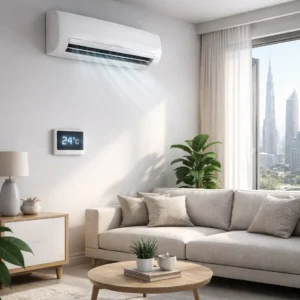
The short answer is: most residential AC systems do not bring in fresh outdoor air. Instead, they recirculate the air already inside your room.
This applies to:
- Split AC units
- Window AC units
- Most standalone residential systems
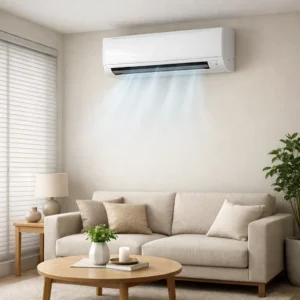
These systems work by pulling indoor air, cooling it, and sending it back into the room. There is no direct intake of outside air unless the system is specifically designed for it.
This is why a room can feel “stuffy” even when the AC is running perfectly.
How Split and Window AC Units Actually Work
To understand this better, it helps to look at how a typical AC system functions.
The process is simple:
- Warm indoor air is drawn into the AC unit
- The air passes through filters
- Cooling coils reduce the temperature
- The same air is pushed back into the room
This cycle repeats continuously.
So while your AC cools the air, it does not replace it. It is essentially reusing the same indoor air again and again.
Do You Run Out of Oxygen in an Air-Conditioned Room
This is one of the most common concerns.
The good news is: you do not “run out of oxygen” in a typical room. Air naturally leaks in and out through small gaps in doors, windows, and building structures.
However, what does happen is:
- Carbon dioxide (CO2) levels slowly increase
- Air can feel stale or heavy
- Ventilation becomes limited
This is not dangerous in most cases, but it can affect comfort and alertness.
Central AC Systems and Fresh Air Handling Units
Unlike split units, some buildings in Dubai use centralized systems that can introduce fresh air.
These systems include:
- AHU (Air Handling Unit)
- FAHU (Fresh Air Handling Unit)
These systems can mix outdoor air with indoor air before cooling it.
This means:
- Some fresh air is introduced into the building
- Indoor air is partially refreshed
- Ventilation is improved
However, not all central systems are configured the same way. Some prioritize energy efficiency and minimize fresh air intake.
How Fresh Air Systems Work in Dubai Buildings
In many Dubai apartments and commercial buildings, fresh air is handled separately from the cooling system.
A typical setup includes:
- Central cooling system for temperature control
- Fresh air duct supplying outside air
- Exhaust system removing stale air
This setup helps balance indoor air quality while maintaining cooling efficiency.
However, if fresh air systems are poorly maintained, they can introduce dust or humidity instead of improving air quality.
How AC Affects Indoor Air Quality
Even though AC does not bring in fresh air, it still plays a major role in indoor air quality.
1. Filtration
AC filters trap dust, particles, and allergens.
However:
- Basic filters only capture large particles
- Fine particles and pollutants may still circulate
2. Dehumidification
AC removes moisture from the air, which helps:
- Prevent mold growth
- Reduce humidity discomfort
This is especially important in coastal UAE cities.
3. Air Circulation
AC keeps air moving, which prevents stagnant pockets.
However, circulation alone is not ventilation.
Risks of Air Recirculation
Since most AC systems recirculate air, certain risks can develop over time.
1. CO2 Buildup
In closed rooms with multiple people, carbon dioxide levels can rise, leading to:
- Sleepiness
- Reduced concentration
2. VOC Accumulation
Volatile Organic Compounds (VOCs) come from:
- Furniture
- Cleaning products
- Paint
Without fresh air, these can accumulate indoors.
3. Odor Retention
Cooking smells, humidity odors, and indoor pollutants remain trapped.
4. Dust Redistribution
If ducts or filters are dirty, dust is continuously circulated.
This is why proper AC duct cleaning plays a key role in maintaining air quality.
Health Concerns Related to AC Air
1. Dry Air Irritation
AC can reduce humidity too much, causing:
- Dry throat
- Skin irritation
- Eye dryness
2. Allergies
Poor filtration or dirty ducts can circulate allergens.
3. Virus Spread
AC does not create viruses, but it can circulate airborne particles if ventilation is poor.
This is why ventilation and filtration together are important.
Common Myths About AC and Air
Myth 1: AC Brings Fresh Air
Most residential systems do not bring outside air.
Myth 2: AC Creates Oxygen
AC only cools air—it does not generate oxygen.
Myth 3: Cold Air Means Clean Air
Cool air can still be polluted if the system is dirty.
How to Improve Air Quality Without Losing Cooling
1. Open Windows Strategically
Short ventilation periods help refresh indoor air.
2. Use Exhaust Fans
Especially in kitchens and bathrooms.
3. Install Air Purifiers
Helps remove fine particles and pollutants.
4. Maintain Proper AC Cleaning
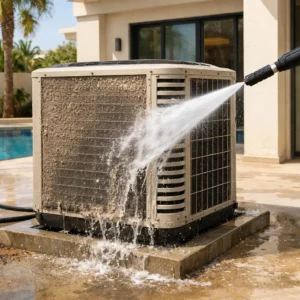
Keeping your system clean ensures better air circulation.
Maintenance Steps That Improve Air Quality
- Clean filters every 2–4 weeks
- Schedule regular AC servicing
- Check ducts for dust buildup
- Ensure proper airflow balance
Regular maintenance not only improves air quality but also keeps the system efficient.
If you are noticing stale air, dust buildup, or discomfort while using your AC, it may not just be about cooling—it could be related to airflow quality and system condition. Poor air circulation, hidden contamination, and lack of ventilation can affect both comfort and health over time. Addressing these issues early helps maintain a cleaner and more balanced indoor environment. If you want to better understand your AC system condition or possible improvements, you can use the WhatsApp or Call button on the top right to connect with the Bio On Air team and explore the most suitable next step.
Conclusion
So, does AC change air? In most residential systems, the answer is no—it recirculates indoor air. Understanding how your system works and taking steps to improve ventilation and maintenance can help ensure healthier, more comfortable indoor air.