




Do it yourself AC maintenance is often the first thing homeowners try when cooling feels weaker, airflow drops, or the AC starts behaving differently than usual. In hot climates, simple routine care can make a real difference—but only if you clearly understand which tasks are safe to do yourself and which ones must be handled by licensed technicians. This guide explains safe DIY boundaries, low-effort high-impact steps, early troubleshooting checks, and clear success indicators so you can maintain your AC confidently without risking damage, safety issues, or warranty problems.
Table of Contents
Toggle#1 Understand the Safe Boundary Between DIY and Professional Work
The biggest mistake in do it yourself AC maintenance is crossing the line between routine care and technical repair. Homeowners often start with good intentions, then unknowingly perform actions that cause system damage or void warranties.
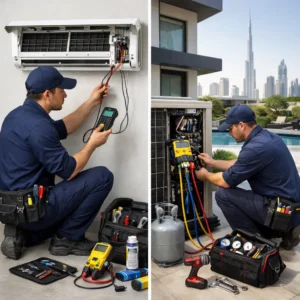
As a simple rule, DIY maintenance should focus on cleaning, observation, and basic checks. Anything involving electrical rewiring, refrigerant handling, internal component disassembly, or control board work should be left to licensed technicians.
Safe DIY areas usually include:
- Air filter inspection and replacement
- Keeping outdoor units clear for airflow
- Basic condensate drain care
- Gentle surface-level coil fin cleaning
- Thermostat and power supply checks
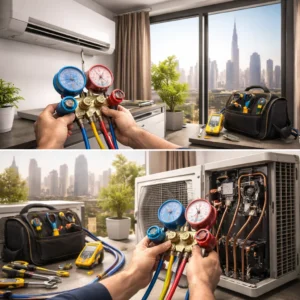
Professional-only areas include refrigerant work, compressor issues, motor replacement, PCB repairs, and anything that requires opening sealed components. Knowing this boundary protects both your AC system and your long-term costs.
#2 Why DIY Maintenance Matters More Than Most Homeowners Think
Many AC failures are not sudden. They develop slowly due to dust buildup, restricted airflow, moisture accumulation, or neglected routine care. DIY maintenance is not about fixing major problems—it is about preventing small issues from becoming expensive repairs.
Simple routine actions can help:
- Maintain consistent cooling performance
- Reduce strain on internal components
- Lower unnecessary energy consumption
- Detect early warning signs before breakdowns
When these basic steps are ignored, the AC works harder to achieve the same cooling result. Over time, this added stress can shorten component lifespan and increase the likelihood of system failure.
#3 Air Filter Checks: The Highest Impact, Lowest Effort Task
Air filter maintenance is the most effective do it yourself AC maintenance step—and also the most neglected. Filters trap dust, lint, and airborne particles before they enter the system. When filters clog, airflow drops and cooling efficiency suffers.
How to handle air filters safely:
- Turn off the AC before removing the filter
- Check the filter against light—if light barely passes through, it needs cleaning or replacement
- Wash reusable filters gently with water and allow them to dry fully
- Replace disposable filters according to manufacturer guidelines
Clean filters improve airflow immediately and reduce strain on the blower and coil. This single step often resolves weak airflow complaints without further action.
#4 Outdoor Unit Airflow Clearance: Often Overlooked, Always Important
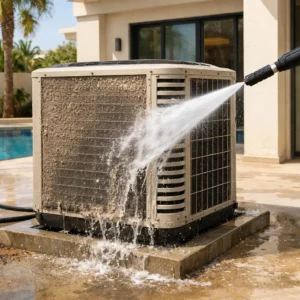
The outdoor unit plays a critical role in releasing heat from your home. If airflow around this unit is blocked, the AC cannot expel heat efficiently, even if the indoor unit is clean.
DIY steps to maintain outdoor airflow include:
- Removing leaves, dust, or debris around the unit
- Ensuring adequate clearance on all sides
- Checking that no objects block the fan exhaust
Restricted outdoor airflow forces the system to work harder, increasing energy usage and internal temperatures. Keeping this area clear is a simple yet powerful preventive measure.
#5 Condensate Drain Care to Prevent Leaks and Moisture Issues
Water leakage is a common AC complaint, and many cases start with a partially blocked condensate drain. This drain removes moisture produced during cooling. When blocked, water backs up and leaks indoors.
Safe DIY drain care includes:
- Visually inspecting the drain outlet for blockage
- Flushing the drain line gently with clean water
- Ensuring the drain pan is not visibly overflowing
Do not use harsh chemicals or high pressure, as this can damage drain components. Simple flushing helps prevent leaks and reduces mold risk inside the system.
#6 Gentle Coil Fin Cleaning Using Basic Tools
AC coils exchange heat between indoor air and refrigerant. Dust buildup on coil fins reduces this heat transfer, leading to weaker cooling and longer run times.
DIY coil care should be gentle and limited to surface cleaning:
- Use a soft brush to remove loose dust
- Brush in the direction of the fins to avoid bending
- Never use sharp tools or excessive force
Bent fins restrict airflow and require professional straightening. If coils appear heavily contaminated or greasy, stop and call a technician instead of attempting deeper cleaning.
#7 Basic Power Supply and Electrical Checks
Before assuming a major AC problem, basic power checks can save time and stress. Many “AC not working” cases are caused by simple electrical issues.
Safe checks homeowners can perform:
- Confirm the circuit breaker has not tripped
- Ensure the AC power switch is on
- Check that the thermostat display is active
If breakers trip repeatedly, do not reset multiple times. This indicates a deeper electrical issue requiring professional inspection.
#8 Thermostat Settings: Small Adjustments, Big Impact
Incorrect thermostat settings often mimic AC problems. A thermostat set incorrectly can cause short cycling, poor cooling, or continuous operation.
DIY thermostat checks include:
- Ensuring the mode is set to cooling
- Verifying the temperature setting is lower than room temperature
- Checking that batteries (if applicable) are not depleted
Thermostat placement also matters. Heat sources nearby can mislead temperature readings and affect performance.
#9 Early Troubleshooting for Visible Icing
Visible ice on indoor coils or refrigerant lines is a warning sign. It usually indicates airflow restriction or low refrigerant—not something to fix yourself.
Safe DIY response to icing:
- Turn off the AC immediately
- Allow ice to melt naturally
- Check filters and airflow paths
If icing returns after airflow checks, stop DIY work and contact a professional. Continued operation with ice can damage the compressor.
#10 Using Sight, Sound, and Airflow Feel as Success Indicators
One advantage of do it yourself AC maintenance is immediate feedback. You do not need instruments to know if basic maintenance worked.
Positive indicators include:
- Sight: cleaner vents, no water leakage, no visible ice
- Sound: smoother operation, reduced rattling or strain
- Airflow feel: stronger, steadier air from vents
If these indicators improve after DIY maintenance, your actions were likely effective and safe.
#11 When DIY Maintenance Should Stop Immediately
Knowing when to stop is just as important as knowing what to do. DIY maintenance should never continue if:
- You smell burning or electrical odor
- The system trips breakers repeatedly
- You see refrigerant oil residue
- Performance worsens after basic maintenance
These signs indicate issues beyond safe DIY boundaries.
#12 Cost-Saving Logic Without Risky Shortcuts
DIY maintenance saves money by reducing wear and preventing breakdowns—not by replacing professional repair. Simple routines lower the chance of major failure and help technicians work more efficiently when service is needed.
Rather than focusing on exact cost numbers, the real savings come from avoiding repeated emergency repairs, reducing energy waste, and extending system lifespan through routine care.
#13 How DIY Maintenance Supports Professional Service
DIY and professional service work best together. When homeowners maintain filters, airflow, and cleanliness, technicians can focus on precise diagnostics instead of basic cleanup.
This collaboration leads to:
- Faster professional service visits
- Clearer diagnosis
- Better long-term system stability
#14 Seasonal DIY Maintenance Timing
Timing matters. Performing basic maintenance before heavy usage seasons helps prevent sudden failures when demand is highest.
Ideal times include:
- Before peak summer months
- After long periods of inactivity
- When indoor air quality changes are noticed
When Professional Help Becomes the Safer Choice
DIY maintenance cannot solve every issue. Persistent cooling problems, electrical faults, refrigerant issues, and internal component failures require licensed technicians. Attempting these tasks yourself can lead to system damage, safety risks, or warranty loss.
Bio On Air helps homeowners handle AC issues safely by combining professional inspection, proper repair methods, and clear guidance. Addressing problems early prevents air quality decline, rising energy consumption, and long-term system damage. If your AC symptoms persist beyond safe DIY steps, you can use the WhatsApp or Call button at the top right of this page to discuss your situation with our team and decide on the next appropriate step.
Conclusion
Do it yourself AC maintenance is not about replacing professional service. It is about knowing safe boundaries, performing simple high-impact routines, and recognizing when to stop. Tasks like air filter care, outdoor airflow clearance, basic drain maintenance, and gentle coil cleaning help keep your AC stable and efficient.
By focusing on observation, cleanliness, and early troubleshooting, homeowners can reduce breakdown risk and maintain comfort with confidence. When DIY steps are paired with timely professional support, your AC system stays reliable, your indoor air stays healthier, and long-term costs remain under control.