




Many homeowners ask can air duct cleaning cause damage, especially after hearing mixed experiences. The answer is yes—but only when the cleaning is done incorrectly. In the UAE, where duct systems run constantly under heat, humidity, and dust, improper cleaning can lead to real damage instead of improvement. This guide explains when damage happens, how to avoid it, and how to verify your system after cleaning.
Table of Contents
ToggleCan Air Duct Cleaning Cause Damage
Air duct cleaning itself is not harmful when done correctly. In fact, it improves airflow, indoor air quality, and AC efficiency. However, problems arise when the cleaning method is too aggressive, rushed, or performed without proper inspection.
Damage usually happens due to:
- Improper tools or high-pressure equipment
- Lack of understanding of duct material (flexible vs rigid)
- No airflow control during cleaning
- Inexperienced technicians
So the real issue is not the cleaning itself—but how it is done.
Common Types of Damage from Improper Duct Cleaning
1. Torn or Collapsed Flexible Ducts
Many residential properties in the UAE use flexible ducts (flex ducts), which are lightweight but delicate. Aggressive brushing or high-pressure air can tear or collapse these ducts.
Once damaged, airflow becomes restricted, and cooling efficiency drops significantly.
2. Disconnected Joints and Leaks
Duct systems are connected through joints and seals. Poor handling during cleaning can loosen or disconnect these joints.
This leads to:
- Air leakage inside ceilings or walls
- Uneven cooling across rooms
- Energy waste
3. Damage to Blower or Coil Components
Some untrained technicians may clean beyond the duct system and accidentally damage sensitive AC components such as:
- Blower fan blades
- Evaporator coil fins
- Drain lines
These parts are critical for cooling performance and require careful handling.
4. Insulation Disturbance
Ducts are often insulated to prevent condensation. Rough cleaning can disturb or remove this insulation.
This can cause:
- Condensation buildup
- Water leakage
- Increased risk of mold growth
5. Dust and Mold Spread Instead of Removal
If proper vacuum control is not used, cleaning can actually release dust and contaminants into your home instead of removing them.
This is one of the most common issues with low-quality services.
Safe Cleaning Method vs Risky Cleaning Method
Not all duct cleaning methods are equal. The technique used makes a major difference.
| Method | Safety Level | Description |
|---|---|---|
| Negative Pressure Vacuum | Safe | Controlled suction removes contaminants without damaging ducts |
| Soft Brush Cleaning | Moderate | Safe when used carefully on rigid ducts |
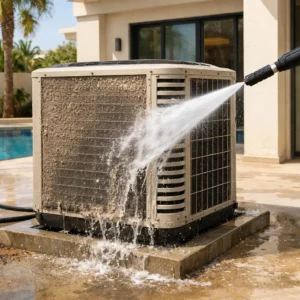
| High-Pressure Air Blasting | Risky | Can tear flexible ducts |
| Heavy Rotary Tools | Risky | Can damage duct structure and insulation |
Professional AC duct cleaning relies on controlled airflow and proper equipment, not aggressive force.
Dubai-Specific Risks That Increase Damage Potential
1. Sticky Dust and Sand
In the UAE, dust is not dry and loose—it often sticks due to humidity. This makes cleaning more difficult and increases the risk of aggressive handling.
2. High Humidity and Condensation
Indoor humidity combined with cold AC surfaces creates condensation. If insulation is disturbed, moisture problems can worsen.
3. Mold Growth Inside Ducts
Mold is more common in UAE AC systems than many people expect. Improper cleaning can spread spores instead of removing them.
4. Continuous AC Usage
AC systems in the UAE run almost year-round, making ducts more fragile over time.
Warning Signs of an Unreliable Contractor
Choosing the wrong contractor is the main reason damage occurs.
Be cautious if you notice:
- Unrealistically cheap pricing
- No inspection before starting work
- No explanation of cleaning method
- No mention of vacuum system or containment
- Very short service duration
These signs usually indicate a surface-level service rather than proper duct cleaning.
What a Safe AC Duct Cleaning Process Should Look Like
A proper cleaning process follows a structured approach:
- Initial inspection of ducts and system condition
- Setup of negative pressure vacuum system
- Controlled cleaning of ducts and vents
- Sanitization treatment if needed
- Final inspection and documentation
This ensures that cleaning improves the system without causing damage.
Post-Cleaning Checklist to Detect Hidden Damage
After cleaning, you should verify that your system is working properly.
Use this checklist:
- Airflow feels consistent across all rooms
- No new noise or vibration from AC
- No dust blowing from vents
- No new smell after cleaning
- No visible leakage or ceiling damage
If any of these issues appear, it may indicate improper cleaning.
When Duct Cleaning Is More Likely to Cause Damage
Certain situations increase risk:
- Old or fragile duct systems
- Poorly installed ducts
- Heavy contamination requiring aggressive cleaning
In these cases, cleaning must be handled carefully with the right method.
How to Protect Your AC System Before Cleaning
Before scheduling duct cleaning, you can reduce risks by:
- Asking about cleaning methods and tools
- Requesting inspection before service
- Confirming what is included
- Ensuring proper equipment is used
This helps ensure the process is safe and effective.
Why Proper Cleaning Improves More Than Just Cleanliness
When done correctly, duct cleaning:
- Improves indoor air quality
- Enhances AC efficiency
- Reduces energy consumption
- Prevents long-term system damage
The key is choosing the right approach, not avoiding cleaning altogether.
Understanding Risk vs Benefit
Many people avoid duct cleaning out of fear of damage. However, leaving ducts dirty also has risks.
- Dust and allergens circulate continuously
- Mold can grow inside ducts
- AC efficiency decreases over time
The goal is not to avoid cleaning—but to ensure it is done properly.
If you are considering duct cleaning or have concerns about previous work, it is important to address the situation early. Improper cleaning can lead to hidden damage, reduced airflow, and poor indoor air quality, while ignoring duct issues can allow dust, bacteria, and moisture to build up over time. With the right approach, these risks can be managed safely. If you need clarity about your system condition or want to confirm whether your ducts were cleaned correctly, you can use the WhatsApp or Call button on the top right to connect with the Bio On Air team and understand the most suitable next step.
Conclusion
So, can air duct cleaning cause damage? Yes—but only when done incorrectly. With proper methods, equipment, and inspection, duct cleaning is safe and beneficial. The key is choosing a professional approach that protects your system while improving air quality and performance.