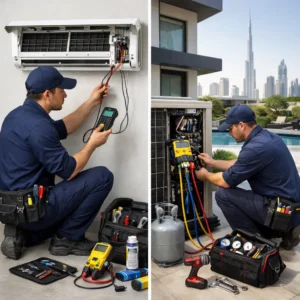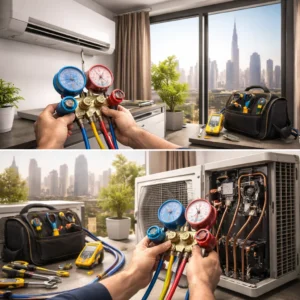





Experiencing a bad odor gas smell from your AC in Dubai is not something to ignore. In many cases, unusual AC odors indicate deeper issues such as mold growth, blocked drainage, electrical overheating, or even refrigerant leaks. In this guide, we explain the types of smells, what they mean, and what you should do immediately.
Table of Contents
ToggleTypes of Bad Odor Gas from AC and What They Mean
Different smells from your AC system indicate different problems. Understanding the type of odor helps you identify the level of risk.
Rotten Egg or Sewage Smell
This smell is one of the most concerning. It is often caused by:
- Clogged condensate drain lines
- Bacteria buildup in stagnant water
- Possible sewer gas backflow through drainage systems
In Dubai, this is common when drainage lines are blocked by dust, algae, or debris. The combination of moisture and heat creates a perfect environment for bacteria.
Risk level: Medium to high — can affect air quality and indicate drainage system issues.
Musty or Moldy Smell
This is the most common AC odor in the UAE. It usually indicates mold or mildew inside:
- Evaporator coils
- Air ducts
- Filters
Dubai’s high humidity combined with constant AC use creates condensation. When mixed with desert dust, it forms a breeding ground for mold.
Risk level: High — especially for people with allergies or respiratory issues.
Burning or Electrical Smell
A burning smell is a serious warning sign. It may come from:
- Overheating electrical components
- Faulty wiring
- Dust burning off internal parts
If the smell is strong or persistent, it could indicate an electrical hazard.
Risk level: Very high — potential fire risk.
Chemical or Sweet Smell
This smell often indicates a refrigerant (gas) leak.
- AC gas leakage (such as R410A or R32)
- System pressure imbalance
Refrigerant gases are not meant to be smelled. If you notice a sweet or chemical odor, it should be treated seriously.
Risk level: High — requires immediate professional attention.
Why Bad AC Odors Are Common in Dubai
Dubai’s environment creates unique conditions that increase the risk of AC odor problems.
- High humidity causes condensation inside AC systems
- Desert dust enters ducts and filters
- Continuous AC usage creates constant moisture cycles
- Closed indoor environments trap contaminants
This combination leads to bacterial growth, mold formation, and airflow contamination.
Villa vs Apartment AC Odor Problems
| Property Type | Common Issue | Cause |
|---|---|---|
| Apartment | Duct contamination | Centralized airflow system |
| Villa | Drain blockage | Individual AC drainage systems |
Apartments often suffer from shared duct contamination, while villas face more localized issues such as blocked drainage lines.
When You Should Turn Off Your AC Immediately
Some smells indicate urgent risk. Turn off your AC immediately if you notice:
- Strong burning smell
- Persistent chemical odor
- Unusual electrical noise with smell
Continuing to run the AC in these conditions may cause further damage or safety hazards.
Safe DIY Steps You Can Try First
1. Clean or Replace Air Filters
Filters should be cleaned every 4–6 weeks in Dubai. Dirty filters trap dust and moisture, leading to odor buildup.
2. Clean Vents and Grills
Dust accumulation around vents can contribute to smell circulation.
3. Basic Drain Line Flushing
If accessible, flushing the drain line with water can help remove minor blockages.
4. Improve Ventilation
Opening windows occasionally can help reduce trapped odors.
When DIY Is Not Enough
DIY solutions are limited. You need professional help if:
- Smell keeps returning
- Odor becomes stronger over time
- Visible mold appears around vents
- Cooling performance drops
These signs indicate deeper internal problems.
Professional Solutions for AC Odor Problems
AC Duct Cleaning
Removes dust, mold, and contaminants from the airflow system. Learn how AC duct cleaning improves indoor air quality.
Coil Cleaning and Sterilization
Evaporator coils are common sources of bacterial growth. Cleaning them removes odor-causing buildup.
Drain Line Cleaning
Clearing blocked drainage prevents water stagnation and bacterial growth.
Full System Sanitization
Includes anti-bacterial treatment for ducts, coils, and internal components.
Health Risks of Ignoring AC Odors
- Allergy symptoms
- Respiratory irritation
- Exposure to mold spores
- Poor indoor air quality
Long-term exposure can affect both comfort and health.
How to Prevent AC Odors in the Future
- Clean filters regularly
- Schedule routine maintenance
- Keep drainage lines clear
- Perform periodic duct cleaning
Prevention is always easier and more cost-effective than repair.
Long-Term Impact on Your AC System
Ignoring odors can lead to:
- Reduced cooling efficiency
- Higher electricity bills
- System damage
- Frequent breakdowns
Early action helps avoid these issues.
If you are experiencing any type of bad odor gas from your AC, it is important not to delay. These smells often indicate underlying problems such as mold buildup, drainage blockage, or even refrigerant leaks. Leaving them unresolved can affect your indoor air quality, increase energy consumption, and lead to more serious damage over time. With the right approach, these issues can be diagnosed and resolved safely. If you need clarity about your AC condition, you can use the WhatsApp or Call button on the top right to connect with the Bio On Air team and understand the most suitable next step.
Conclusion
Bad odor gas from AC systems in Dubai can indicate anything from minor issues to serious risks. Understanding the type of smell and acting early helps protect your health, improve air quality, and maintain system performance.