




Air quality UAE is something many residents check daily, especially during dusty days or seasonal changes. In cities like Dubai and Abu Dhabi, air quality can shift quickly due to desert dust, traffic emissions, and weather patterns. This guide explains AQI levels, pollutants, forecasts, and how you can protect your indoor environment.
Table of Contents
ToggleCurrent Air Quality UAE and AQI Understanding
Air Quality Index (AQI) is a standard used to measure how clean or polluted the air is. In the UAE, AQI levels can change throughout the day depending on wind, humidity, and dust movement.
| AQI Range | Category | Impact |
|---|---|---|
| 0 – 50 | Good | Air quality is safe for everyone |
| 51 – 100 | Moderate | Acceptable, minor risk for sensitive individuals |
| 101 – 150 | Unhealthy for Sensitive Groups | Children and elderly may feel effects |
| 151 – 200 | Unhealthy | Everyone may experience discomfort |
| 201+ | Very Unhealthy | Serious health effects possible |
In the UAE, AQI often fluctuates between moderate and unhealthy levels, especially during sandstorms or high traffic hours.
Air Quality Across Major UAE Cities
Dubai
Dubai experiences variable air quality due to traffic density, construction, and coastal humidity. AQI levels can rise quickly during peak hours and dust events.
Abu Dhabi
Abu Dhabi generally has similar patterns, with additional influence from industrial areas and coastal winds.
Northern Emirates
Sharjah, Ajman, and other Northern Emirates often experience higher dust concentrations due to geographical positioning and wind patterns.
Across all regions, desert dust is a major factor influencing air quality.
Short-Term Forecast and Dust Alerts
Air quality in the UAE can change within hours. Dust storms and sand movement can significantly reduce air quality quickly.
Common triggers include:
- Shamal winds (strong regional winds)
- Sandstorms and dust storms
- Sudden humidity changes
During these events, AQI levels can spike into unhealthy ranges, even if the day started clear.
Key Pollutants in UAE Air Quality
PM2.5 (Fine Particles)
These are very small particles that can enter the lungs and bloodstream. They are often caused by dust and combustion processes.
PM10 (Coarse Dust)
These particles are larger but still harmful. In the UAE, PM10 is mainly from desert dust.
Ozone (O3)
Ground-level ozone forms due to chemical reactions between pollutants under sunlight. It can irritate the respiratory system.
Nitrogen Dioxide (NO2)
This pollutant comes mainly from vehicle emissions and contributes to urban air pollution.
Main Causes of Air Pollution in UAE
Desert Dust
The UAE’s desert environment naturally produces dust that can travel long distances and enter urban areas.
Traffic Emissions
High vehicle usage contributes to nitrogen dioxide and particulate pollution.
Construction Activity
Ongoing development creates additional airborne particles.
Industrial Emissions
Certain areas experience pollution from industrial operations.
Health Effects Based on AQI Levels
- Moderate: Mild irritation for sensitive individuals
- Unhealthy: Breathing discomfort, especially for children and elderly
- Very Unhealthy: Increased risk of respiratory issues
People with asthma or allergies are more sensitive to changes in air quality.
How Air Quality Affects Indoor Environments
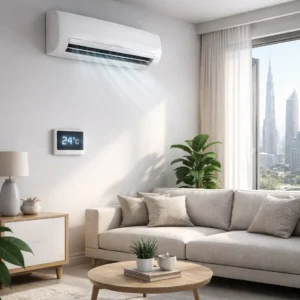
Many people assume staying indoors protects them completely. However, outdoor air often enters indoor spaces through ventilation and AC systems.
This means:
- Dust particles can circulate indoors
- Air quality inside may reflect outdoor conditions
- Poor AC maintenance can worsen indoor air
Practical Ways to Protect Yourself in UAE
1. Use Air Purifiers
Air purifiers with HEPA filters help remove fine particles from indoor air.
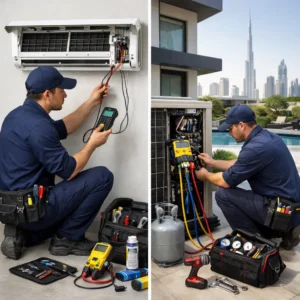
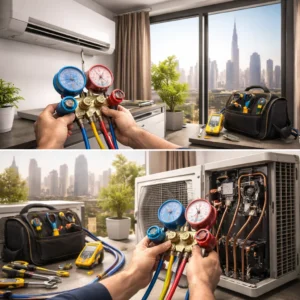
2. Maintain Your AC System
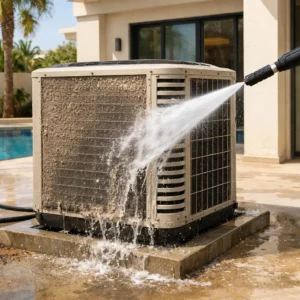
Your AC system is your primary air circulation system. Dirty ducts can trap and redistribute pollutants.
Proper AC maintenance helps ensure clean airflow and better filtration.
3. Keep Windows Closed During Dust Events
This reduces the amount of outdoor dust entering your home.
4. Clean Filters Regularly
AC filters collect dust quickly in the UAE environment and should be cleaned frequently.
5. Monitor Air Quality Using Apps
Several mobile apps provide real-time AQI updates for UAE cities.
- AirVisual
- AQICN
- Weather apps with AQI data
Best Practices for Families and Sensitive Individuals
If you have children, elderly family members, or individuals with respiratory conditions, extra precautions are important.
- Avoid outdoor activities during high AQI
- Use indoor air filtration systems
- Maintain clean indoor airflow
Common Misconceptions About Air Quality UAE
“Indoor air is always clean”
Not necessarily. Without proper maintenance, indoor air can become more polluted than outdoor air.
“Dust is harmless”
Fine dust particles can affect respiratory health over time.
“AC solves everything”
AC systems can circulate polluted air if not properly cleaned and maintained.
Long-Term Strategy for Better Air Quality
Improving air quality is not a one-time action—it requires consistent effort.
- Regular AC maintenance
- Periodic duct cleaning
- Monitoring AQI trends
- Using air purification systems
If you are experiencing poor indoor air quality or noticing dust buildup and airflow issues, it is important to address them early. Outdoor pollution in the UAE can easily enter indoor spaces and circulate through your AC system, affecting both comfort and health. Without proper maintenance, this can lead to reduced air quality, higher energy usage, and long-term system strain. With the right approach, these issues can be managed effectively. If you need clarity about your indoor air condition, you can use the WhatsApp or Call button on the top right to connect with the Bio On Air team and understand the most suitable next step.
Conclusion
Air quality UAE is influenced by natural and human factors, making it important to stay informed and proactive. By understanding AQI levels, pollutants, and protective strategies, you can create a healthier indoor environment and reduce the impact of outdoor air pollution.