




The air quality index Sharjah is an important indicator of how clean or polluted the air is at any given time. In the UAE, air quality can change quickly due to dust, traffic, and weather conditions. This guide explains current AQI levels, key pollutants, health impacts, and how you can protect yourself both outdoors and indoors.
Table of Contents
ToggleCurrent Air Quality Index in Sharjah
The air quality index (AQI) in Sharjah typically ranges from moderate to unhealthy levels depending on weather patterns, dust activity, and urban emissions. On most normal days, AQI falls within the Moderate (51–100) to Unhealthy for Sensitive Groups (101–150) range.
During dust storms or high pollution events, AQI can rise significantly into the Unhealthy (151–200) or even Very Unhealthy (201+) categories.
The most common dominant pollutant affecting AQI in Sharjah is:
- PM10 (coarse dust particles) during sandstorms
- PM2.5 (fine particles) from traffic and urban pollution
These particles are small enough to enter the respiratory system and affect overall health.
Understanding the AQI Scale and Health Impact
The AQI scale helps you understand how air quality affects your health.
| AQI Range | Category | Health Impact |
|---|---|---|
| 0–50 | Good | Air quality is safe for everyone |
| 51–100 | Moderate | Acceptable, minor risk for sensitive individuals |
| 101–150 | Unhealthy for Sensitive Groups | Children, elderly, and people with respiratory issues may feel effects |
| 151–200 | Unhealthy | Everyone may begin to experience symptoms |
| 201–300 | Very Unhealthy | Serious health effects possible |
| 300+ | Hazardous | Emergency conditions |
Understanding these levels helps you decide when to limit outdoor exposure.
Primary Pollutants Affecting Sharjah AQI
PM2.5 (Fine Particulate Matter)
PM2.5 particles are extremely small and can penetrate deep into the lungs. They often come from:
- Vehicle emissions
- Industrial activities
- Urban pollution
PM10 (Coarse Dust Particles)
PM10 is more common during dust storms in the UAE. These particles are larger but still harmful, especially when levels are high.
Nitrogen Dioxide (NO2)
NO2 is produced mainly by traffic and combustion processes. It contributes to respiratory irritation.
Ozone (O3)
Ground-level ozone forms under sunlight and heat, making it more common during hot UAE afternoons.
Short-Term AQI Trends in Sharjah
Air quality in Sharjah typically follows daily and seasonal patterns:
- Morning: AQI may be moderate due to traffic buildup
- Afternoon: Higher ozone levels due to heat
- Evening: Pollution may increase with traffic
- Dust events: Sudden AQI spikes due to sandstorms
Seasonally, AQI tends to worsen during dry, dusty periods and improve slightly during cooler months.
Monitoring Stations and Data Sources in UAE
Air quality data in Sharjah is collected from multiple monitoring stations across the UAE. These stations track pollutant levels in real time.
Common data sources include:
- Government environmental monitoring systems
- Urban air quality sensors
- Regional environmental agencies
These systems continuously update AQI readings to provide accurate information for public awareness.
Health Recommendations Based on AQI Levels
For Sensitive Groups
- Avoid outdoor activities when AQI exceeds 100
- Use air purifiers indoors
- Keep windows closed during high pollution
- Wear masks during dust storms
For General Public
- Limit prolonged outdoor exposure during high AQI
- Stay hydrated
- Avoid heavy exercise outdoors when AQI is high
Outdoor Activity Guidelines Based on AQI
| AQI Level | Outdoor Activity Advice |
|---|---|
| 0–100 | Safe for normal outdoor activities |
| 101–150 | Reduce prolonged outdoor exertion |
| 151–200 | Limit outdoor activities |
| 200+ | Avoid outdoor exposure |
Indoor Protection During Poor Air Quality
Indoor air quality becomes critical when outdoor AQI is high. Many people assume staying indoors is enough, but pollutants can still enter through ventilation systems.
Effective indoor protection includes:
- Keeping windows and doors closed
- Using air purifiers
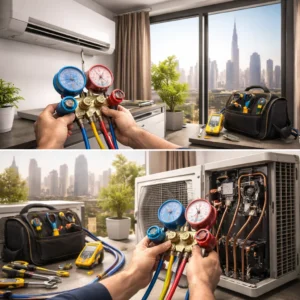
- Maintaining AC filters regularly
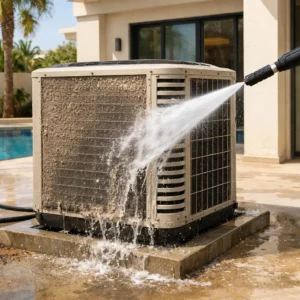
- Cleaning ducts to remove trapped dust and particles
Improving indoor air circulation and filtration plays a major role in reducing exposure.
Why AC Systems Affect Indoor Air Quality
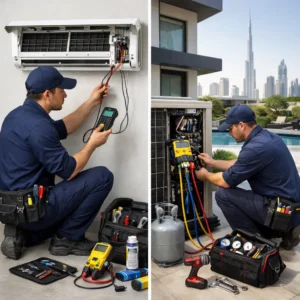
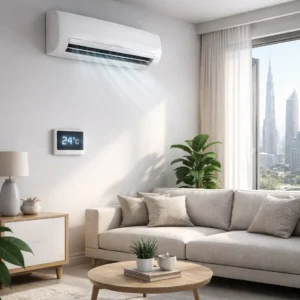
In the UAE, air conditioning systems run continuously, especially during summer. These systems circulate air throughout your home.
If ducts and filters are not clean:
- Dust and pollutants recirculate indoors
- Air quality becomes worse than outside
- Allergens and bacteria may build up
This is why proper maintenance, including services like AC duct cleaning, plays an important role in maintaining healthy indoor air.
Signs Your Indoor Air Quality May Be Affected
- Persistent dust buildup
- Musty or stale smell indoors
- Frequent allergy symptoms
- Uneven airflow from AC vents
These signs often indicate poor air circulation or contamination inside the system.
Practical Tips to Protect Your Health
- Check AQI daily before going outdoors
- Limit outdoor exposure during high pollution
- Maintain your AC system regularly
- Use high-quality air filters
- Keep indoor spaces clean and dust-free
Short-Term vs Long-Term Exposure Risks
Short-Term Effects
- Coughing and throat irritation
- Eye discomfort
- Breathing difficulty
Long-Term Effects
- Chronic respiratory conditions
- Increased allergy sensitivity
- Reduced lung function
Understanding these risks helps you take preventive action early.
Why Sharjah AQI Matters More Than You Think
Air quality is not just an outdoor issue. In cities like Sharjah, where buildings are sealed and air-conditioned, indoor air quality becomes directly connected to outdoor conditions.
Without proper filtration and maintenance, pollutants can remain trapped indoors for long periods.
If you are noticing poor air quality symptoms or discomfort at home, it is important not to ignore them. Outdoor pollutants like dust and fine particles can accumulate inside your AC system and continue circulating indoors, affecting your breathing, comfort, and overall health. Over time, this can also reduce AC efficiency and increase energy consumption. Addressing these issues early helps maintain both air quality and system performance. If you need clarity about your indoor air condition, you can use the WhatsApp or Call button on the top right to connect with the Bio On Air team and understand the most suitable next step.
Conclusion
The air quality index Sharjah is a key indicator of environmental and indoor health conditions. By understanding AQI levels, pollutant types, and protective measures, you can reduce exposure, improve air quality, and maintain a healthier living environment.