




Searching for air duct with fan usually means you are trying to solve a very specific airflow problem. One room feels weak at the end of the duct run, an enclosed space traps heat or humidity, or a workshop or garage needs faster air removal. In these situations, adding a fan inside or along the duct can seem like a simple fix. However, without understanding the real airflow issue, the fan type, and how it interacts with your HVAC system, this solution can either work very well or quietly create new problems.
Table of Contents
ToggleUnderstanding Why Airflow Problems Happen in Ducted Systems
Before choosing any air duct with fan solution, it is important to understand why airflow feels weak or uneven in the first place. Many people assume the AC unit itself is the problem, but in reality, airflow issues often develop inside the duct network.
Common real-world scenarios include:
- Rooms at the end of duct runs: Air loses pressure as it travels through long or complex duct paths, leaving distant rooms undercooled.
- Enclosed spaces: Storage rooms, server closets, or bathrooms often trap heat or humidity because air is not refreshed fast enough.
- Workshops and garages: These spaces generate heat, fumes, or dust and need rapid air extraction rather than gentle circulation.
In many homes and commercial spaces, ducts were designed for an earlier layout or lower usage. Over time, added rooms, partitions, or higher cooling demand expose weaknesses in airflow distribution. This is where people start looking for an air duct with fan as a targeted solution.
What an Air Duct with Fan Is Designed to Do
An air duct with fan is not meant to replace your main AC blower. Instead, it supports airflow in specific areas where natural pressure from the central system is not enough.
In simple terms, a duct fan can:
- Assist air movement through long or restrictive duct runs
- Help pull stale, hot, or humid air out of enclosed spaces
- Improve balance between rooms with uneven airflow
However, it is important to understand that a duct fan amplifies existing airflow conditions. If the duct is blocked, leaking, or contaminated with dust, the fan may only push the same problem faster. This is why diagnosing the airflow issue correctly matters before deciding to install anything.
Diagnosing Airflow Problems Before Adding a Duct Fan
One of the biggest mistakes people make is installing a fan before identifying the real cause of weak airflow. A fan can help, but only when the underlying system allows air to move properly.
Here are practical checks that should be considered first:
- Duct cleanliness: Heavy dust buildup restricts airflow and reduces efficiency.
- Leaks or gaps: Air escaping through duct joints reduces pressure at the far end.
- Duct sizing: Narrow or poorly designed duct paths create resistance.
- Blocked registers: Furniture or closed vents change airflow balance.
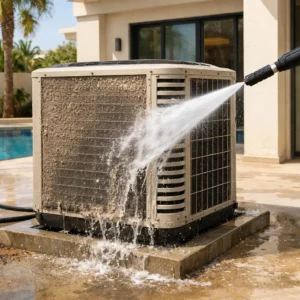
If dust or debris is part of the issue, improving airflow with a fan alone may not solve the problem. In such cases, professional AC duct cleaning helps restore airflow capacity before considering mechanical assistance.
Types of Air Duct Fans and Their Best Use Scenarios
Not all duct fans work the same way. Choosing the wrong type can lead to noise, inefficiency, or even backflow issues. Understanding the main categories helps match the solution to the problem.
Inline Duct Fans
Inline duct fans are installed inside the duct run, usually between two sections of ducting. They actively push or pull air through the duct.
Best use scenarios:
- Long duct runs where airflow weakens toward the end
- Rooms consistently undercooled despite proper AC operation
- Supplementing airflow without changing the main AC unit
Core benefits include improved airflow consistency and better pressure support. However, they must be matched carefully to the duct size and airflow direction to avoid turbulence.
Register Booster Fans
Register booster fans are installed directly at the air vent or register. They pull more air into the room from the duct behind the vent.
Best use scenarios:
- Single rooms with slightly weaker airflow
- Temporary or low-impact airflow correction
- Situations where duct modification is not possible
These fans are easy to install but have limited impact. They are not suitable for severe airflow imbalance or large spaces.
In-Duct Inductor Fans
In-duct inductor fans use airflow from the main system to induce additional air movement. They rely on pressure differences rather than direct pushing.
Best use scenarios:
- Systems where maintaining natural airflow balance is important
- Spaces requiring subtle airflow support
- Applications sensitive to noise or pressure changes
While more complex, these fans can integrate smoothly into certain HVAC designs when installed correctly.
Technical Specifications That Matter (Without the Numbers)
When choosing an air duct with fan, technical specifications matter more than brand names. You do not need formulas, but you do need to know what to check.
Airflow Capacity
Airflow capacity tells you how much air the fan can move. The key is not choosing the strongest fan, but one that matches the duct size and airflow need. Too little airflow makes no difference; too much can create noise, vibration, or pressure imbalance.
Static Pressure Handling
Static pressure refers to resistance inside the duct. Long ducts, bends, and filters increase resistance. A fan that cannot handle this resistance will struggle, even if it is powerful on paper.
Always consider how restrictive your duct system is, not just how far the air needs to travel.
Noise Level
Noise becomes a major issue when fans are installed near living or working spaces. A poorly chosen fan can turn a comfort solution into a daily annoyance.
Consider where the fan will be located and how sound travels through ducting. Quieter operation is especially important for bedrooms, offices, and residential spaces.
Installation and Safety Considerations You Should Not Ignore
Installing an air duct with fan is not only a mechanical task. Electrical safety, airflow direction, and fire compliance all matter.
Power Source Options
Duct fans may use standard electrical connections, low-voltage systems, or plug-in power. The choice affects installation complexity and safety.
Improper wiring increases fire risk and can damage the fan or HVAC controls.
Airflow Direction
Incorrect airflow direction is a common mistake. A fan installed backward can fight the main system, reduce efficiency, or cause air to recirculate improperly.
Always confirm airflow direction relative to supply and return ducts.
Fire Safety and Compliance
Duct systems often pass through walls and ceilings. Fans installed incorrectly can compromise fire barriers.
Fire-rated components, proper sealing, and compliance with local safety standards are critical, especially in commercial or shared buildings.
Smart Automation Options for Air Duct Fans
Modern air duct with fan solutions often include automation features that improve efficiency and comfort without constant manual control.
Temperature-Based Activation
Fans can activate only when duct air reaches a certain temperature. This prevents unnecessary operation when the AC is off or air movement is not needed.
Humidity-Based Control
In bathrooms, storage rooms, or humid spaces, humidity sensors trigger the fan when moisture rises. This helps control mold risk and air quality.
Variable Speed Control
Instead of simple on-off operation, variable speed allows gradual airflow adjustment. This reduces noise and prevents sudden pressure changes.
Automation works best when integrated thoughtfully. Poor configuration can lead to overuse, energy waste, or system imbalance.
When an Air Duct with Fan Is the Right Solution
An air duct with fan can be effective when:
- The main HVAC system is working correctly
- Airflow loss is localized to specific areas
- Ducts are clean, sealed, and structurally sound
In these cases, a duct fan acts as targeted assistance, not a workaround.
When a Duct Fan Is Not the Right Solution
A duct fan is not the answer when:
- The AC system itself is undersized or failing
- Ducts are heavily contaminated or leaking
- Air distribution problems affect the entire building
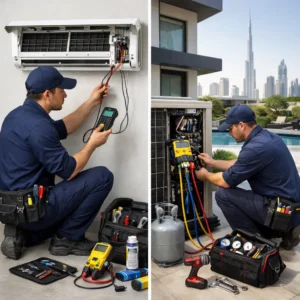
In such situations, addressing system health through inspection, repair, or maintenance is more effective. Services like AC repair or AC maintenance and AMC may be necessary before adding any airflow accessories.
Common Installation Mistakes to Avoid
Many duct fan problems come from avoidable mistakes:
- Installing a fan without checking duct condition
- Oversizing the fan and creating noise and turbulence
- Ignoring airflow balance between rooms
- Skipping safety and compliance checks
Each of these mistakes can reduce comfort and increase long-term costs.
Assessing the System Before Deciding to Proceed
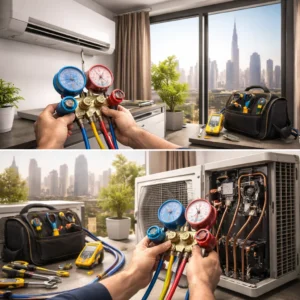
Before deciding to install an air duct with fan, it is wise to assess the entire HVAC system. Airflow issues are often symptoms, not root causes.
Checking duct cleanliness, sealing, system capacity, and maintenance history helps you decide whether a fan is the right step or just a temporary fix.
Conclusion
An air duct with fan can be a smart and effective solution for targeted airflow problems, especially in rooms at the end of duct runs, enclosed spaces with heat or humidity buildup, or workshops requiring rapid air removal. However, its success depends entirely on proper diagnosis, correct fan selection, and safe installation.
Understanding fan types, airflow behavior, technical considerations, and automation options helps you make informed decisions instead of relying on trial and error. Just as important is knowing when a duct fan is not the answer. Addressing underlying HVAC issues first often saves money, improves comfort, and prevents repeated adjustments later.