




Air duct supply is one of the most misunderstood parts of an HVAC system, yet it plays a direct role in comfort, airflow balance, noise levels, and energy efficiency. Many problems people experience—weak cooling, uneven temperatures between rooms, whistling sounds, or rooms that never feel comfortable—are often linked to how the supply duct system is designed, sized, installed, or maintained. This guide explains air duct supply in a clear and practical way, helping you understand how it works, how to identify it, how to choose the right materials, and how to troubleshoot common supply-side problems without unnecessary guesswork.
Table of Contents
ToggleAir Duct Supply vs Return Airflow: Functional Clarity
The first step to understanding air duct supply is clearly separating it from return airflow. These two are often confused, even though they serve opposite purposes in the HVAC cycle.
Supply ducts deliver conditioned air (cool or warm) from the HVAC unit into occupied spaces. This is the air you feel blowing into the room.
Return ducts pull air back from the room to the HVAC unit to be reconditioned.
A healthy HVAC system depends on balance between supply and return. If supply airflow is restricted, rooms feel weak or uneven. If return airflow is restricted, pressure builds up, causing noise, poor cooling, and higher energy use.
Key functional differences:
- Supply ducts: push air into rooms, control comfort, affect throw and air distribution.
- Return ducts: pull air out of rooms, stabilize pressure, support airflow loop.
Understanding which duct does what is critical before any repair, replacement, or optimization decision.
How to Identify Supply Lines and Supply Registers
In real homes and buildings, identifying supply ducts is usually straightforward once you know what to look for.
Supply registers are the visible outlets where air enters the room. They are commonly located:
- On ceilings (most common in apartments and villas)
- High on walls
- Sometimes on floors in certain layouts
Simple identification methods:
- Turn the AC on and feel airflow—air blowing out indicates supply.
- Supply registers usually have adjustable louvers to direct airflow.
- Supply ducts often feel cooler than surrounding areas during operation.
Supply lines typically branch out from a central plenum connected to the air handling unit. These branches deliver air to each room or zone.
Anatomy of an Air Duct Supply System
To truly understand air duct supply, it helps to break the system into its core components. Each part affects airflow, noise, efficiency, and comfort.
Supply Plenum
The supply plenum is the main air chamber connected directly to the HVAC unit. It collects conditioned air and distributes it into multiple branch ducts.
A poorly designed plenum can:
- Create uneven airflow distribution
- Increase static pressure
- Cause noise and vibration
Branch Ducts
Branch ducts carry air from the plenum to individual rooms or zones. Their length, diameter, bends, and material directly affect airflow performance.
Common issues with branch ducts include:
- Undersized diameter causing weak airflow
- Too many sharp bends increasing resistance
- Disconnected or leaking joints
Takeoffs and Transitions
These are the connection points where air moves from plenum to branch ducts. Poorly sealed or badly shaped takeoffs are a major source of airflow loss and noise.
Supply Registers and Diffusers
Registers and diffusers control how air enters the room. Their design affects:
- Air throw distance
- Mixing of air within the space
- Draft sensation and comfort
Even a well-designed duct system can perform poorly if registers are mismatched to room size or airflow rate.
Supply Duct Material Options and When to Use Each
Material choice for air duct supply has a major impact on durability, airflow quality, noise, insulation, and long-term maintenance.
Flexible Duct (Flex Duct)
Flexible duct is widely used due to ease of installation and lower upfront cost.
Pros:
- Quick installation
- Lower labor cost
- Good vibration isolation
Cons:
- Higher airflow resistance
- Can sag and restrict airflow
- Shorter lifespan if poorly installed
Best use: short runs with gentle curves and proper support.
Rigid Sheet Metal Duct
Sheet metal ducts provide the best airflow performance.
Pros:
- Low resistance and smooth airflow
- High durability
- Easy to clean internally
Cons:
- Higher installation cost
- Requires skilled labor
- Needs external insulation
Best use: main supply trunks, long runs, high-performance systems.
Pre-insulated Duct Panels
Common in commercial and modern residential systems, these combine structure and insulation.
Pros:
- Good thermal insulation
- Reduced condensation risk
- Cleaner internal surfaces
Cons:
- Higher material cost
- Requires precise fabrication
Best use: systems prioritizing energy efficiency and air quality.
Airflow Fundamentals for Supply Duct Systems
Understanding airflow fundamentals helps explain why many supply duct systems fail to perform as expected.
Static Pressure
Static pressure is the resistance the HVAC fan must overcome to move air. High static pressure often results from:
- Undersized ducts
- Dirty filters or coils
- Blocked or collapsed flex ducts
Excessive static pressure reduces airflow and stresses the blower motor.
Air Velocity
Velocity refers to how fast air moves through the duct. Too high velocity can cause noise, while too low velocity can cause poor air distribution.
Air Throw
Throw is the distance air travels from the supply register into the room. Poor throw leads to hot or cold spots and uncomfortable drafts.
What Happens When Sizing Is Wrong
- Undersized ducts: noisy system, weak airflow, high energy use.
- Oversized ducts: poor air mixing, low velocity, uneven temperatures.
Correct sizing balances pressure, velocity, and comfort.
Common Air Duct Supply Problems and How to Troubleshoot Them
Weak Airflow at Supply Registers
Possible causes include:
- Clogged or dirty ducts
- Disconnected branches
- Improper duct sizing
Professional inspection and AC duct cleaning often restore airflow when dust buildup is the main issue.
Uneven Cooling Between Rooms
This often indicates imbalance in the supply system. Dampers may need adjustment, or branch ducts may need resizing.
Noise from Supply Ducts
Whistling, rattling, or booming noises are usually caused by:
- High air velocity
- Loose duct connections
- Sharp transitions
Air Leaks and Poor Sealing
Leaky supply ducts waste energy and reduce comfort. Proper sealing uses mastic or approved sealants—not standard cloth tape, which dries and fails.
Insulation and Condensation Issues
Uninsulated or damaged insulation can lead to condensation, mold growth, and energy loss. Supply ducts in hot climates require proper insulation to protect performance.
Balancing Supply Airflow with Dampers
Dampers control airflow distribution across branches. Proper balancing ensures each room receives the correct amount of air.
Signs balancing is needed:
- Some rooms always too cold or too warm
- High airflow noise in specific areas
- Comfort complaints despite correct temperature setting
Balancing is a precise task and often part of professional optimization work rather than DIY adjustment.
Supply-Side Maintenance Best Practices
Regular maintenance reduces supply-side problems and extends system life.
- Replace or clean filters regularly
- Inspect visible duct connections annually
- Address airflow changes early
- Schedule periodic system inspection
Many long-term airflow issues are preventable with early attention.
Practical Visuals and Tools for Supply Duct Work
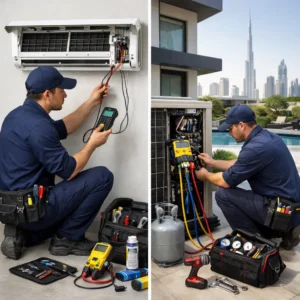
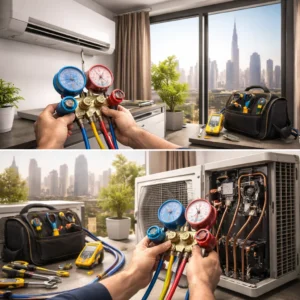
When repairing or optimizing air duct supply systems, technicians rely on specific tools and visuals.
Common Supply-Side Tools
- Airflow meters and anemometers
- Static pressure gauges
- Duct inspection cameras
- Mastic sealants and approved tapes
- Balancing dampers
These tools support accurate diagnosis and long-term solutions rather than guess-based fixes.
When to Repair, Replace, or Optimize Supply Ducts
Not every problem requires full replacement. Decisions depend on duct condition, age, material, and performance goals.
- Repair: leaks, disconnections, minor insulation damage.
- Optimize: balancing, resizing branches, improving sealing.
- Replace: collapsed, contaminated, or severely undersized ducts.
Understanding these options helps avoid unnecessary cost while improving comfort.
When Supply Duct Issues Should Be Addressed Properly
Supply duct problems rarely improve on their own. If ignored, they can lead to poor indoor air quality, higher electricity bills, uneven comfort, and strain on HVAC equipment. Bio On Air helps address air duct supply issues through inspection, cleaning, sealing, and airflow optimization, always explaining what is needed and why. Acting early is a preventive step that protects comfort and system efficiency. You can use the WhatsApp or Call button at the top right of this page to discuss your supply duct concerns with our team.
Conclusion
Air duct supply is the backbone of effective HVAC performance. From plenum design to branch sizing, material selection, airflow balance, and maintenance, every detail matters. When supply ducts are misunderstood or neglected, comfort suffers and costs rise. By understanding how supply airflow works, how to identify problems, and when professional support is needed, you can make better decisions for repair, replacement, or optimization.
In hot climates like the UAE, where AC performance directly affects daily life, a well-designed and well-maintained air duct supply system is not optional. It is essential for comfort, clean air, and long-term efficiency.