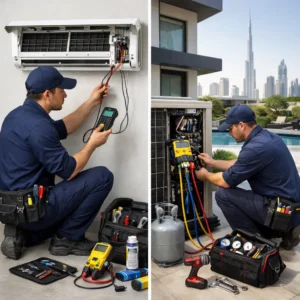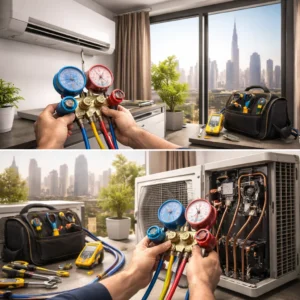





ac water leaking is one of the most alarming AC problems because it creates immediate mess, potential electrical risk, and possible ceiling or wall damage. When you see water dripping from your indoor unit or stains forming around it, the priority is not only comfort—but preventing structural damage, mold growth, and expensive restoration. This guide walks you through emergency first-aid steps, smart self-checks, and when to stop and call a professional before the situation escalates.
Table of Contents
ToggleEmergency First-Aid Steps to Stop Damage Immediately
If your AC is leaking water right now, focus on stopping further damage before thinking about deeper diagnosis. These first steps are simple but critical.
Step 1: Turn Off the AC Unit
Shut the unit off immediately using the remote or thermostat. If water is dripping close to electrical wiring, sockets, or lighting fixtures, switch off the AC circuit breaker for safety. Continuing to run the system while water is leaking increases the risk of electrical short circuits and internal component damage.
Step 2: Switch to Fan Mode (If Safe)
If there is no active dripping near electrical areas and the leak seems minor, switching the unit to fan-only mode can help stop further water production. Cooling mode creates condensation. Fan mode circulates air without producing additional condensate, allowing internal moisture to dry slightly.
If leaking continues in fan mode, turn the system fully off.
Step 3: Remove Pooled Water
Use towels or a wet vacuum to remove standing water from the floor. If the leak is from a ceiling-mounted unit, place a container below to prevent further damage. Drying the area quickly reduces the risk of mold growth and material warping.
Step 4: Perform a Quick Filter Check
Remove and inspect the air filter. A clogged filter restricts airflow, which can cause the evaporator coil to freeze and later melt, producing excess water. If the filter is heavily dusty, clean or replace it before restarting the system.
These emergency actions do not fix the root cause—but they buy you time and reduce immediate risk.
Understanding Why AC Water Leaking Happens
Air conditioners naturally produce condensation when cooling warm air. This water normally flows through a drain line into a safe outlet. When something interrupts that path, water leaks out.
The most common causes include:
- Clogged condensate drain line
- Frozen evaporator coil
- Cracked or rusted drain pan
- Disconnected or misaligned drain pipe
- Improper installation slope
Understanding these causes helps you decide what is safe to check yourself and when professional inspection is necessary.
Diagnostic Hierarchy: From Simple DIY to Professional-Level Faults
Level 1: Simple DIY Causes
Clogged Air Filter
A dirty filter reduces airflow. Restricted airflow lowers coil temperature, causing freezing. When the ice melts, excess water overwhelms the drain system.
DIY Action: Clean or replace the filter and allow the unit to dry before restarting.
Minor Drain Line Blockage
Dust, algae, and debris can partially block the drain line, causing water backup.
DIY Action: If accessible, gently flush the drain line with clean water or use a wet vacuum at the outlet. Avoid inserting sharp objects that may damage the pipe.
Level 2: Intermediate Issues (Caution Required)
Frozen Evaporator Coil
If you notice ice buildup inside the unit, turn it off and let it fully defrost. Freezing may result from airflow restriction or low refrigerant levels.
DIY Check: After replacing a dirty filter, allow the coil to thaw completely before restarting.
If freezing returns, the issue may be refrigerant-related and requires professional attention.
Disconnected Drain Pipe
Sometimes vibration loosens drain connections, causing water to leak before reaching the outlet.
DIY Check: Inspect visible drain pipe connections. If dislodged, gently reconnect. If cracks are visible, do not attempt makeshift repairs.
Level 3: Professional-Level Faults
Low Refrigerant (Gas Issue)
Low refrigerant reduces pressure and can cause coil freezing, leading to water overflow when ice melts.
This requires proper diagnosis and possibly AC gas refill and leak repair to fix the root cause safely.
Cracked or Rusted Drain Pan
Older units may develop corrosion in the drain pan, allowing water to leak even if drainage is normal.
This typically requires part replacement under professional AC repair services.
Improper Installation Slope
If the indoor unit is not installed with the correct tilt, water may not flow properly toward the drain outlet.
Correcting slope or repositioning may involve professional adjustment under AC installation and replacement services.
Symptom-Based Self-Check Guide
| Where Water Appears | Likely Cause | DIY or Professional? |
|---|---|---|
| Dripping from front panel | Clogged drain or frozen coil | Check filter first; if persists, professional |
| Water pooling on floor below unit | Disconnected drain pipe | Visual check possible; repair if damaged |
| Ceiling stain below ducted system | Blocked central drain line | Professional inspection required |
| Water during heavy cooling use | Airflow restriction or refrigerant issue | Likely professional service |
This comparison helps you quickly match visible signs with likely causes and decide the safest next step.
Hidden Dangers of Ignoring AC Water Leaking
Water leaks may look minor at first, but hidden consequences can escalate quickly.
Electrical Risk
Water near internal wiring or external sockets can cause short circuits or component damage.
Ceiling and Structural Damage
Continuous dripping can weaken drywall, stain ceilings, and damage paint. Structural repairs cost far more than early AC service.
Insulation Saturation
Wet insulation loses effectiveness and can harbor moisture long-term, reducing energy efficiency.
Mold Growth
Standing water promotes mold growth within 24–48 hours, affecting indoor air quality and health.
The cost of inaction often multiplies. What starts as a simple drain blockage can escalate into ceiling restoration, repainting, insulation replacement, and deep sanitization.
Cost of Inaction vs Timely Repair
Instead of focusing only on repair price, consider total impact. A minor neglected issue can lead to major restoration expenses that far exceed repair costs.
Professional inspection and repair often prevent:
- Electrical component replacement
- Ceiling repair or repainting
- Mold remediation
- Compressor damage from extended strain
When AC water leaking is handled early, repair remains targeted and controlled. When delayed, the problem spreads beyond the AC system itself.
Step-by-Step Visual Thinking Guide
When facing a leak, follow this mental checklist:
- Is water actively dripping? Turn off unit.
- Is the filter dirty? Clean and let dry.
- Is there visible ice? Let system thaw fully.
- Does leak return? Likely professional-level issue.
This structured approach builds confidence while preventing rushed decisions.
When AC Water Leaking Needs Professional Attention
If water leakage persists after filter cleaning and drain checking, deeper inspection is necessary. Bio On Air handles AC water leaking issues through careful diagnosis, safe repair methods, and clear explanation of root causes. Acting early prevents electrical risk, ceiling damage, mold growth, and costly structural repairs. If you notice ongoing leaks or signs of internal freezing, use the WhatsApp or Call button at the top right of this page to discuss your situation with our team before damage spreads further.
Conclusion
AC water leaking is more than a small inconvenience. It is a warning sign that something inside your system is not functioning correctly. By following immediate first-aid steps, understanding the diagnostic hierarchy, and recognizing when professional help is needed, you protect your comfort, safety, and property. Acting early is always more cost-effective than repairing structural damage later. When in doubt, prioritize safe shutdown, quick inspection, and timely repair to prevent escalation.