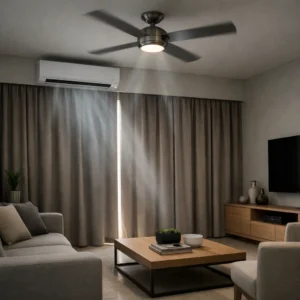





Searching for ac temperature to cool room usually means you want a clear, exact answer—not guesses, not vague advice. You want to know what temperature actually cools a room effectively without wasting electricity, making the air uncomfortable, or putting extra strain on your AC. In hot climates like the UAE, setting the wrong temperature is one of the most common reasons rooms feel uncomfortable, energy bills rise, and AC systems wear out faster than they should.
Table of Contents
ToggleWhat Is the Ideal AC Temperature to Cool a Room?
The most effective and widely recommended AC temperature to cool a room is between 24°C and 26°C. This range is considered the best balance between cooling comfort, energy efficiency, and system health.
At this temperature range:
- The room feels comfortably cool, not cold or stuffy
- The AC does not overwork its compressor
- Electricity consumption stays controlled
- Indoor air circulation remains stable
Many people assume that setting the AC to 18°C or 20°C will cool the room faster. In reality, this does not cool the room quicker—it only forces the AC to run longer and harder, increasing energy usage and mechanical stress.
Why 24°C to 26°C Works Best in Hot Climates
In regions like the UAE, outdoor temperatures are often extremely high. Your AC works by removing heat from indoor air and releasing it outside. When the temperature difference between indoor and outdoor air is too large, the system must work continuously.
Setting the AC within 24°C–26°C:
- Reduces the temperature gap between indoors and outdoors
- Allows the compressor to cycle normally instead of running nonstop
- Prevents excessive humidity buildup inside the room
This is why many HVAC professionals recommend this range not only for comfort but also for long-term system reliability.
Exact AC Temperature Based on Room Usage
While 24°C–26°C is the general recommendation, the ideal setting can vary slightly depending on how the room is used.
Bedroom
For sleeping comfort, the ideal AC temperature is usually 24°C to 25°C. This range helps the body cool naturally without causing dryness or cold-related discomfort.
Living Room
Living rooms often have more movement, lighting, and heat sources. A setting of 25°C to 26°C is usually sufficient to keep the space comfortable.
Office or Work Room
For productivity and alertness, 24°C to 25°C is ideal. Lower temperatures can cause fatigue or stiffness, while higher temperatures reduce concentration.
Children’s Room
For children, especially infants, 25°C is generally considered safe and comfortable, avoiding overly cold air that may cause respiratory irritation.
Why Lower Temperature Does Not Cool Faster
A common misunderstanding about ac temperature to cool room is believing that lower settings cool the room faster. AC systems do not work like volume knobs.
An AC cools at a fixed rate. Setting it to 18°C does not make it cool faster than setting it to 24°C—it only makes the system run longer.
This leads to:
- Higher electricity consumption
- Increased compressor wear
- Lower indoor air quality due to poor air circulation
Over time, this habit often results in frequent breakdowns and the need for professional AC repair.
How Humidity Affects Cooling Comfort
Cooling is not just about temperature—it is also about humidity. High humidity makes a room feel warmer than it actually is.
At 24°C–26°C, most AC systems can effectively remove excess moisture from the air. When the temperature is set too low, the AC may cool the air too quickly, reducing its ability to dehumidify properly.
Balanced temperature settings help:
- Reduce sticky or damp air feeling
- Improve breathing comfort
- Limit mold and bacterial growth inside the system
If humidity issues persist even at correct temperature settings, professional AC deep cleaning or system inspection may be necessary.
Energy Consumption at Different AC Temperature Settings
Every degree lower than 24°C can increase energy consumption by approximately 5–10%, depending on system condition and insulation.
| AC Setting | Cooling Comfort | Energy Usage |
|---|---|---|
| 18°C–20°C | Too cold, uneven | Very high |
| 21°C–23°C | Cool but inefficient | High |
| 24°C–26°C | Comfortable and stable | Optimal |
| 27°C–28°C | Slightly warm | Low |
This is why many energy efficiency guidelines recommend 24°C–26°C as the standard cooling range.
How Airflow and Placement Affect Cooling Temperature
If your room does not feel cool even at the correct temperature, the issue may not be the setting—it may be airflow.
Common airflow-related issues include:
- Blocked air vents
- Dirty filters
- Poor duct design
- Incorrect indoor unit placement
In such cases, lowering the temperature will not solve the problem. Proper airflow inspection or AC duct cleaning is often more effective.
Does AC Size Affect the Ideal Temperature?
Yes. An undersized AC struggles to cool a room even at low settings, while an oversized AC cools too quickly without proper air circulation.
When AC capacity does not match room size:
- Temperature feels uneven
- Humidity control is poor
- Energy efficiency drops
In these cases, adjusting temperature alone will not help. A professional assessment of system sizing through AC installation or replacement may be required.
Best AC Temperature for Night Use
At night, the body naturally lowers its core temperature. Setting the AC to 24°C–25°C is ideal for uninterrupted sleep.
Using sleep mode or timer functions helps:
- Maintain steady temperature
- Reduce dryness
- Lower nighttime energy use
Common Mistakes When Setting AC Temperature
- Setting temperature too low thinking it cools faster
- Ignoring humidity and airflow issues
- Changing temperature frequently
- Running AC continuously without maintenance
These mistakes often lead to discomfort and system strain rather than better cooling.
How Maintenance Affects Cooling Performance
Even the perfect temperature setting will not help if the AC is poorly maintained.
Regular maintenance ensures:
- Clean filters and coils
- Proper refrigerant levels
- Balanced airflow
Without maintenance, cooling efficiency drops, and users often compensate by lowering temperature—creating a cycle of inefficiency.
Scheduled AC maintenance and AMC services help keep the system efficient at recommended temperature ranges.
When Correct Temperature Still Does Not Cool the Room
If your room does not cool properly at 24°C–26°C, the issue is likely technical.
Possible causes include:
- Low refrigerant due to leaks
- Dirty evaporator or condenser coils
- Electrical or sensor issues
These problems require professional inspection rather than further temperature adjustments.
When AC Cooling Issues Should Be Addressed Properly
Incorrect temperature settings combined with unresolved system issues can reduce indoor air quality, increase electricity bills, and cause long-term damage to your AC. Bio On Air helps identify whether the problem lies in temperature usage, airflow, cleanliness, or mechanical faults. Addressing the issue early helps avoid permanent damage and unnecessary expenses. If you are unsure whether your AC temperature setting is enough or something deeper is wrong, you can use the WhatsApp or Call button at the top right of this page to discuss your situation with our team.
Conclusion
The most effective ac temperature to cool room is not the lowest number on the remote. For most homes and offices, setting the AC between 24°C and 26°C provides the best balance of comfort, energy efficiency, and system health. Lower settings rarely improve cooling speed and often increase costs and wear.
If your room still feels uncomfortable at the correct temperature, the issue is usually airflow, humidity, sizing, or maintenance—not the temperature itself. Understanding this helps you make smarter choices, protect your AC system, and maintain a comfortable indoor environment without unnecessary expense.