




Searching for ac temperature in winter usually means you are unsure how cold your AC should be set when the weather outside is no longer extreme. Many people worry about comfort, electricity usage, health effects, and whether running AC in winter can damage the system. The confusion is understandable because winter temperatures vary, indoor needs differ, and advice online is often vague. This guide explains the exact temperature ranges you should use, why they work, and how to adjust them based on comfort, energy efficiency, and long-term AC health.
Table of Contents
ToggleWhat Is the Ideal AC Temperature in Winter?
The generally recommended ac temperature in winter for comfort, efficiency, and system safety is between 22°C and 25°C (72°F–77°F). This range keeps indoor spaces comfortable without overworking the AC or causing sudden temperature differences that can affect health.
Unlike summer, winter does not require aggressive cooling. Most indoor discomfort in winter comes from poor airflow, humidity imbalance, or incorrect thermostat settings rather than high heat. Setting your AC too low in winter often leads to wasted energy, dry air, and unnecessary strain on components.
For most homes, apartments, and offices, starting at 24°C and adjusting slightly up or down based on comfort is a safe and practical approach.
Why 22°C–25°C Works Best in Winter
This temperature range is not random. It balances three critical factors: human comfort, energy efficiency, and AC system protection.
Comfort: The human body adapts better to gradual temperature differences. In winter, outdoor temperatures are already lower, so setting the AC extremely cold can make indoor spaces feel uncomfortable, especially in the morning or at night.
Energy efficiency: Every degree you lower the thermostat increases energy consumption. Keeping your AC within the recommended range helps control electricity bills without sacrificing comfort.
System health: Running an AC too cold when the ambient temperature is already low can cause issues such as coil freezing, poor refrigerant performance, and uneven airflow.
Exact AC Temperature Settings Based on Usage
Living Room and Common Areas
For living rooms or shared spaces, the ideal ac temperature in winter is typically 23°C–25°C. These areas usually have more movement and heat from occupants, electronics, and lighting.
Setting the temperature slightly higher reduces cold drafts and keeps the space comfortable for longer periods without frequent on-off cycling.
Bedroom at Night
For sleeping, most people feel comfortable between 22°C and 24°C. However, it is important to avoid setting the AC too low overnight.
Cold air blowing continuously while you sleep can cause dry throat, nasal irritation, muscle stiffness, or disrupted sleep. Using sleep mode or increasing the temperature slightly after you fall asleep helps maintain comfort.
Office and Workspaces
In offices, the recommended ac temperature in winter is usually 23°C–24°C. This range supports alertness and comfort without making the space feel cold or stale.
Offices often have heat generated by computers and equipment, so setting the AC too low is unnecessary.
Should You Turn Off AC Completely in Winter?
Many people wonder whether they should turn off AC entirely during winter. The answer depends on your location, indoor environment, and daily activities.
In mild winter climates, AC is still useful for:
- Maintaining air circulation
- Controlling humidity
- Preventing indoor air from becoming stale
Instead of turning the AC off completely, it is often better to set it to a higher temperature or use fan mode when cooling is not needed. This keeps airflow consistent and helps maintain indoor air quality.
Common Mistakes When Setting AC Temperature in Winter
Setting the Temperature Too Low
One of the most common mistakes is keeping the AC at summer-level temperatures in winter. This leads to unnecessary cooling, higher energy bills, and discomfort.
If you feel cold air even when the weather outside is mild, your setting is likely too low.
Frequent Temperature Changes
Constantly adjusting the thermostat up and down confuses the system and reduces efficiency. It also causes uneven cooling and discomfort.
Choose a stable setting within the recommended range and allow your body time to adjust.
Ignoring Humidity Levels
Winter air can become dry indoors. Running the AC too cold worsens dryness, leading to skin irritation and respiratory discomfort.
If your AC has humidity control or fan-only options, use them to balance comfort.
How AC Temperature in Winter Affects Electricity Bills
Electricity consumption is directly linked to thermostat settings. Lower temperatures force the AC compressor to run longer.
In winter, the difference between setting your AC at 20°C versus 24°C can be significant. Each unnecessary degree of cooling increases energy use without real comfort benefits.
Keeping your ac temperature in winter within the recommended range helps control costs while still maintaining a pleasant indoor environment.
Health Considerations of AC Use in Winter
Incorrect AC settings in winter can affect health more than people realize.
Possible issues include:
- Dry eyes, throat, and skin
- Increased susceptibility to colds
- Muscle stiffness due to cold airflow
- Sleep disruption
Maintaining a moderate temperature and avoiding direct airflow toward sleeping or seating areas reduces these risks.
Does Running AC in Winter Damage the System?
Running an AC at very low temperatures in winter can cause technical problems, especially if the outdoor temperature drops significantly.
Potential risks include:
- Frozen evaporator coils
- Poor refrigerant circulation
- Increased wear on the compressor
Keeping the AC within safe temperature limits protects the system and reduces the likelihood of repairs.
AC Temperature in Winter for Different AC Types
Split AC Systems
Split AC units perform best in winter when set between 22°C and 25°C. Avoid extreme cooling, especially at night.
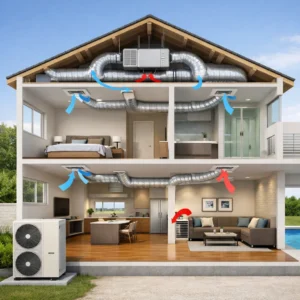
Central AC Systems
Central systems cool large spaces. In winter, they should be set closer to 24°C–25°C to avoid overcooling unused rooms.
Inverter AC Systems
Inverter ACs adjust power automatically, but temperature settings still matter. Setting them too low in winter forces unnecessary operation.
How to Adjust AC Temperature During Different Winter Conditions
Winter is not the same every day. Some days are cooler, others warmer.
- On cooler days: increase the AC temperature or use fan mode
- On warmer winter days: set the AC closer to 23°C
- At night: increase temperature by 1–2 degrees or use sleep mode
This flexible approach improves comfort and efficiency.
Signs Your AC Temperature Is Set Incorrectly in Winter
Your AC setting may need adjustment if you notice:
- Feeling cold despite mild outdoor weather
- Dry air symptoms
- AC cycling on and off frequently
- Unusual noises or frost buildup
These signs indicate that your current setting is not ideal for winter conditions.
Practical Tips to Maintain Comfort Without Overcooling
- Use curtains or blinds to retain indoor warmth
- Avoid direct airflow toward seating or beds
- Clean filters to improve airflow efficiency
- Use ceiling fans on low speed to circulate air
These small steps reduce the need for aggressive cooling.
When AC Performance Feels Unusual in Winter
If your AC behaves strangely even with correct temperature settings—such as weak airflow, noise, or uneven cooling—it may need inspection.
Dust buildup, refrigerant imbalance, or mechanical wear can become more noticeable in winter because the system operates differently than in peak summer.
Addressing these issues early helps prevent bigger problems later.
Conclusion
The ideal ac temperature in winter is not about making your space cold, but about maintaining balance. For most homes and offices, keeping the AC between 22°C and 25°C provides comfort, protects health, and reduces unnecessary energy use. Settings outside this range often lead to discomfort, higher bills, and potential system issues.
By understanding how your AC behaves in winter and adjusting temperatures thoughtfully, you create a healthier and more efficient indoor environment. Instead of treating winter as a reason to ignore AC settings, use it as an opportunity to optimize comfort, protect your system, and avoid avoidable problems in the long run.