




Searching for ac temperature for cold usually means you want your room to feel properly cool, not just “AC on but still uncomfortable.” Many people lower the temperature to the minimum hoping for faster cooling, yet the room still feels sticky, uneven, or too cold in some areas and warm in others. In hot climates like the UAE, the real question is not how low you can set the AC, but what exact temperature or range actually delivers effective cooling, comfort, healthy air, and reasonable energy use without damaging the system.
Table of Contents
ToggleWhat Does “Cold” Really Mean for AC Temperature?
Before talking about exact numbers, it is important to understand what “cold” means in practical terms. Cold is not just a number on the remote. It is a combination of temperature, humidity, airflow, and how evenly cool air is distributed.
Many people feel uncomfortable even at low temperatures because humidity is high or airflow is weak. Others feel too cold even at moderate settings because airflow is direct or uneven. This is why blindly setting the AC to the lowest number often fails to deliver real comfort.
So when we talk about ac temperature for cold, we are really talking about a temperature range that balances:
- Effective heat removal
- Comfort for the human body
- Healthy indoor air
- Stable AC performance
- Reasonable electricity consumption
The Exact AC Temperature Range That Feels Cold
For most residential and commercial spaces, the temperature range that feels clearly cold but still comfortable is:
- 22–24°C (72–75°F) for normal daily use
- 20–21°C (68–70°F) for people who prefer a noticeably colder environment
This range is widely accepted in HVAC practice because it allows the AC system to remove heat and humidity efficiently without overloading components.
Temperatures below 20°C are generally not recommended for continuous use. While they may feel cold at first, they often lead to:
- Uneven cooling
- Excessive energy use
- Increased moisture issues
- Higher risk of coil freezing
In short, colder does not always mean better.
Why Setting AC Too Low Often Fails
A common frustration is setting the AC to 16–18°C and still not feeling comfortable. This usually happens because the problem is not temperature, but system performance.
Here are common reasons why very low settings do not give real cold:
- Dirty filters or coils: airflow is blocked, so cold air cannot circulate.
- High indoor humidity: the air feels heavy and sticky even when cold.
- Uneven airflow: some areas get cold air, others do not.
- Low refrigerant or airflow imbalance: cooling capacity is reduced.
In these cases, lowering the temperature only forces the AC to run longer, increasing electricity use without improving comfort.
How Humidity Affects How Cold the Room Feels
Humidity plays a major role in perceived cold. In the UAE, high outdoor humidity often enters indoor spaces, especially in coastal areas or poorly sealed buildings.
When humidity is high:
- The air feels warmer at the same temperature
- Sweat does not evaporate efficiently
- The room feels uncomfortable even when cold air is present
An AC set to 23°C with controlled humidity can feel colder than an AC set to 18°C with high humidity.
This is why proper system condition matters. Sometimes the solution is not changing the temperature, but improving airflow, drainage, or internal cleanliness. In systems with dust buildup or moisture retention, professional AC deep cleaning can significantly improve both cooling and dryness.
Best AC Temperature for Sleeping Cold
Sleep comfort is one of the most common reasons people search for ac temperature for cold. Sleeping requires slightly different conditions than daytime use.
The recommended temperature range for sleeping is:
- 22–24°C for most people
- 21–22°C for those who prefer a cooler sleeping environment
Going lower than this often leads to:
- Dry throat or nose
- Muscle stiffness
- Interrupted sleep due to overcooling
Using fan mode or adjusting airflow direction often improves sleep comfort more than lowering the temperature further.
Best AC Temperature for Daytime Comfort
During the day, especially in active spaces like living rooms or offices, slightly higher temperatures are often more effective.
Recommended daytime settings:
- 23–25°C for living areas
- 22–24°C for offices or workspaces
This range allows stable cooling without sudden cold spots, especially when people are moving around.
Why Airflow Direction Matters as Much as Temperature
Many people overlook airflow direction. Cold air that blows directly onto the body can feel too cold, while the rest of the room remains warm.
Proper airflow should:
- Distribute cold air evenly
- Avoid direct airflow onto beds or desks
- Encourage air circulation across the room
Adjusting louvers often improves comfort more than lowering the temperature.
How AC Size Affects Cold Performance
If your AC is undersized or oversized, temperature settings alone cannot fix comfort issues.
Common problems include:
- Undersized AC: runs constantly but never feels cold enough.
- Oversized AC: cools quickly but shuts off before removing humidity.
In both cases, the room may feel uncomfortable even at low settings. Proper assessment through professional AC installation and replacement guidance helps resolve these issues.
Why Your AC Used to Feel Colder at the Same Temperature
Many people say, “My AC used to feel colder at 24°C.” This is usually true, and it points to system condition rather than settings.
Over time:
- Dust builds up on coils
- Filters clog
- Drain lines accumulate residue
- Refrigerant efficiency decreases
These factors reduce heat transfer, making the same temperature feel less effective.
Routine inspection and cleaning through proper AC maintenance and AMC services help restore original performance.
Does Lower Temperature Increase Electricity Consumption?
Yes, significantly.
Each degree lower increases workload on the compressor. Setting the AC to 18°C instead of 23°C can increase energy consumption by 20–30% or more, depending on system condition.
When the AC struggles to reach a very low target, it runs longer cycles, increasing wear and electricity cost.
When Cold Air Means There Is a Problem
Sometimes cold air itself is a warning sign.
Signs of abnormal cooling include:
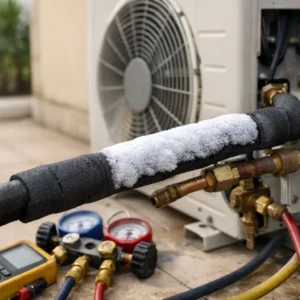
- Ice forming on indoor unit
- Sudden loss of airflow
- Water leakage after long cooling cycles
These often indicate airflow restriction or refrigerant issues. In such cases, professional AC repair is necessary rather than temperature adjustment.
DIY Adjustments You Can Try Before Calling for Help
Before assuming your AC cannot get cold enough, try these safe steps:
- Clean or replace the filter
- Set temperature between 22–24°C
- Adjust airflow direction
- Close doors and windows
If comfort does not improve, the issue is likely internal.
Why Professional Inspection Matters for Cooling Performance
When temperature settings no longer produce expected results, internal system condition must be checked.
Professional inspection can identify:
- Coil contamination
- Drainage problems
- Airflow imbalance
- Refrigerant inefficiency
Addressing these restores cooling effectiveness without pushing the system to extremes.
When AC Temperature Should Not Be Lowered Further
If your AC cannot reach comfortable cold within the recommended range, lowering it further often causes more harm than benefit.
At this point, focus should shift from settings to system health.
When AC Cooling Problems Should Be Addressed Properly
Cooling discomfort, high humidity, and uneven temperature rarely solve themselves. If left unaddressed, they can lead to poor indoor air quality, higher electricity bills, moisture issues, and long-term system damage. Bio On Air helps assess cooling performance, airflow, and system condition to identify the real cause rather than masking symptoms. Acting early helps restore comfort efficiently. You can use the WhatsApp or Call button at the top right of this page to discuss your cooling concerns with our team.
Conclusion
The correct ac temperature for cold is not about setting the lowest number on the remote. For most spaces, a range of 22–24°C delivers effective cold, comfort, and efficiency when the system is healthy. Going lower rarely improves comfort and often increases cost and wear.
If your room does not feel cold within this range, the problem is likely airflow, humidity, or internal cleanliness—not temperature. Understanding this helps you avoid unnecessary stress, high electricity bills, and repeated adjustments that do not solve the real issue. With proper care, correct settings, and timely professional support, your AC can deliver consistent, comfortable cold without being pushed beyond its limits.