




When people search for ac temperature 16 means, they are usually trying to understand what really happens when the AC remote is set to 16°C. Many users believe this setting will cool the room faster, make the air colder, or reduce humidity more effectively. In reality, the meaning of AC temperature settings is often misunderstood, and using them incorrectly can affect comfort, energy consumption, indoor air quality, and even the lifespan of the AC system.
Table of Contents
ToggleWhat AC Temperature 16 Actually Means
On most residential and commercial AC systems, the temperature number shown on the remote or thermostat represents the target room temperature, not the temperature of the air coming out of the AC. When you set your AC to 16°C, you are telling the system that you want the room to reach 16°C.
This does not mean:
- The AC will blow air at exactly 16°C
- The room will cool faster than at higher settings
- The AC will become more powerful
Instead, the AC will continue running until the thermostat senses that the room has reached the target temperature. If the room cannot realistically reach 16°C due to climate, insulation, or system capacity, the AC may run continuously without stopping.
Why 16°C Is the Lowest Setting on Most AC Remotes
Many users wonder why 16°C is the minimum temperature option on AC remotes. This value is not chosen randomly. Manufacturers set a lower limit to prevent unrealistic expectations and reduce the risk of system overload.
In most cases, 16°C represents:
- The lowest safe target temperature for standard comfort cooling
- A boundary to prevent excessive compressor strain
- A standardized setting across different brands
However, in hot regions like the UAE, indoor temperatures rarely reach 16°C naturally, especially during peak summer. This means setting the AC to 16°C often causes the system to run non-stop.
Does Setting AC to 16°C Cool the Room Faster
One of the biggest misconceptions behind ac temperature 16 means is the idea that lower settings cool the room faster. AC systems do not work like volume controls. They do not cool “harder” just because the number is lower.
Most AC systems operate in two basic modes:
- On (cooling at full designed capacity)
- Off (when target temperature is reached)
When you set the AC to 24°C or 16°C, the cooling speed is usually the same. The difference is how long the AC keeps running. At 16°C, the system will simply keep running longer, often without achieving the target.
What Happens Inside the AC When Set to 16°C
Understanding what happens internally helps explain why using 16°C constantly may cause problems.
When the AC is set very low:
- The compressor runs for longer cycles
- Evaporator coils stay cold for extended periods
- Moisture removal increases initially, then stabilizes
- Electrical components experience prolonged load
Extended operation without rest can increase wear on components, especially in systems that are already dusty, poorly maintained, or low on refrigerant.
Is AC Temperature 16 Bad for the AC System
Occasional use of 16°C is not immediately harmful. However, using it as a daily default setting can increase long-term stress on the system.
Common risks include:
- Higher electricity consumption
- Faster wear on compressor and fan motors
- Increased chance of coil freezing
- Reduced system lifespan over time
In hot climates, the AC may never reach 16°C, causing continuous operation that looks like “strong cooling” but actually signals inefficiency.
Why the Room Still Feels Hot Even at 16°C
Many users feel frustrated when the AC is set to 16°C but the room still does not feel cool enough. This usually points to issues unrelated to temperature settings.
Common causes include:
- Poor insulation allowing heat to enter
- Dirty filters reducing airflow
- Blocked or dusty ducts
- Low refrigerant levels
- Incorrect AC capacity for the room size
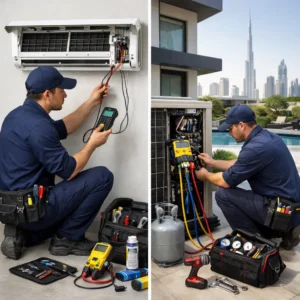
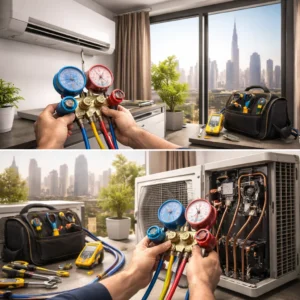
In such cases, lowering the temperature further does not solve the root problem. Professional inspection and repair are often required. You can learn how proper diagnosis works through a dedicated AC repair service overview.
AC Temperature 16 and Energy Consumption
Energy usage is one of the biggest hidden costs of using very low AC temperature settings.
When the AC runs continuously:
- Electricity consumption increases significantly
- Monthly utility bills rise
- Peak load on the system increases
In many cases, the comfort difference between 16°C and 23–24°C is minimal, but the energy difference can be substantial. This is why many energy efficiency guidelines recommend moderate temperature settings.
Impact of 16°C on Indoor Air Quality
Indoor air quality is often overlooked when discussing temperature settings.
Very low settings can:
- Reduce airflow balance
- Create uneven temperature zones
- Increase condensation inside the system
Excess moisture combined with dust can encourage microbial growth inside coils and ducts. Over time, this may cause odors or air quality issues.
If air quality concerns are present, services like AC deep cleaning or AC duct cleaning may be more effective than lowering the temperature.
Does 16°C Help Remove Humidity Faster
Lower temperatures do help remove humidity initially because cold coils condense moisture more efficiently. However, once humidity stabilizes, further lowering the temperature provides diminishing returns.
In many homes, humidity control depends more on:
- Airflow design
- System cleanliness
- Proper refrigerant charge
This means setting 16°C is not a long-term humidity solution.
Recommended AC Temperature for Comfort and Efficiency
For most residential and office environments, a balanced temperature range provides the best comfort-to-cost ratio.
Common recommendations include:
- 23–24°C for daytime use
- 24–25°C for sleeping
- Slightly lower settings during peak heat if needed
These ranges reduce system strain while maintaining comfort.
When Setting 16°C Might Make Sense
There are limited scenarios where using 16°C temporarily can be reasonable:
- Quick cooldown in an empty room before use
- Short-term relief during extreme heat
- Testing system performance after service
Even in these cases, returning to a moderate setting once comfort is achieved is advisable.
Common Myths About AC Temperature 16
Several myths continue to confuse users:
- Myth: Lower temperature cools faster
- Myth: 16°C uses less electricity
- Myth: Colder air always means better comfort
Understanding these myths helps prevent misuse and unnecessary costs.
Signs That Temperature Is Not the Real Problem
If your AC struggles even at low settings, look for these signs:
- Weak airflow from vents
- Unusual noises during operation
- Frequent on-off cycling
- Water leakage or ice buildup
These symptoms usually indicate maintenance or repair needs rather than temperature adjustment.
How Proper Maintenance Improves Cooling Without 16°C
Well-maintained AC systems often feel cooler at higher temperature settings.
Key maintenance actions include:
- Regular filter cleaning
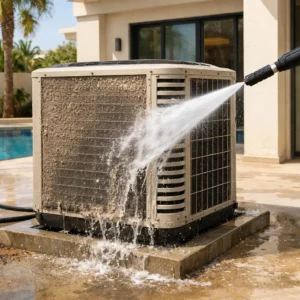
- Coil cleaning
- Drain line maintenance
- Periodic performance checks
Structured programs like AC maintenance and AMC services help ensure stable performance without extreme settings.
How AC Installation Affects Temperature Performance
If an AC is incorrectly sized or installed, temperature settings become misleading.
Common installation-related issues include:
- Undersized units struggling to cool
- Poor airflow distribution
- Improper sensor placement
In such cases, learning about AC installation and replacement standards helps explain why temperature adjustments alone do not solve comfort problems.
When AC Temperature Issues Require Professional Attention
Temperature confusion often masks deeper system problems. Ignoring them can lead to higher energy bills, poor air quality, and component failure.
Bio On Air helps address these issues through proper inspection, clear explanations, and safe repair procedures. Acting early prevents small efficiency problems from turning into major repairs. If you are unsure why your AC only feels effective at 16°C, you can use the WhatsApp or Call button at the top right of this page to discuss your situation with our team.
Conclusion
Understanding what ac temperature 16 means helps you use your AC more effectively and avoid unnecessary stress on the system. The number on the remote is a target, not a power control. Setting it too low does not make the AC faster or stronger, but it can increase energy use and wear.
Comfort, efficiency, and air quality depend more on system condition, airflow, and maintenance than extreme temperature settings. By using balanced temperatures and addressing underlying issues early, you can enjoy reliable cooling, healthier indoor air, and lower long-term costs—especially in demanding climates like the UAE.