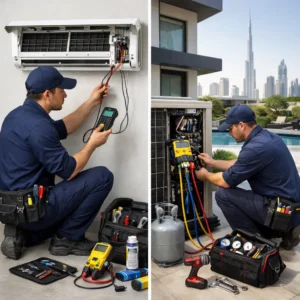





AC technician tools are more than a checklist of equipment. They define how accurately a technician diagnoses problems, how safely work is performed, and how often a job is fixed correctly on the first visit. For anyone entering the HVAC field—or upgrading skills after years in the job—the real challenge is not owning many tools, but owning the right tools for the right phase of work. This guide explains AC technician tools by career phase, clarifies what each tool is used for, the failures it helps prevent, how safety and compliance fit into daily work, how analog and digital tools compare, and how proper care keeps tools reliable over the long term.
Table of Contents
ToggleWhy AC Technician Tools Matter More Than Experience Alone
Experience is essential, but even the most skilled technician is limited by their tools. Incorrect or missing tools often lead to misdiagnosis, unsafe shortcuts, repeated call-backs, and unnecessary component damage. In HVAC work, small measurement errors can cause big problems—overcharging refrigerant, overlooking electrical imbalance, or missing airflow restrictions that later lead to compressor failure.
Well-chosen AC technician tools support accuracy, safety, and efficiency. They allow technicians to work methodically rather than guessing, which is especially important in environments with strict safety standards and regulatory oversight, such as residential and commercial properties in hot-climate regions.
Career-Phase Categorization of AC Technician Tools
Not every technician needs the same tools at every stage of their career. Tool selection should grow with responsibility, job complexity, and diagnostic expectations.
Apprentice and Starter Essentials
At the apprentice level, the focus is on learning fundamentals, performing supervised tasks, and avoiding mistakes that could cause injury or equipment damage. Tools at this stage should be simple, durable, and easy to understand.
- Basic hand tools: screwdrivers, adjustable wrench, nut drivers, pliers. These support panel removal, filter replacement, and basic mechanical work.
- Multimeter (basic): used to check voltage presence, continuity, and simple resistance. Prevents accidental electrical contact and helps confirm power isolation.
- Tape measure and level: ensures correct alignment during installation tasks, preventing drainage issues and vibration.
- Flashlight or headlamp: improves visibility inside units and ceiling spaces, reducing missed issues.
These tools prevent early-career failures such as loose connections, misaligned indoor units, and unsafe electrical assumptions. The goal is safe learning, not advanced diagnostics.
Professional Service and Maintenance Upgrades
Once technicians handle jobs independently, tool requirements increase. At this stage, accuracy, speed, and repeatability become critical.
- Digital multimeter: provides faster, more precise readings for voltage, current, and resistance. Prevents misdiagnosis of electrical faults.
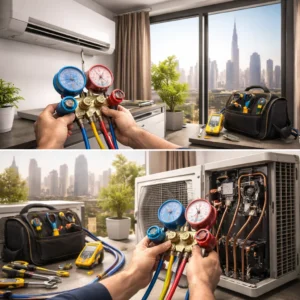
- Manifold gauge set: essential for refrigerant pressure measurement during charging and diagnostics. Helps avoid overcharging or undercharging.
- Vacuum pump: removes moisture and air during installation or major repair, preventing corrosion and refrigerant contamination.
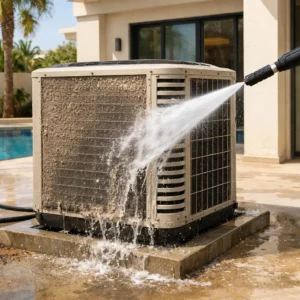
- Coil cleaning tools: fin combs, spray applicators, and low-pressure washers improve heat transfer efficiency.
- Leak detection tools (basic): soap solution or simple electronic detectors to identify refrigerant leaks early.
These tools prevent common professional-level failures such as reduced cooling efficiency, recurring gas loss, and premature compressor wear.
Specialist and Advanced Add-On Tools
Advanced technicians and specialists handle complex systems, large installations, and detailed diagnostics. Their tools focus on precision and system-wide analysis.
- Digital manifold gauges: combine pressure, temperature, and refrigerant data for faster diagnostics.
- Thermal imaging camera: identifies hidden airflow issues, insulation gaps, and electrical hotspots.
- Advanced leak detectors: detect very small refrigerant leaks that basic tools miss.
- Airflow measurement tools: anemometers and manometers for balancing ducts and verifying system performance.
- Data logging devices: track system behavior over time, useful for intermittent faults.
These tools help prevent complex failures such as uneven cooling, chronic energy waste, and unexplained system shutdowns.
Practical Purpose of AC Technician Tools in Daily Work
Understanding what each tool actually does—and what problem it prevents—is more important than owning many tools.
Installation Tasks
During installation, tools ensure correct setup from the start. A level prevents drainage backflow, a vacuum pump removes moisture, and accurate torque tools prevent refrigerant leaks at joints. Poor installation tools often lead to water leakage, noisy operation, and early system failure.
Maintenance Tasks
Maintenance tools focus on cleanliness and measurement. Coil cleaning tools restore heat exchange efficiency, while gauges and thermometers confirm the system is operating within design parameters. Without proper tools, maintenance becomes cosmetic rather than functional.
Diagnostic Tasks
Diagnostics rely heavily on measurement accuracy. Multimeters confirm electrical health, gauges reveal refrigerant behavior, and airflow tools identify distribution problems. Guesswork during diagnostics is a major cause of repeat call-backs.
Safety and Compliance Coverage for AC Technician Tools
Safety is not optional in HVAC work. Tools must support safe practices and regulatory compliance.
Electrical Protection Tools
- Insulated screwdrivers and gloves prevent electrical shock.
- Voltage testers confirm power isolation before work begins.
- Lockout and tagout devices prevent accidental re-energizing.
These tools reduce the risk of injury and comply with electrical safety standards.
Refrigerant Handling Tools
- Approved recovery machines prevent illegal venting.
- Proper hoses and gauges prevent leaks during servicing.
- Weighing scales ensure accurate refrigerant charging.
Incorrect refrigerant handling can damage equipment and violate environmental regulations.
Personal Protective Equipment
- Safety goggles protect eyes from chemicals and debris.
- Respirators protect against dust and chemical fumes.
- Protective footwear reduces injury risk in tight spaces.
PPE supports both technician safety and professional compliance.
Analog vs Digital AC Technician Tools
Choosing between analog and digital tools affects workflow and accuracy.
Accuracy and Reliability
Digital tools generally provide higher accuracy and easier readability. Analog tools, however, can be more durable and less sensitive to harsh environments.
Speed and Workflow Efficiency
Digital tools often combine multiple measurements, reducing setup time. Analog tools may require more manual interpretation but are less dependent on batteries.
When to Use Each
Many technicians use a mix: analog tools for rough checks and durability, digital tools for precision diagnostics. The best choice depends on job complexity and environment.
Tool Care and Long-Term Performance
Even the best AC technician tools lose value if poorly maintained.
Organization Systems
Tool bags with labeled compartments reduce time wasted searching and prevent damage from improper storage.
Transport Protection
Hard cases and padded bags protect sensitive instruments during travel, especially digital gauges and meters.
Calibration and Maintenance
Regular calibration ensures measurement accuracy. Skipping calibration leads to gradual error that affects every diagnosis.
Cleaning and Inspection
Cleaning tools after use and inspecting hoses, leads, and connectors prevents sudden failures on-site.
How Proper Tools Support First-Time Fix Accuracy
First-time fix accuracy is a key performance indicator in HVAC work. The right AC technician tools reduce guesswork, improve confidence, and allow technicians to verify results before leaving the site. This leads to fewer call-backs, better customer trust, and safer systems.
Conclusion
AC technician tools are a foundation, not an accessory. From apprentice basics to advanced specialist equipment, each tool plays a role in preventing failures, ensuring safety, and improving efficiency. Understanding when to upgrade, how to use tools properly, and how to care for them long-term supports consistent performance and accurate diagnostics. In HVAC work, the right tools do not replace skill—but they allow skill to be applied correctly, safely, and reliably on every job.