




If your ac system not cooling, the discomfort can escalate quickly—especially in hot climates where indoor cooling is essential. Whether the air feels warm, airflow is weak, or the system runs constantly without results, the real pain point is uncertainty: Is it something simple you can fix now, or a deeper issue that risks serious damage? This guide gives you a clear, structured triage checklist so you can act calmly, safely, and intelligently before the problem gets worse.
Table of Contents
ToggleStep 1 Quick Triage Checklist Before You Panic
Before assuming a major failure, start with the basics. Many cooling complaints come from small, easily overlooked settings or airflow issues. Use this quick triage checklist:
1. Verify Thermostat Mode and Settings
- Confirm the thermostat is set to Cool, not Fan or Heat.
- Lower the temperature at least 2–3°C below room temperature to trigger cooling.
- Check if batteries (if applicable) are weak.
Sometimes the system is functioning correctly but simply not receiving the right signal.
2. Inspect the Air Filter
- Remove and check if the filter is clogged with dust.
- If visibly dirty, replace or clean it.
A blocked filter restricts airflow, which can make air feel weak or even warm.
3. Check the Breaker Panel
- Look for tripped breakers related to the AC or outdoor unit.
- Reset once if necessary—but avoid repeated resets.
If the breaker trips again immediately, stop and call a professional.
4. Ensure Vents Are Not Obstructed
- Check that furniture, curtains, or rugs are not blocking supply vents.
- Open all vents fully.
Restricted airflow can mimic a cooling failure.
Step 2 Sensory Diagnostics What Your AC Is Telling You
After basic checks, move to sensory diagnostics. Your AC system often gives clues through temperature, sound, and visual signs.
Check for Ice on Refrigerant Lines
If you see frost or ice buildup on refrigerant lines or the indoor coil, turn the system off immediately. A frozen system needs time to thaw—usually several hours—before proper diagnosis can occur.
Confirm Outdoor Fan Operation
- If the outdoor unit is running but the fan is not spinning, the system cannot release heat.
- This often points to capacitor or fan motor issues.
Listen for Unusual Sounds
- Humming: possible capacitor problem.
- Screeching: worn motor bearings.
- Clicking repeatedly: electrical control issue.
Determine If Airflow Is Weak or Just Warm
Weak airflow often suggests filter blockage, blower issues, or duct problems. Strong airflow that is simply warm usually suggests refrigerant, compressor, or condenser-related issues.
Step 3 Matching Symptoms to Common Causes
Understanding symptom patterns helps reduce panic and unnecessary guesswork.
Capacitor Failure
If the outdoor unit hums but does not fully start, the capacitor may have failed. This is a common cause of sudden non-cooling.
Dirty Coils
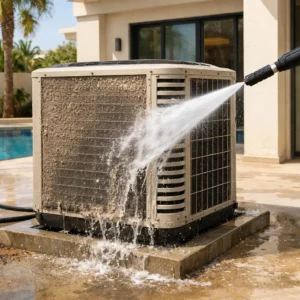
Dirty evaporator or condenser coils reduce heat exchange. Symptoms include longer run times and gradual cooling loss.
Low Refrigerant Due to Leak
Refrigerant does not get “used up.” If levels are low, there is likely a leak. Signs include weak cooling, ice buildup, and hissing sounds.
Clogged Condensate Drain Line
If water backs up and safety switches trigger, the AC may stop cooling entirely.
Compressor Issues
If the outdoor unit runs but cooling never improves, compressor failure is possible.
Blower Motor Problems
If air barely moves through vents, the blower motor may be malfunctioning.
Safety Warnings You Should Not Ignore
- If the system is frozen, turn it off immediately to prevent compressor damage.
- Avoid rapid power cycling (turning on/off repeatedly).
- Never attempt to handle refrigerant yourself.
- Do not bypass safety switches.
Ignoring these precautions can transform a moderate repair into major component damage.
When DIY Stops and Professional Service Begins
DIY is appropriate only for simple checks like thermostat settings, filter cleaning, and visible vent inspection. Once you suspect electrical, refrigerant, compressor, or motor issues, professional service is required.
If the system is frozen, allow complete thaw time (several hours, sometimes overnight) before scheduling inspection. A technician cannot diagnose properly while ice remains.
Cost Expectations Without Guesswork
Repair costs depend entirely on diagnosis. Instead of assuming numbers, it is better to ask the technician to clearly tell the price once inspection confirms the issue.
Minor issues such as filter or capacitor problems are typically simpler. Refrigerant leak repair, compressor issues, or motor replacement require more extensive work.
Always request a breakdown of what the price covers and whether additional parts may be required.
Repair or Replace A Practical Threshold Framework
When your ac system not cooling, the decision between repair and replacement should be logical, not emotional.
Consider Unit Age
- Under 8 years: repair is often reasonable.
- 10–15 years: evaluate efficiency and repair frequency carefully.
Evaluate Repair Frequency
If repairs are becoming annual or seasonal, replacement may be more cost-effective long-term.
Assess Overall Efficiency
Older systems consume more electricity. Even if repaired, they may continue costing more to operate.
If replacement becomes necessary, understanding proper system sizing and installation standards is essential. You can review best practices in AC installation and replacement for informed decision-making.
How to Prevent Future Cooling Failures
- Clean or replace filters regularly.
- Schedule seasonal inspections before peak summer.
- Keep outdoor units free from obstruction.
- Address small symptoms early.
Preventive care reduces sudden breakdowns and protects system lifespan.
When Professional Help Is the Safer Choice
If your AC system not cooling persists after basic checks, delaying action can worsen indoor air quality, increase electricity usage, and risk permanent compressor damage. Professional inspection ensures accurate diagnosis and safe repair procedures. Early action prevents higher long-term costs. You can use the WhatsApp or Call button at the top right of this page to discuss your AC condition with our team and understand the next appropriate step.
Conclusion
An ac system not cooling is stressful, but structured troubleshooting reduces uncertainty. Start with simple checks, observe symptoms carefully, and respect safety limits. Understanding when DIY ends and professional service begins protects your comfort, health, and long-term investment. Acting early and logically is always more effective than reacting after damage escalates.