




When ac switch not working becomes the problem, most people immediately assume the AC is broken or there is a serious electrical fault. In reality, many cases start with simple, low-risk issues that can be checked calmly before jumping to conclusions. The key is to separate whether the issue is truly the switch itself, a control or safety lock, or a wider power problem affecting the AC system. This guide is written to help you regain clarity step by step, reduce panic, avoid unsafe actions, and decide confidently when DIY checks are enough and when calling a professional is the smarter move.
Table of Contents
ToggleImmediate Calm Triage: Is It Really the AC Switch?
Before touching anything or assuming damage, the first goal is to identify whether the problem is isolated to the switch or part of a broader power or control issue. This initial triage can often save time and unnecessary expense.
Start with these calm, non-invasive checks:
- Thermostat mode: Ensure the thermostat is set to “Cool” and not “Off,” “Fan,” or “Auto” in a way that prevents startup.
- Temperature setting: Set the temperature several degrees lower than room temperature to force a cooling call.
- Safety interlock doors: Some indoor units have safety switches that disable power if the front panel or filter door is not seated properly.
- Basic user errors: Check if a timer, schedule, or smart control has disabled operation unintentionally.
If the display responds normally but the AC does nothing when the switch is used, the issue may be downstream. If there is no response at all—no sound, no indicator, no click—the issue may be power-related.
Step-by-Step DIY Causes Ordered from Easiest to Harder
Once basic settings are ruled out, move through likely causes in order. Stop at any step where the issue is identified and resolved.
#1 Tripped Circuit Breaker or Blown Fuse
A tripped breaker is one of the most common reasons an AC switch appears not to work. AC units draw significant power, especially during startup.
What to check:
- Go to the main electrical panel.
- Look for a breaker labeled AC, HVAC, or Outdoor Unit.
- If it is in the middle or off position, reset it once.
If the breaker immediately trips again, stop. Repeated trips indicate a deeper electrical or mechanical problem that should not be forced.
#2 Hidden Float Switch Triggered by Drain Clog
This is a very common but often overlooked cause. Many modern AC systems include a float switch in the drain pan to prevent water overflow.
When the drain line is clogged:
- Water accumulates in the pan.
- The float switch cuts power to protect your home.
- The AC switch appears unresponsive.
Signs pointing to this issue include water stains near the unit or recent high humidity. Clearing minor clogs may restore operation, but persistent clogs often indicate deeper hygiene issues.
In such cases, professional AC repair or targeted drain cleaning is usually safer than repeated DIY clearing.
#3 Weak or Dead Thermostat Batteries
If your thermostat uses batteries, weak power can cause inconsistent signals. The screen may still appear on, but the control signal may not reach the system.
Quick checks:
- Replace batteries with fresh ones.
- Ensure battery contacts are clean.
- Re-seat the thermostat firmly on its base.
This simple step solves many “ac switch not working” cases where the system itself is fine.
#4 Loose or Worn Wall Switch
Wall-mounted AC switches endure frequent use. Over time, internal contacts can wear out or loosen.
Indicators of a worn switch:
- The switch feels loose or unusually stiff.
- You hear no click when toggling.
- The switch works intermittently.
Replacing a wall switch is generally straightforward for a trained person, but improper handling carries electrical risk. If unsure, this is a reasonable point to stop DIY.
Moving into Advanced Hardware-Related Causes
If basic DIY checks do not restore function, the issue is likely within the AC’s control or power components. These problems help determine whether part replacement or professional service is required.
#5 Faulty Contactor
The contactor is an electrical relay that allows power to flow to the compressor and fan. When it fails, the AC will not start even if the switch is on.
Common symptoms include:
- No response from outdoor unit.
- Faint humming or clicking sounds.
- Burn marks visible (do not touch).
This component operates under high voltage. Diagnosis and replacement should be handled by a technician.
#6 Failed Capacitor
Capacitors help motors start and run efficiently. A failed capacitor can make the AC appear completely dead or cause it to stall.
Typical signs:
- AC tries to start but stops.
- Buzzing sound without operation.
- Outdoor fan not spinning.
Capacitors can retain electrical charge even when power is off, making DIY handling dangerous.
#7 Control Board or PCB Issues
Modern AC systems rely on electronic control boards. Power surges, moisture, or age can cause these boards to fail.
Symptoms include:
- Random or no response to switch input.
- Error codes on the display.
- System behaving unpredictably.
PCB issues usually require professional diagnosis and replacement decisions.
Basic Safety and Tool Awareness Before Any DIY Attempt
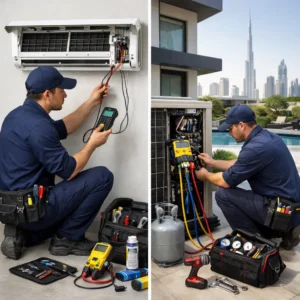
Understanding tools and risk levels helps prevent accidents. This section is not to instruct usage, but to explain awareness.
| Tool Type | General Purpose | Risk Level |
|---|---|---|
| Screwdrivers | Opening panels, securing covers | Low (if power is off) |
| Voltage tester | Checking presence of power | Medium |
| Multimeter | Testing electrical continuity | High (without training) |
| Insulated gloves | Reducing shock risk | Protective |
If you are unsure about a tool’s purpose or risk, that uncertainty itself is a sign to stop and seek professional help.
Clear Red Flags to Stop DIY Immediately
Some signs mean DIY attempts should stop at once due to safety or damage risk.
- Burning smell or visible smoke
- Sparks or arcing
- Breaker trips repeatedly after reset
- Unusual loud buzzing, banging, or screeching sounds
Continuing DIY under these conditions can cause permanent system damage or personal injury.
Fast Reference: Symptoms vs Likely Direction
| Symptom | Likely Cause | Next Step |
|---|---|---|
| Switch does nothing, no display | Breaker, power issue | Check breaker once |
| Display on, AC silent | Float switch, control issue | Check drain or call technician |
| AC clicks but won’t start | Capacitor or contactor | Professional repair |
| Repeated breaker trip | Electrical fault | Stop DIY immediately |
When Professional Help Becomes the Smarter Choice
If your checks point toward internal electrical components, control boards, or repeated safety shutdowns, professional intervention is the safest path. Experienced technicians can diagnose efficiently, prevent secondary damage, and restore safe operation.
Structured AC repair services focus on correct diagnosis first, then repair or replacement only where necessary. This approach reduces repeat failures and long-term costs.
Conclusion
When an ac switch not working issue appears, panic often leads to rushed decisions. By starting with calm triage, moving through simple DIY checks, and knowing when to stop, you protect both your safety and your AC system. Many causes are minor and easily resolved, while others signal the need for professional attention.
The real goal is not just to make the AC turn on again, but to restore safe, reliable operation without hidden risks. Understanding symptoms, respecting red flags, and choosing timely expert help when needed ensures comfort, efficiency, and peace of mind—especially in environments where AC is essential, not optional.