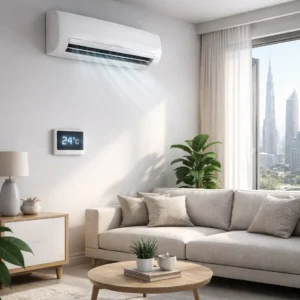





Choosing the right ac settings for winter in Dubai is important for both comfort and energy savings. While the weather is cooler, your AC still plays a key role in maintaining indoor air quality, controlling humidity, and preventing mold. In this guide, we explain the best temperature settings, modes, and practical tips to optimize your AC during winter in the UAE.
Table of Contents
ToggleIdeal AC Temperature Settings for Winter in Dubai
Winter in Dubai is mild, but indoor environments still depend on AC systems due to sealed buildings and limited natural ventilation. The goal is not just cooling—it is maintaining stable comfort and healthy airflow.
Recommended Daytime Temperature
For daytime use, the ideal AC setting is:
- 22°C – 24°C
This range provides a balance between comfort and energy efficiency. It prevents the AC from overworking while keeping the indoor temperature stable.
Recommended Night Temperature
At night, the body prefers slightly cooler temperatures for better sleep quality.
- 18°C – 20°C
This setting supports deeper sleep while reducing humidity buildup.
Recommended Temperature When Away
Many people turn off the AC completely when leaving home. However, this can lead to humidity buildup.
- 26°C (recommended when away)
This keeps the environment controlled without consuming too much energy.
Why Winter AC Settings Still Matter in UAE
Even during winter, indoor environments in Dubai can become humid and stale due to sealed windows and continuous AC usage.
Without proper settings, you may experience:
- Condensation on walls and ceilings
- Musty smell from vents
- Mold growth inside ducts
- Uneven cooling or airflow issues
This is why adjusting AC settings correctly during winter is essential.
Best AC Modes to Use in Winter
Fan Mode
Fan mode circulates air without cooling. It uses significantly less energy compared to cooling mode.
- Best for mild weather days
- Reduces electricity consumption
- Keeps airflow consistent
In many cases, switching to fan mode can reduce energy usage by up to 80–90% compared to full cooling.
Heat Mode (If Available)
Some AC units in the UAE include a heating function (sun icon). However, not all systems have this feature.
- Useful during colder nights
- Rarely needed in most UAE homes
Before using it, confirm if your AC supports heating.
Auto Mode
Auto mode allows the AC to adjust cooling based on room temperature.
- Convenient for stable indoor conditions
- May switch between fan and cooling automatically
This is useful if you want a hands-off approach.
Dry Mode
Dry mode reduces humidity without excessive cooling.
- Ideal for humid winter days
- Helps prevent mold growth
- Improves indoor air quality
Dry mode is often underused but very effective in UAE conditions.
How 1°C Change Affects Energy Consumption
Small adjustments in temperature can significantly impact your electricity bill.
General rule:
- Every 1°C lower → increases energy consumption by 6–10%
- Every 1°C higher → reduces energy usage
For example:
- Setting AC at 20°C instead of 24°C can increase energy usage by up to 30%
This is why finding the right balance is important—not just comfort, but efficiency.
How to Reduce DEWA Bills During Winter
Even in winter, AC contributes to electricity consumption. Here are practical ways to reduce costs:
- Use fan mode when possible
- Increase temperature by 1–2°C
- Avoid running AC at maximum power unnecessarily
- Keep doors and windows closed
- Use curtains to reduce heat gain
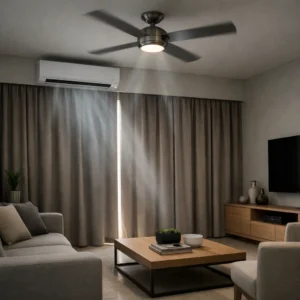
Use Ceiling Fans with AC
Ceiling fans help distribute air more evenly.
- Allows higher AC temperature setting
- Reduces AC workload
- Improves comfort
This combination can reduce energy consumption without sacrificing comfort.
Use Smart Thermostats
Smart thermostats allow better control of temperature and scheduling.
- Automatically adjust temperature when you are away
- Maintain consistent indoor conditions
- Prevent unnecessary energy usage
Winter AC Maintenance Tips
Clean or Replace Air Filters
Dirty filters reduce airflow and force the system to work harder.
- Clean filters every 2–4 weeks
- Replace if heavily worn
Check for Moisture and Mold
Winter humidity can lead to hidden moisture buildup.
- Inspect vents for smell or discoloration
- Monitor condensation around AC areas
If airflow smells musty, internal cleaning such as AC duct cleaning may be necessary.
Inspect Drain Lines
Blocked drain lines can cause water leakage and mold growth.
- Ensure proper drainage
- Check for standing water
Common Mistakes in Winter AC Usage
| Mistake | Impact |
|---|---|
| Turning AC off completely | Leads to humidity buildup and mold risk |
| Setting temperature too low | Increases energy consumption |
| Blocking vents | Reduces airflow efficiency |
| Ignoring maintenance | Leads to long-term damage |
Frequently Asked Questions About Winter AC Settings
Should I Turn Off AC Completely in Winter?
No. It is better to keep it running at a higher temperature (around 26°C) to control humidity.
Is Fan Mode Enough in Winter?
In many cases, yes. Especially during mild days when cooling is not necessary.
Why Does My AC Smell in Winter?
This is often due to moisture and dust buildup inside the system. Cleaning may be required.
Does Winter Reduce AC Problems?
Not necessarily. Some issues like mold and airflow blockage become more noticeable during winter.
Long-Term Benefits of Proper Winter Settings
- Lower electricity bills
- Better indoor air quality
- Reduced AC wear and tear
- More consistent comfort
These benefits make winter AC optimization a simple but effective step.
If your AC feels inefficient, produces odor, or struggles to maintain airflow during winter, it may indicate underlying issues such as dust buildup, internal moisture, or airflow restriction. These problems can gradually affect indoor air quality, increase energy consumption, and lead to more serious system damage over time. Addressing them early helps maintain both comfort and system performance. If you need clarity about your AC condition or want to understand the best setup for your space, you can use the WhatsApp or Call button on the top right to connect with the Bio On Air team and discuss the most suitable next step.
Conclusion
Setting the right ac settings for winter in Dubai is about balance—comfort, efficiency, and air quality. With the right temperature, mode selection, and maintenance approach, you can reduce costs, prevent issues, and maintain a healthier indoor environment throughout the season.